

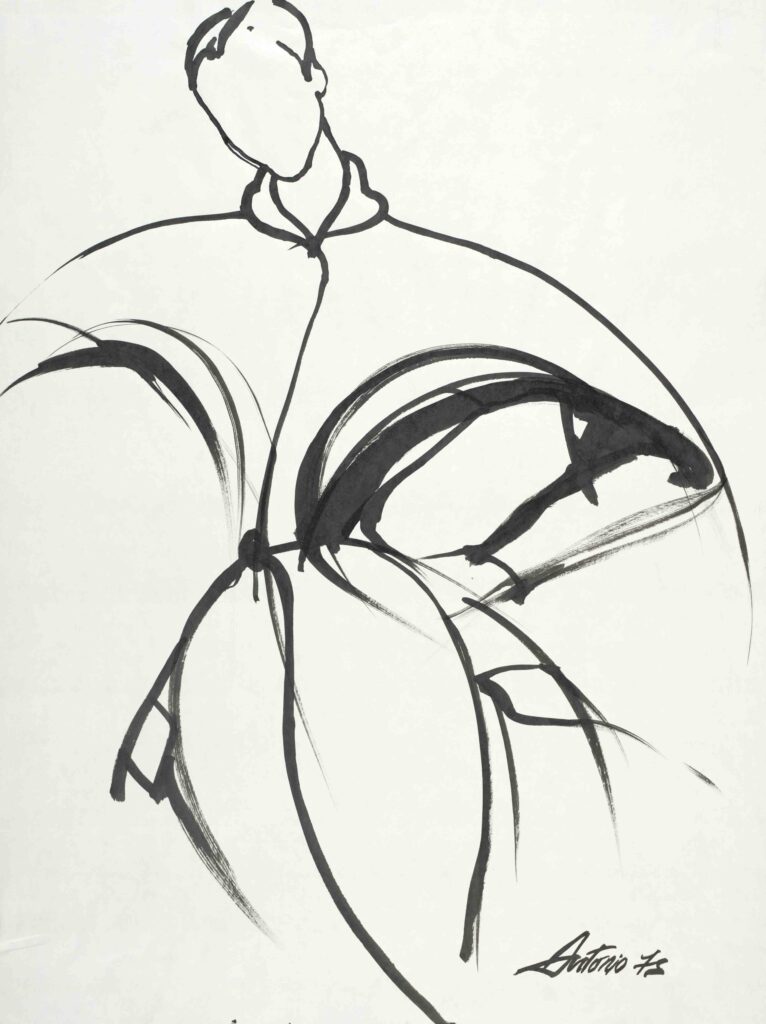
Many women will be able to tell you that having pockets–much less functional pockets because, yes, the functional part does need to be specified–is a source of giddy pride. Undoubtedly, you’ve complimented a woman on her dress, only to be replied to with an enthusiastic, “Thank you, it has pockets!” This appreciation for pockets feels almost primal amongst women, and it’s not a random coincidence.
Women’s fashion throughout history has always been reflective in varying degrees of their social standing, both as a gender and as individuals. Clothing can signify class, profession, and even determine the autonomy and respect that society and culture grants to certain people. How women present physically to the world is unfortunately very much tied to their treatment. Looking “put together” and adhering to a specific idea of beauty (that is often centered on whiteness and Westernized culture) is an expectation that is overwhelmingly put on women.
Dr. Colbey Emmerson Reid, a Professor of Fashion Studies and Director of the School of Fashion at Columbia College Chicago, says that pockets have been sewn into men’s clothing in Western dress since the Middle Ages. Before women’s garments also began to feature sewn in pockets, they would carry personal belongings in small pouches tied to their hip. In fact, the word “pocket” comes from the Anglo-French word “pokete” and the old French word for a bag or pouch which is “poque.” These pouches became commonplace around the 1600s and remained popular for many years after that. But, Dr. Reid posits that the lack of pockets on women’s clothing early on had more to do with the policing of women’s mannerisms than restricting their ability to carry personal belongings around. Resting one’s hand in their pocket didn’t fall under the umbrella of acceptable behavior for women at the time. She explains, “That simply wasn’t a form of body language people could conceive of a woman possessing. The posture was not considered feasible for women–or desirable–so you wouldn’t create a garment feature to encourage it.”
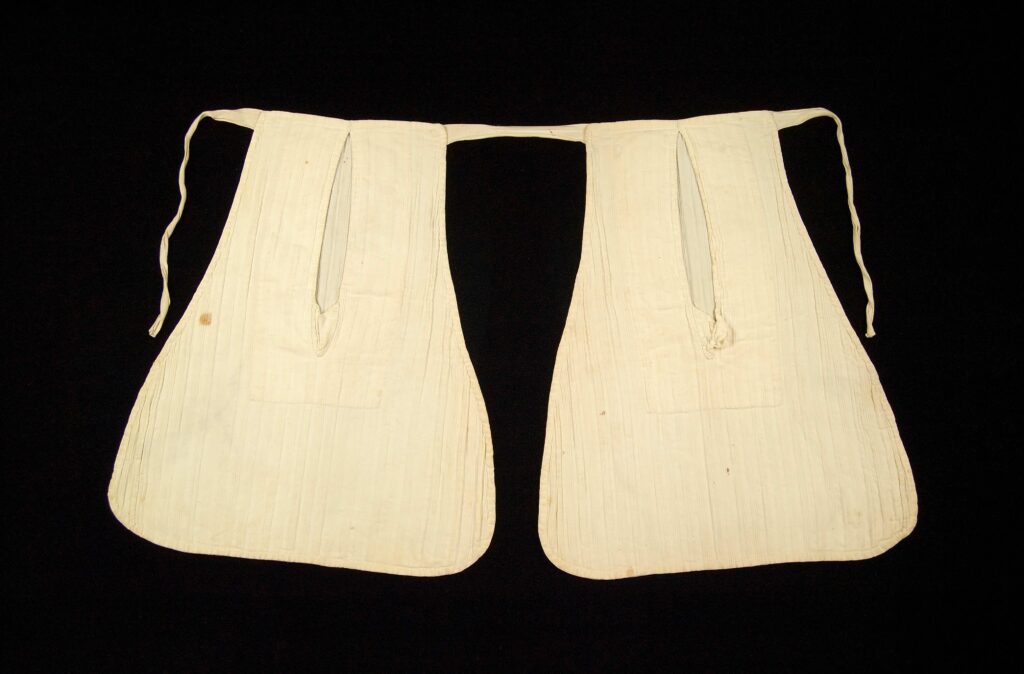
The tie-on pouches of the 1600s served the purpose of giving women some ability to carry personal effects without altering existing women’s garments or encouraging postures perceived as unladylike. Eventually, these small pouches–which evolved into decorated, handheld reticules that were an early iteration of the modern purse–were worn by both men and women in fairly equitable fashion. But, as design, gender norms, and society as a whole continued to shift, women’s pockets just weren’t considered an important element.
Not having any way of carrying your belongings around might seem somewhat trivial until you pause and think about what is in the average purse. House keys for getting in and out of your home, a wallet for making purchases and holding your personal identification, small toiletries that make it easier to comfortably spend time out and about, pepper spray and other small weapons for safety and peace of mind, pens, books, glasses–you name it. The ability to bring personal items outside of the house is key to being able to leave the home at all, which is crucial to the literal and metaphorical mobility of women in our society.
Women have used fashion as a form of dissent against this kind of restricted physical, social, and political mobility throughout history. The women’s suffrage movement is one example of particular significance, and pockets were a major player. In 1910, the New York Times published an article titled “Plenty of Pockets in Suffragette Suit; Latest Creation Also Has a Divided Skirt, Turned Up and Creased,” outlining the details of a fashion show hosted by the American Ladies Tailors’ Association. The suffragette suit was a garment that appeared like a typical A-line skirt but was actually split up the middle like a pair of wide-legged, flowy pants. And, as it was designed intentionally for utility and as a statement, the suffragette suit had pockets, of course. It was a revolutionary fashion design that women fighting for the right to vote wore proudly.
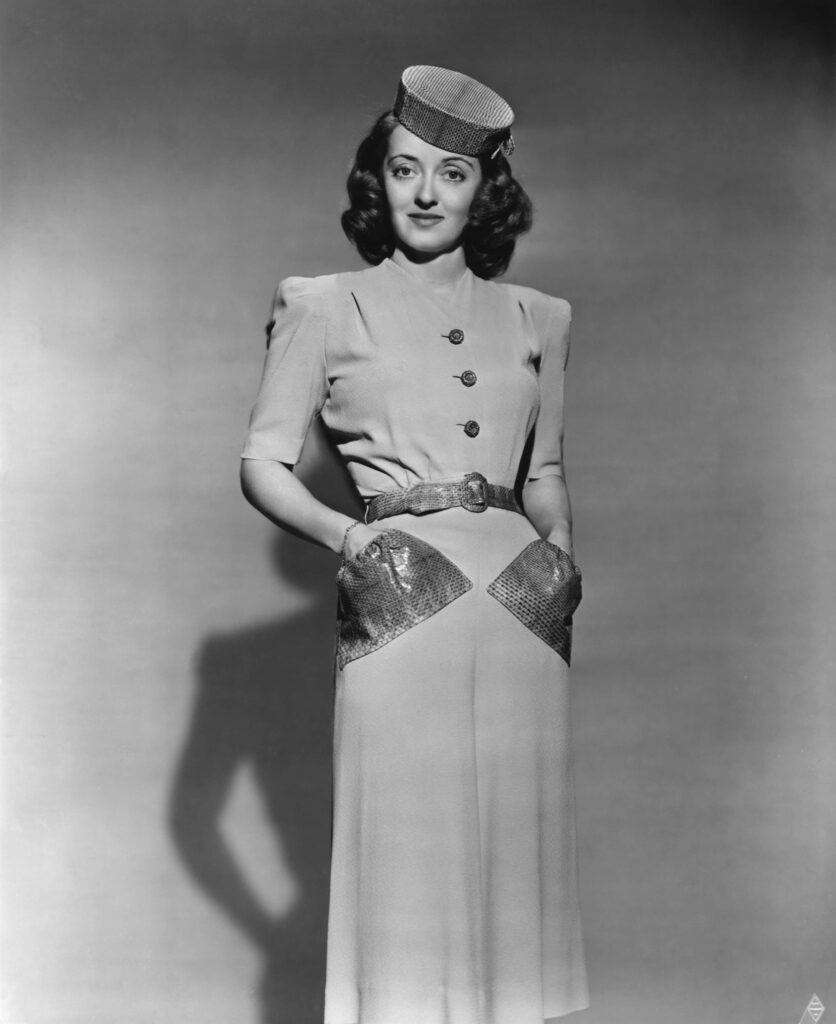
Fast-forward a bit, and the first pair of women’s jeans was designed by Levi Strauss in 1934. These jeans featured pockets that were very comparable in size and functionality to the men’s jeans the brand produced, according to Vox. At the time, denim was still primarily workwear but became more mainstream as fashion trends developed over the years. Along with this transition into popular fashion, the pockets on women’s blue jeans began to shrink over time in order to create a less bulky and more “flattering” fit. Digital publication, The Pudding collected data in 2018 on the difference in pocket sizes between men’s and women’s fashion. They measured the pockets of twenty popular blue jeans brands and found that the pockets on pants designed for women were 48% shorter and 6.5% narrower than the men’s. The difference is hard to ignore and impossible to attribute to coincidence.
It’s a nearly universal truth for anyone that wears clothing designed for women that pockets are for show and not for actual use. Dr. Reid reinforces this by explaining, “I think there is less attention to function and purpose in women’s garments, and more focus on style. It’s become something of a feminist statement to include pockets.” Another potentially major reason that pockets on women’s clothing leave much to be desired is the rise of fast fashion. Producing garments quickly and on a massive scale means inevitably cutting some corners, and pockets happen to be that corner a lot of the time. Dr. Reid notes that this could be partially to blame for the current state of the average woman’s pockets.” The other consideration is the expense of adding these details in manufacturing and production terms. More expensive clothes are more likely to have [pockets] than less expensive mass produced items,” she says.
Even today in our modern era, the pockets on women’s clothing remain almost comically tiny, if they’re there at all (or worse, a dummy pocket that’s sewn shut). It’s a bit of a bizarre cultural phenomenon but one that, luckily, does not go without a decent amount of criticism. Take the popular Instagram account @girlscarryingshit, for example. The page has amassed nearly 500,000 followers with a bio that reads “after thousands of years w/o pockets, non-men have evolved a superior grip to carry our shit.” And nearly half a million people are all tuning in for photos of women, femme, and nonbinary people carrying things with their hands in a way that is either aesthetically pleasing, relatable, comedic, or downright defies the laws of physics. It’s a uniquely modern way to poke fun at the ridiculousness of women’s pockets or lack thereof. (Read our story about Girls Carrying Shit from our BUST Spring 2026 issue!)
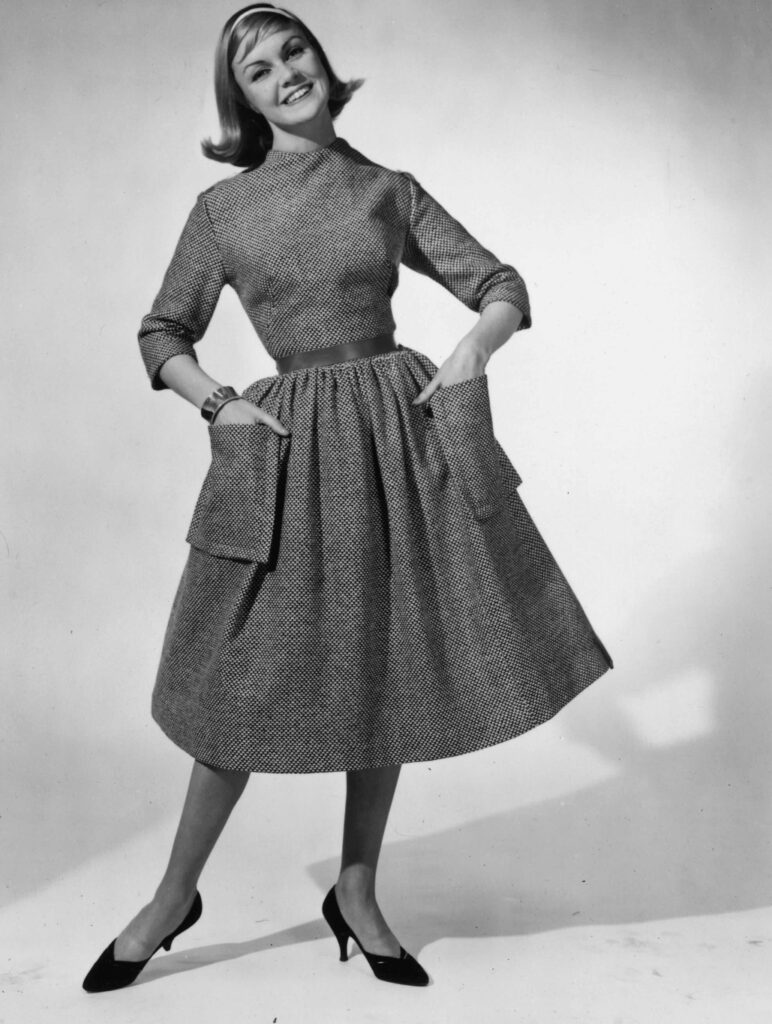
There is simply no good reason for women’s pockets to be virtually useless on such a widespread scale ever, much less into our current timeline. But, there are clothing designers that have resisted this odd industry norm. Take legendary designer Claire McCardell, for example. McCardell rose the fashion ranks throughout the mid-1900s with the intent of crafting designs that were equal parts functional and stylish. She despised the cinched waists and poofy skirts that dominated the silhouettes of the time and left women physically restricted. McCardell believed women should be able to move through the world comfortably and that the clothing they wore was central to that. She also loved pockets, once writing that pockets were good for, “standing in front of your boss’s desk trying to look casual and composed.” It’s clear that she understood and was passionate about not just the utility element of pockets but the symbolic element, as well. McCardell’s unapologetic approach to her designs made her a certified tastemaker and a commercial success. Because of course there was enormous demand for women’s clothing that prioritized the comfort of the woman wearing it, and McCardell tapped into that.
Again, pocket size might seem trivial at first thought. Purses and other bags exist, after all. But clothing is and always has been a symbol of status and wealth, and gender politics are all tangled up in that too. Minute details like the size of women’s pockets compared to men’s matter at the end of the day. It’s a disadvantage that women quite literally sink their hands into–albeit, not that deeply–on a daily basis. This problem has been acknowledged for over a century now, but designs for women’s clothing that feature larger pockets are still outliers rather than the standard.
Because of the necessary groundwork laid by women like McCardell, designers like Julie Sygiel have, thankfully, also been able to find great success in prioritizing pockets in their designs. Sygiel is the brain and founder behind The Pockets Project, a collection of dresses that all have pockets that are at least 8.5 inches deep. On her website (www.pocketsproject.com), Sygiel highlights the need for intentional design choices like this on her website by saying, “Dresses with pockets put an end to endlessly rummaging through our bag to find business cards. They hold speech notes, guard good luck charms, and allow us to dance without a purse swinging into the person next to us.” With innovative designers like Sygiel on the scene, the future of women’s pockets looks a little brighter and a lot deeper.

