

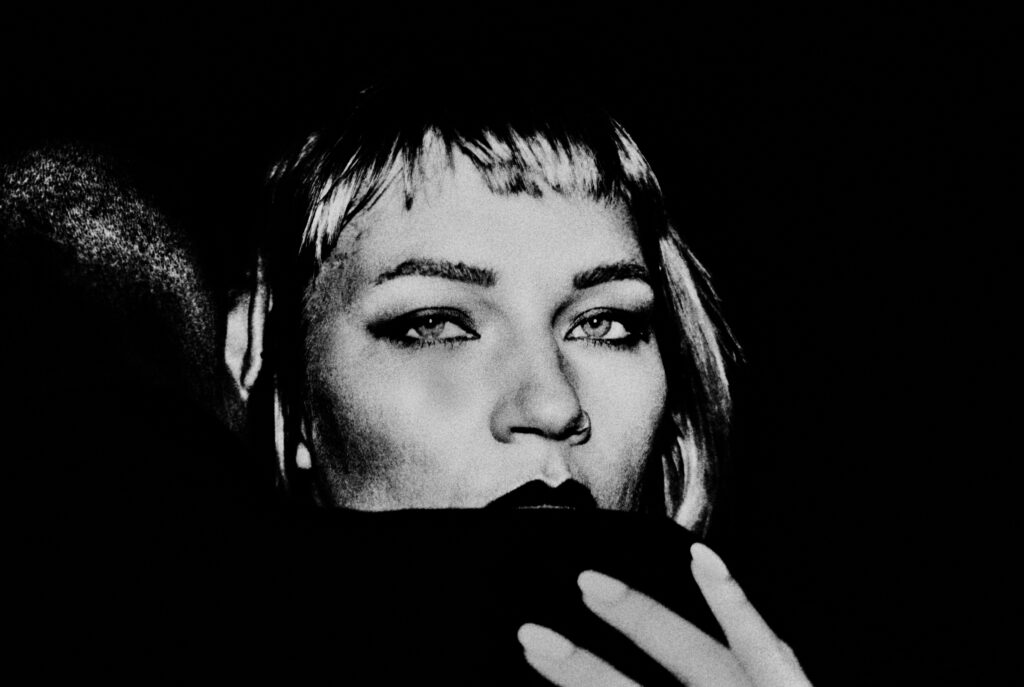
There is a particular kind of woman who has become both villain and patron saint of modern pop culture: the one who ruins everything.
She cheats. She lies. She makes choices we wouldn’t. She self-sabotages at the exact moment things start going well. She blows up relationships, careers, entire social ecosystems–sometimes with intention and sometimes with the kind of chaotic impulse that feels less like a decision and more like gravity.
She is, depending on who you ask, either the worst or the most honest person in the room.
And lately? She’s everywhere.
From the wine-soaked confessions of Fleabag to the icy ambition of Shiv Roy in Succession, from Amy Dunne’s meticulous revenge in Gone Girl to the slow-burn unraveling of Marianne in Normal People, pop culture has entered what can only be described as a golden age of women behaving badly. Not just flawed women (because those have always existed), but women who actively destabilize the worlds around them. Women who are difficult to root for in the traditional sense, but impossible to look away from.
The question is: why now? And more importantly, why do we love them?
The Rise of the Messy Woman (Finally)
For decades, female characters were expected to function as moral centers. Even when they struggled, they were supposed to struggle gracefully. Think of the long lineage of “strong female characters” who were strong in ways that felt suspiciously convenient: competent, nurturing, emotionally intelligent, and of course, likable.
But somewhere along the way, audiences got bored of perfection. Or maybe we just stopped believing it.
Enter the messy woman.
Phoebe Waller-Bridge’s Fleabag didn’t just give us a flawed protagonist, it gave us a woman who weaponized her own dysfunction. She sleeps with the wrong men, betrays the people closest to her, and uses humor as both shield and sword. And yet, by the time she admits to The Priest, “I want someone to tell me what to wear every morning,” she’s already dismantled the idea that women must be aspirational to be worthy of attention.
Similarly, Girls for all its controversy, centered women who were self-involved, inconsistent, and often insufferable. Hannah Horvath doesn’t “ruin everything” in a dramatic, cinematic way; she does it in smaller, more recognizable increments: bad decisions, bad timing, bad boundaries. The kind of ruin that feels uncomfortably close to real life. Hannah Horvath was designed to make the viewer cringe.
What these characters have in common is agency. They are not victims of circumstance so much as active participants in their own chaos.
Because historically, when women caused problems in stories, they were punished for it. The femme fatale dies. The adulterous wife is cast out. The “difficult” woman is corrected, softened, or sidelined. But today’s messy women? They get to stay. They get to narrate their own destruction and sometimes even thrive within it.
The Likability Trap (And Why We’re Escaping It)
Let’s talk about likability, the invisible leash that has shaped female characters for generations.
Male antiheroes have long been granted the freedom to be terrible. Tony Soprano murders people. Don Draper lies professionally and personally. Walter White literally builds an empire on destruction. And yet, audiences are invited—encouraged, even—to empathize with them.
Women, on the other hand, have historically been held to a different standard. They can be flawed, sure, but only within acceptable limits. They must remain relatable, sympathetic, and essentially, redeemable by the story’s end.
But something has shifted.
Take Amy Dunne in Gone Girl, arguably the blueprint for the modern “woman who ruins everything” trope. She is manipulative, calculating, and depending on your interpretation, she’s completely justified. The brilliance of Amy isn’t just in what she does, but in how she reframes the narrative. She exposes the performance of femininity itself: the “cool girl” monologue is less a rant than a manifesto.
Amy isn’t likable. That’s exactly the point.
And audiences were divided. Some were horrified. Others were, quietly or not-so-quietly, impressed.
That tension between discomfort and fascination is where these characters thrive.
More recently, characters like Cassie in Promising Young Woman or Villanelle in Killing Eve have pushed this even further. They don’t just reject likability; they actively dismantle it. They dare the audience to follow them anyway.
And we do.
Because likability, it turns out, is overrated. What we’re really drawn to is specificity. Complexity. The sense that a character is acting from an internal logic that feels real, even if it’s destructive.
Unlikable women aren’t a failure of storytelling, they’re a sign that storytelling is finally catching up to reality.
Women Who Ruin Everything as Narrative Catalysts
Here’s the thing about women who ruin everything: without them, there is no story. There’s just the truth.
Conflict is the engine of narrative, and these characters are walking, talking engines. They destabilize relationships, expose hidden tensions, and force other characters to confront truths they’d rather ignore.
Take Shiv Roy in Succession. She is brilliant, strategic, and perpetually underestimated. She also makes choices that alienate allies and sabotage her own position. And she acts this way time and time again, season after season. But without Shiv’s ambition, without her refusal to play the role assigned to her, the entire dynamic of the show shifts. She doesn’t just exist within the narrative; she reshapes it.
Or consider Rue in Euphoria, whose addiction and self-destruction ripple outward, affecting everyone around her. Rue “ruins” things constantly; such as her relationships, trust and her own sense of stability. But the show’s emotional core depends on that instability which shifts the plot and the narrative arc at a moment’s notice. Her chaos isn’t a bug; it’s the feature.
Even in literature, this archetype has deep roots. Think of Anna Karenina, whose choices unravel not just her own life but the social fabric around her. Or Catherine Earnshaw in Wuthering Heights, whose emotional volatility drives the entire narrative forward.
These women are the heartbeat of the story, they’re not relegated to side characters or positioned as cautionary tales of woe. And that’s what makes them so compelling.
The Pleasure of Watching Women Be “Too Much”
There’s also, let’s be honest, a certain thrill in watching women break the rules.
We are still living in a culture that polices female behavior: how women speak, how they express anger, and especially, how much space they’re allowed to take up. So when a character refuses those constraints, it feels transgressive in a way that’s both unsettling and satisfying.
Think of Maddy in Euphoria, who turns confrontation into performance art. Or Tanya in The White Lotus, whose obliviousness and emotional excess create both comedy and tragedy. Or even Emily in Emily in Paris, whose relentless optimism and questionable decision-making somehow manage to bulldoze through every obstacle in her path.
These women are “too much” in ways that real women are often discouraged from being. They’re positioned as too emotional, too ambitious, too naive, or even too loud and too selfish.
And yet, on screen and on the page, those same qualities become magnetic because they’re honest.
So… Are They Actually Ruining Everything?
Or are they just refusing to hold everything together? That might be the real question.
The idea that a woman is “ruining everything” often assumes that she is responsible for maintaining harmony in the first place. That it’s her job to smooth things over, to absorb conflict, to keep the peace.
But what happens when she doesn’t?
What happens when she prioritizes her own desires, even when those desires are messy, contradictory, or self-destructive?
What happens when she tells the truth, even if it breaks something?
The answer, increasingly, is: we get better stories.
Stories that acknowledge the full spectrum of female experience. The intrinsic experience of women is not just the polished, palatable parts, but also the uncomfortable, chaotic, and deeply human ones.
Why We Need These Women
We need these characters now more than ever because perfection is boring and likable characters are limiting for storytelling and development.
Because real people—women included—are complicated, contradictory, and occasionally catastrophic. Not to mention, there is something deeply validating about seeing that reflected back.
That’s how life rolls. So, shouldn’t characters, especially female characters, be the same way?
Women who ruin everything remind us that we are allowed to be more than one thing at once. That we can be loving and selfish, insightful and destructive, strong and deeply flawed.
They remind us that failure is not the opposite of growth because it’s often the mechanism for it.
And maybe, most importantly, they remind us that being “too much” is sometimes exactly what the story needs.

