


At home, Naïka is comfortably sitting on the floor with her phone propped up for the video call. The conversation feels more like a FaceTime catch-up with a friend than a formal interview. And it makes sense; the more we talk, the clearer it becomes that she is someone who is driven by real, human connection.
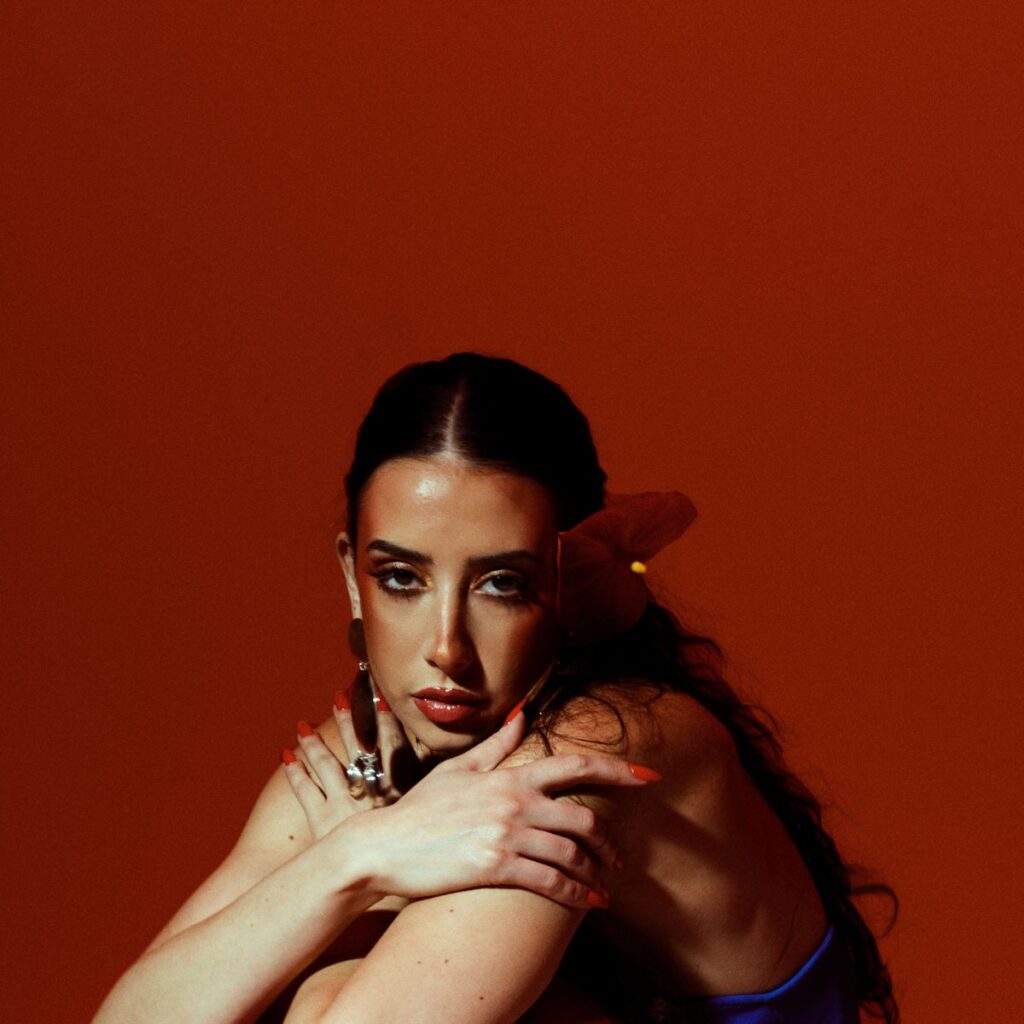
Nearly a decade into her musical career, Naïka has been taking up more and more space as an artist. She is now stepping into her biggest chapter yet as she gears up to release her debut album, ECLESIA, a project that is meant to carry that same energy: to connect and bring people together.
When asked about the album’s theme, Naïka lights up as she describes how she visually wants to capture it. “The way that I hope it comes through is like a conversation in a living room. You know, a room with your friends or family where everybody gathers together and you just talk about different life topics.”
The name ECLESIA came about on a phone call Naïka had with her father, when she told him that she wanted the album to symbolize eclecticism. “He just said, Eclesia,” she recalls. “I thought, oh, that’s super beautiful.” Later, when she looked it up, she couldn’t easily find a definition. “In ancient Greece, apparently it was a word that meant a gathering of people. I saw that and I was like, ‘Let’s go!’ That’s the name of the album.”
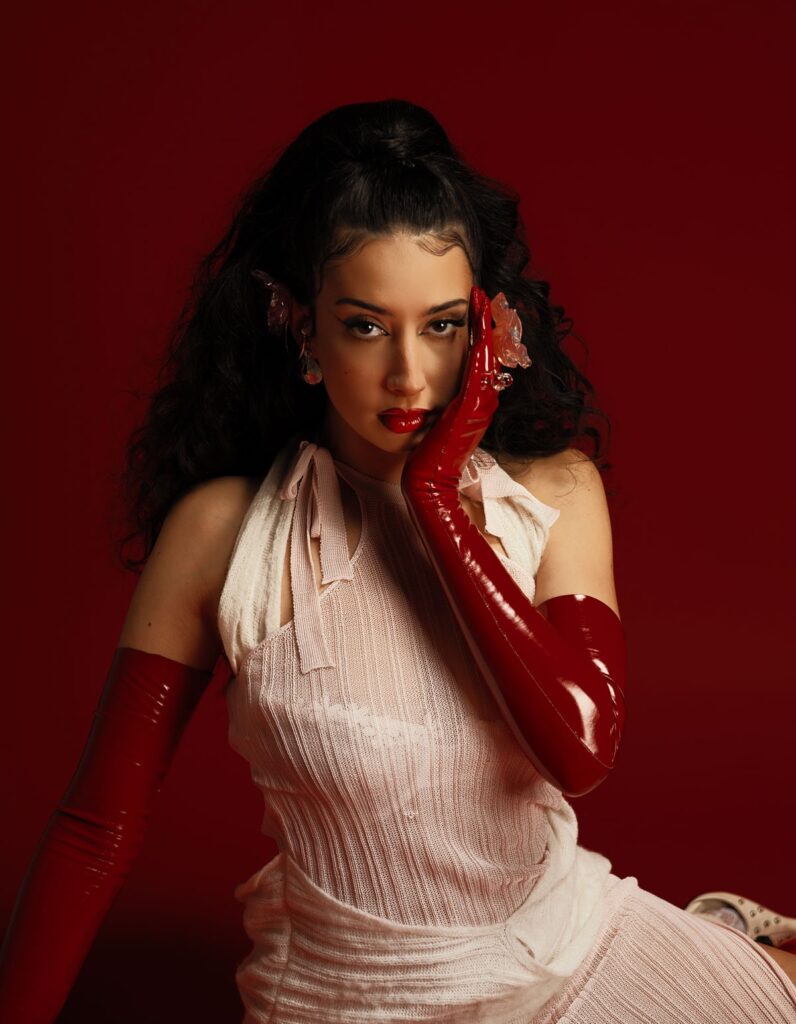
The experience of recording the album was special to Naïka because she got to work with people she is close to, “My collaborators are my friends and I’m an only child, so my friends are like family to me. They’re like my chosen siblings.” She continues to share, “For the first batch of songwriting that we did, we were in the middle of nowhere in the countryside in France, and we kind of secluded ourselves.”
Music is not just sound for Naïka – it’s a language she learned to speak when words just weren’t enough. “I sometimes have a hard time talking about things, I’ve always had a bit of a blockage when it came to expressing myself,” she admits. “That’s why music for me is such an important outlet because it’s the only place that I find myself being able to express how I feel in my most authentic way.”
And soon, we’ll get to hear that honesty first hand in ECLESIA. “There are songs in the album where I talk about things that really frustrate me about the world, the society that we live in, and the injustice that we see every day in the world,” she tells BUST. “I’m a big empath, so it gets to me on a level that’s not always healthy for my mental state. So being able to talk about these things in a song is important for me.”
Channeling her feelings into music always came to her naturally. Naïka recalls performing a cover of “Before He Falls” when she was studying in Berklee College of Music, and mentions writing songs like “My Body, My Choice.” Naïka has never shied away from touching on subjects that matter to her, like war, cultural identity, women’s rights – and she’s not about to start now.
Take “MATADOR”, one of the more experimental tracks on her upcoming project. It is all about female empowerment and the weight of society’s expectations. “Speak up but don’t be too loud. Stand straight but not too straight because you don’t want to draw too much attention,” says the songwriter, quoting the kinds of messages women are taught to internalize. “I think the world really needs some nurturing feminine energy all around. It disgusts me that that’s seen as a weakness and it’s not something to be honored, respected and lifted.” To Naïka, “MATADOR” is more than just a song. “You can bop your head to it, you can vibe to it,” she says, “but to me, it’s more like a statement.”
Something else that comes authentically to Naïka is her blending of languages, both in conversation and in her music. It isn’t a stylistic choice, it’s simply how she moves through the world. “It’s so natural,” she says. “And I’m also grateful that with the people around me, it’s the same vibe. We switch languages all the time.”
The French-Haitian singer has called many places home – the Caribbean, Kenya, the U.S., South Africa, France among others – and she wears her cultural influences on her sleeve. “I’ve always felt a bit of an emptiness because I never felt like I belonged anywhere, you know? That’s why I wrote “Layers”, to kind of express that,” she shares. When I’m making these musical choices, I want people to understand where I’m coming from, like these are cultures that I grew up in. These are parts of my fabric and my identity.”
That feeling of in-betweenness, however, also led her to a quiet sense of belonging. “It is frustrating when you don’t feel like you belong to any community or any place or any culture fully. But what I did realize and what I’m realizing more and more is that there is also an unspoken community of the people that feel this way, and I’m sure that you relate in your own beautiful way. You find your sense of home with the people that feel the same type of ambiguity in identity and you relate to each other.”
As she channels those layered experiences in her music, Naïka is constantly finding the balance between honoring her heritage and creating something universal. One of the songs on her upcoming album for example, is meant to be an ode to her Haitian roots, built on a Kompa beat. “Foundationally, I’m pop,” she says with a smile. “I discovered Britney Spears at 7 years old and that bitch changed my whole life.” That early love for pop and R&B still anchors her sound, but she sprinkles it with her cultures and her languages. Some songs are fully in English, others in French and a few weave in some Creole. For Naïka, it’s all about letting the music flow where it wants to go, even if that means not everyone will sing along to every word.
One of the reasons Naïka is able to step into this long-awaited moment in her career with so much gratitude and confidence, is because she built a strong foundation. Before the glamorous studios, she spent years playing small gigs – casinos, weddings, corporate events – anything that kept her afloat and on stage. “One time, I was playing a show at this venue in LA called the Viper Room, super rock n roll, and grungy,” she recalls. “I arrived with my flowers and my little dress and there were these guys at the bar just looking at me funny and literally there were two people in the audience – and they were my roommates. The only two people in the audience were my girls and it was just like… ‘I’m going home with y’all after this.’”
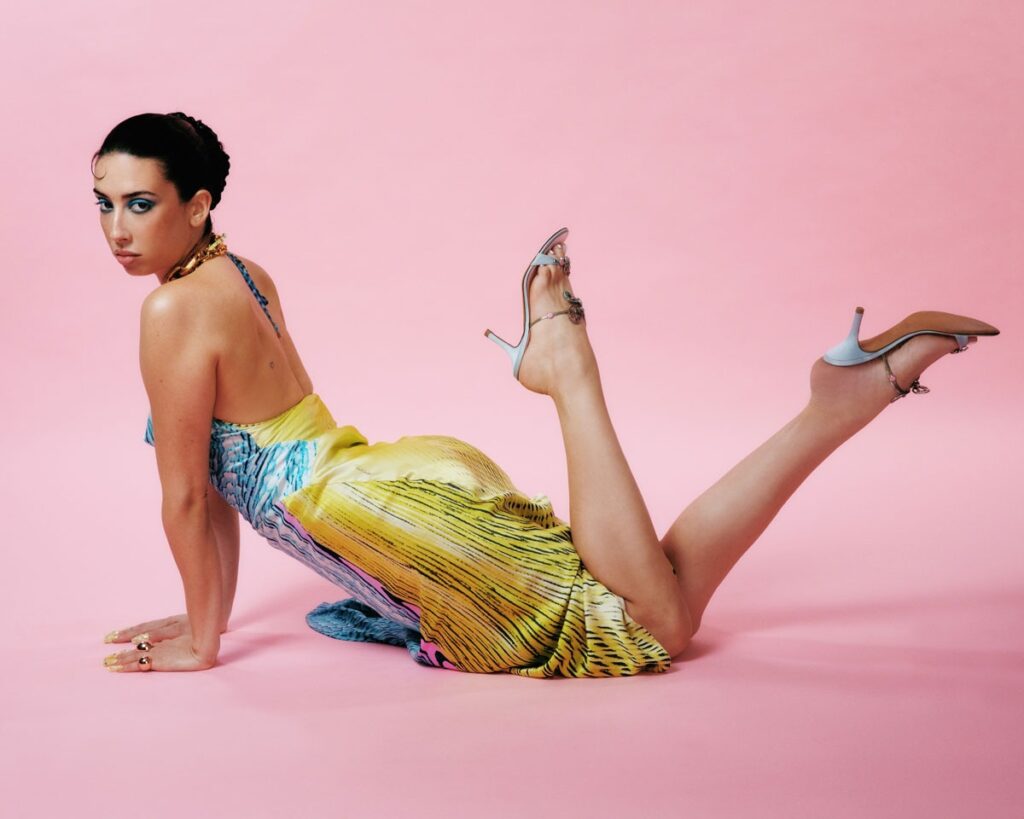
Those early years humbled Naïka, at a time she was still finding her footing. And she is still constantly evolving. When she released her 2022 EP Transitions, it felt like the start of a gentle shift – a time where she was exploring new sounds and figuring out what her next chapter might look like. With no more label behind her, a new team by her side and a growing fanbase, that shift quickly grew into something much bigger. “The universe is funny,” she says, “because it was like, ‘Oh, you want a transition? Bet. Here’s the transition.’”
Now standing on the other side of all that change, the eclectic musician has a much clearer sense of the world she is building. When asked about her next era, Naïka had her mood board ready, “Tropical because I’m an island girl. Vintage glam – think like Caribbean Great Gatsby. I want it to be fabulous but also woven in with weirdness and the je ne sais quoi of an odd dark diva world.”
Call it timing or cosmic alignment – Naïka is on the brink of something big. She is stepping into herself, boldly and unapologetically

