

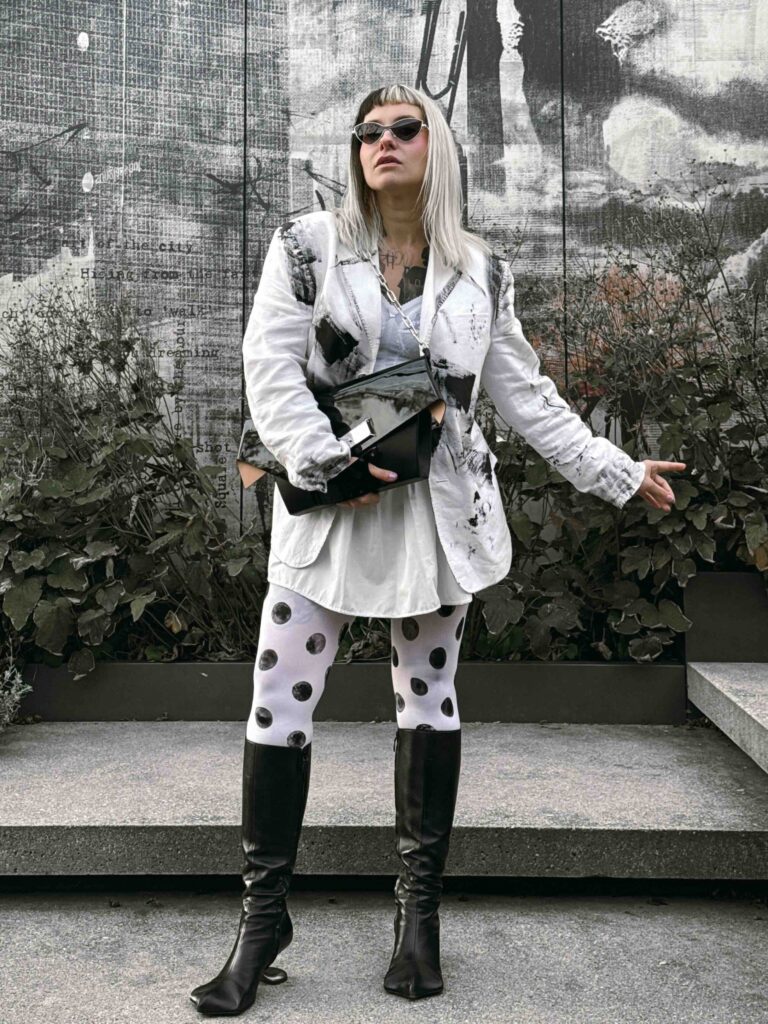
‘I think unfortunately it’s too small’ – laments my boyfriend in front of the mirror, trying on a pair of wide-leg jeans. Jeans that I brought home from a flea market, fully knowing that he had never worn anything like this before. The only words he could eke out were ‘I think unfortunately it’s too small’ but his eyes were full of relief that he didn’t need to come up with an excuse not to wear them. It’s not his style. He’s not a fashion enthusiast and he doesn’t follow what’s trending. And yet, like so many people who say they really don’t care much about clothing, he’s also very quick to warn everyone around him that he would never wear that. Much like everybody else on the planet, maybe unconsciously, my boyfriend’s ‘it’s too small’ was a way of protecting his personal style, his visual identity.
From the beginning of time, we wanted to show who we are without using words. And even though it seems like we have been living with this notion for ages, ‘personal style’ is a brand new social media fixation. According to Google Trends data pulled from web searches of the last two years, a huge search increase for the term ‘personal style’ was recorded. I say that this obsession is new because the growing interest started in the summer of 2025, when searches grew more than three times compared to the months before (and have been growing ever since). I found this phenomenon especially fascinating and kept trying to find an answer: why this, and why now? Is it a counter-reaction to micro-trend fatigue?
Fashion researcher and activist Justina Semčenkaite reflects on these results: “I, unfortunately, believe that it’s yet another (micro) trend. The ‘personal style’ phenomenon is relatively new in the field of fashion, as it emerged together with social media and our addiction to sharing images, thoughts, our POV of the world. Fashion was always something to unite or blend in, but with personal style for the first time we were able to stand out. In my opinion, it was absolutely fantastic for about 15 years, until it became… well, another trend.”
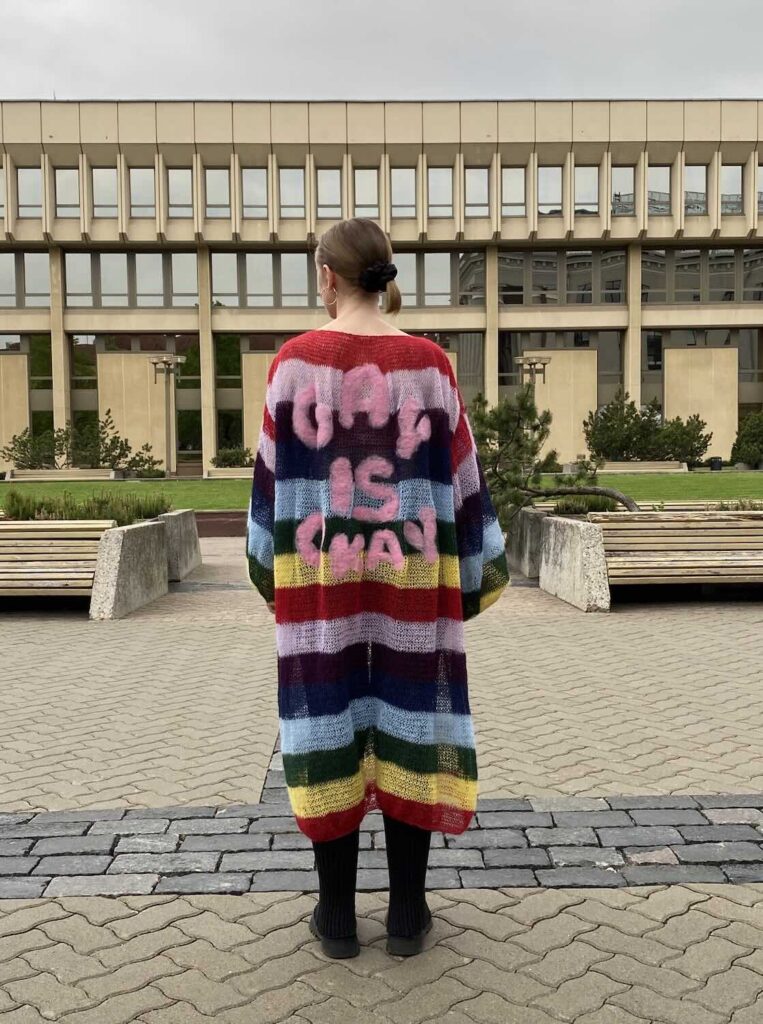
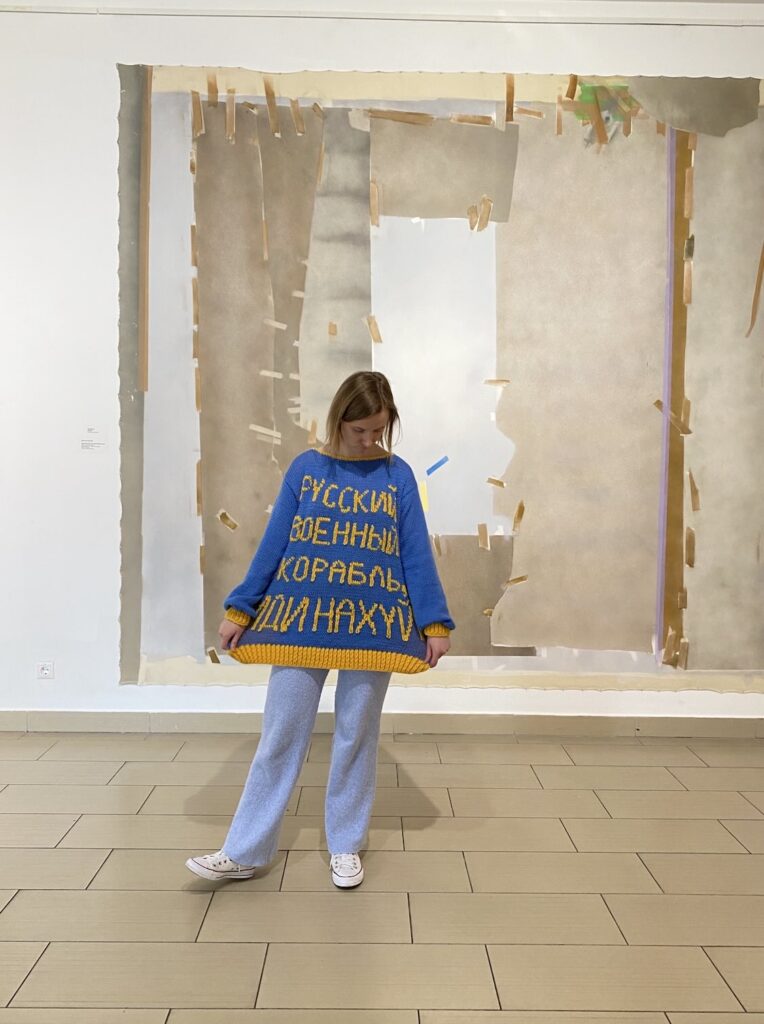
Photos of Justina Semcenkaite courtesy of Justina Semcenkaite
It’s not that we didn’t have our identities before social media, and it’s not that fashion wasn’t used to communicate those identities before. The point is in the idea that ‘fashion was something to unite‘. One of the most beautiful, yet heartbreaking examples I heard was on the Wardrobe Crisis podcast; a listener shared her experience of learning tatreez embroidery to connect with her Palestinian roots. Traditionally, Palestinian embroidery marked difference – each village carried its own distinctive stitches, patterns, threads, colors. It was a textile system of personal and intercommunal communication, one that held human diversity within it. With displacement and the chaos that followed, that meaning collapsed. A new homogeneity emerged: a shared memory of loss. What mattered most now was the shared national identity. In Western countries these ideas feel so far away and unrelatable. To most of us, the most important identity is our own. We are told that our differences define us—me vs. the crowd—and we do backflips trying to fulfill that sentiment, or at least we think we do. Yet on the other hand, we all shop in similar places, without really paying much thought to the fact that the same jacket we proudly bring to the cash register will be worn by thousands of others.
Otto von Busch wrote in The Psychopolitics of Fashion that we can dress any way we like, but most of us become followers drawn to leaders. That the freedom of fashion is too overwhelming, so we hand the decision to designers, editors, celebrities. We desire to be led. So why now, suddenly, are we so obsessed with personal style? Maybe because we finally got tired of ‘being led’?
When contemplating this new boom of ‘personal style’, I found myself reaching for Style Feed: The World’s Top Fashion Blogs by Susanna Lau and William Oliver—published in 2012, which feels like ages ago now—covering the most influential fashion blogs starting from 2006. Even though it’s hard to track down the roots of all this when not everything was digitally documented, that period and the early 2010s was the last time we were so hyperfocused on personal style, with the rapidly growing phenomenon of fashion blogging. One of my favourite bloggers from the book, Michelle—whose blog Kingdom of Style I actually remember following at the time—talks about the new rise of personal style, “I don’t feel it’s coming from a healthy place overall. I think there are two things at play here and both relate to the rise of the influencer. On one hand, people are looking for a style formula that could help them become influencers themselves. And you just need to look at influencers—they really do have a very homogenised style. And with the meteoric rise of influencers, the temptation for young people to try to enter this area must be immense, so they are all looking for that successful formula. On the other hand, this online style homogenisation has eroded people’s confidence in their own style, especially younger people who seem to need constant validation from strangers online. It just becomes this toxic soup and no one gets out in a healthy state of mind.” It was an interesting insight, as it translates Otto von Busch’s words into today’s context.
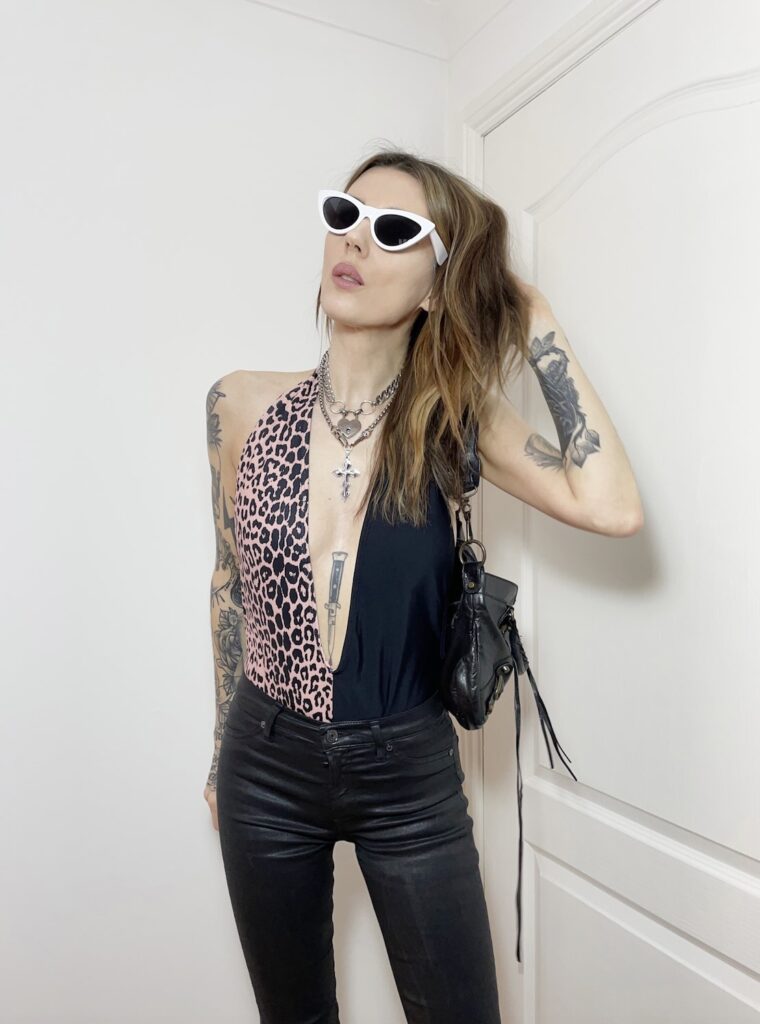
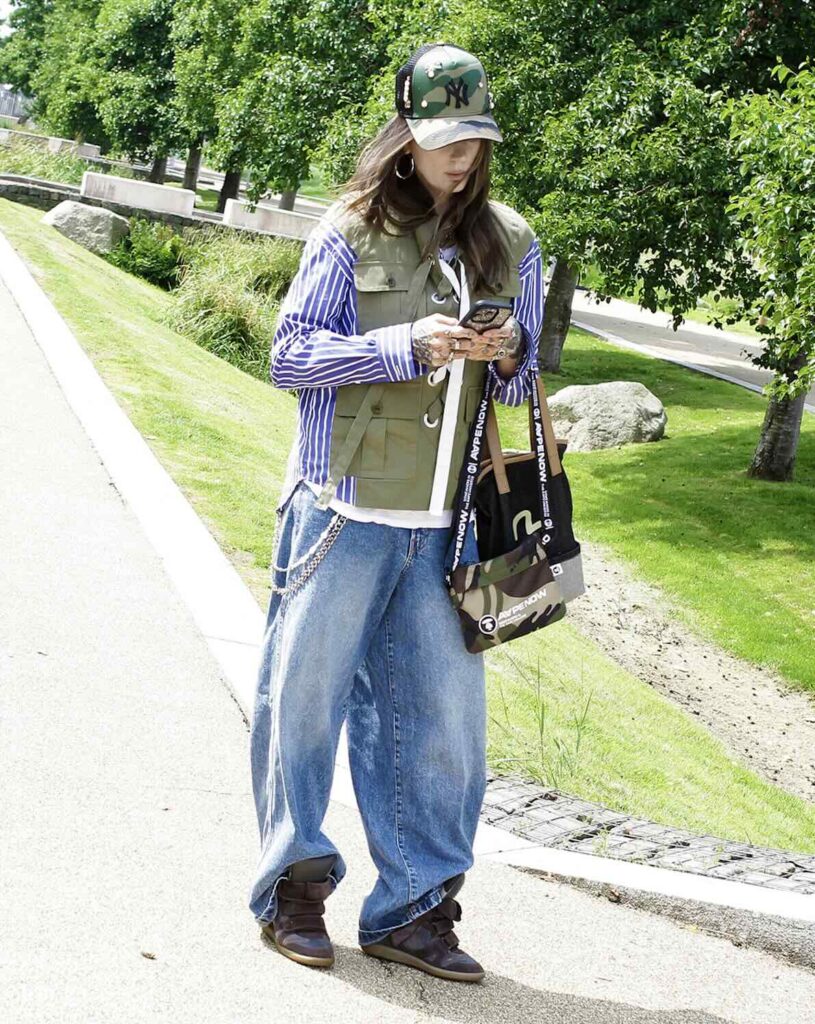
Photos of Michelle Haswell courtesy of Michelle Haswell
More and more we hear from fashion professionals that we are not dressing for the world—we are dressing for the feed. And so we see subtle changes in how clothes are being constructed and styled. Many new styles are being introduced thinking about how it looks on the gram without taking the practicality into consideration. For example, pockets disappearing or seeing ultra-long leather gloves that look great in pictures but fail miserably when trying to use your phone outside. The absolute curation and photogenicity of style is one of the biggest differences I notice when skimming through looks from the early internet era. Many bloggers expressed that they loved mixing moods and feelings with colors and shapes. It was raw, eclectic and unstaged. Michelle characterises that time in fashion and blogging: “When I started blogging back in 2006, it was so different: the people who were drawn to bloggers were desperate for something more relatable than the very polished, unattainable and unrealistic beauty and style we got in print media. Bloggers like me gave those who didn’t fit any beauty standard or style a way to be proud of that difference, and also showed everyone that you didn’t need to have money to have an amazing personal style. Thrifting and DIY was huge then. It was a genuine personal style as it was so individualised.”
To me, that sounds like a prime time of individual experimentation and discovery, where intuition took the lead. Which brings me to the essential question: the chicken or the egg? Do we discover our style because of who we are, or do we construct ourselves through it? Is personal style an expression of a pre-existing identity, or is identity something we only figure out once we actually put it on? If the algorithm feeds us the suggestions, is it still something we consciously chose?
Justina Semčenkaite reflects, “Right now I see it as a prompt for your personal algorithm rather than something personal. We think we have personal style, but thanks to successfully working search engines it’s not “personal” because it comes from our persona, no. It’s as personal as our algorithm makes us believe it is, and we are too lazy to re-think it in depth.” We live in the fantasy that somewhere between the saved posts and the influencer content, there’s a fixed version of you just waiting to be dressed. And that’s exactly why the personal style conversation is so useful to brands right now. The anti-trend/microtrend thing has itself become a marketing brief. “Build your own style” is a perfect campaign strategy now. It sounds ironic, but even Shein has a ‘personal stylist’—an AI bot—to help you create your personal style using their own products. I say it’s ironic because even when buying from a company that produces thousands of items per day, it sells the illusion that we can be special and unique by buying their products. Nothing is worse than being like everybody else, as we’ve already established. And this idea that style is something you can only construct with the right pieces, the latest ones, the ones you don’t have yet—that’s exactly where brands want you. It comes full circle and leads to the magical ‘I have nothing to wear’. Suddenly we have an urge to clean the closet out and start fresh—a blank page with empty hangers full of potential. There’s a promise in it: get these dream items and your style will finally be finished. Fulfilled. The project is done and you can rest. Just a little poorer. Maybe that’s why new clothes don’t have pockets—after buying them, there’s nothing left to put in them.
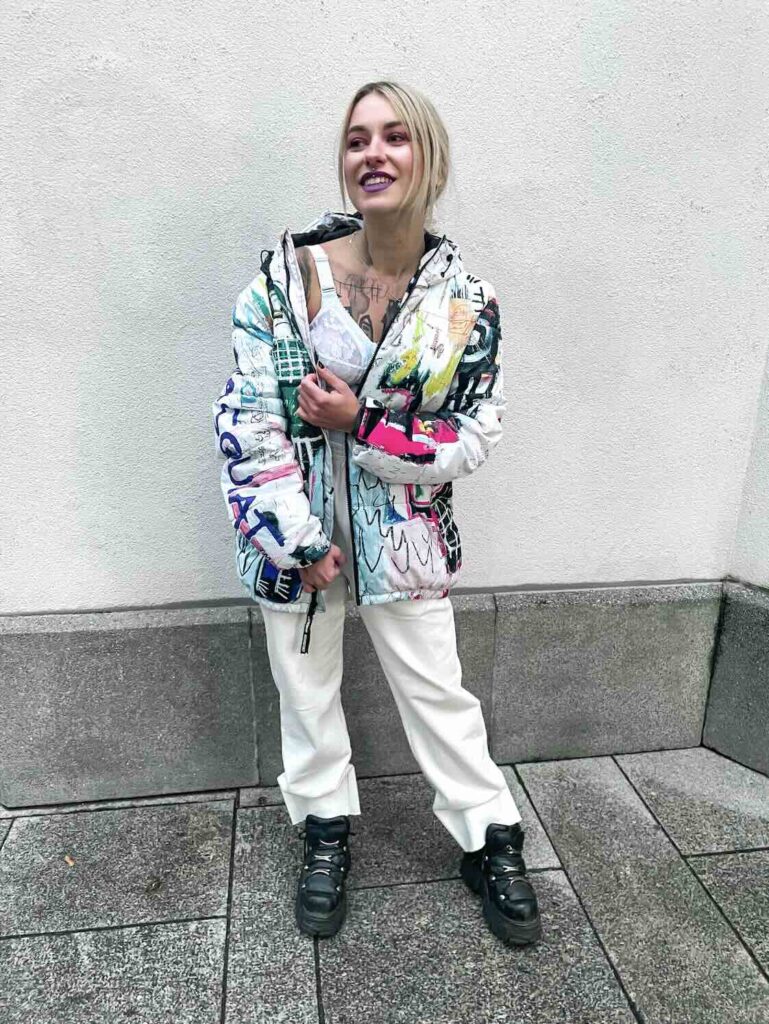
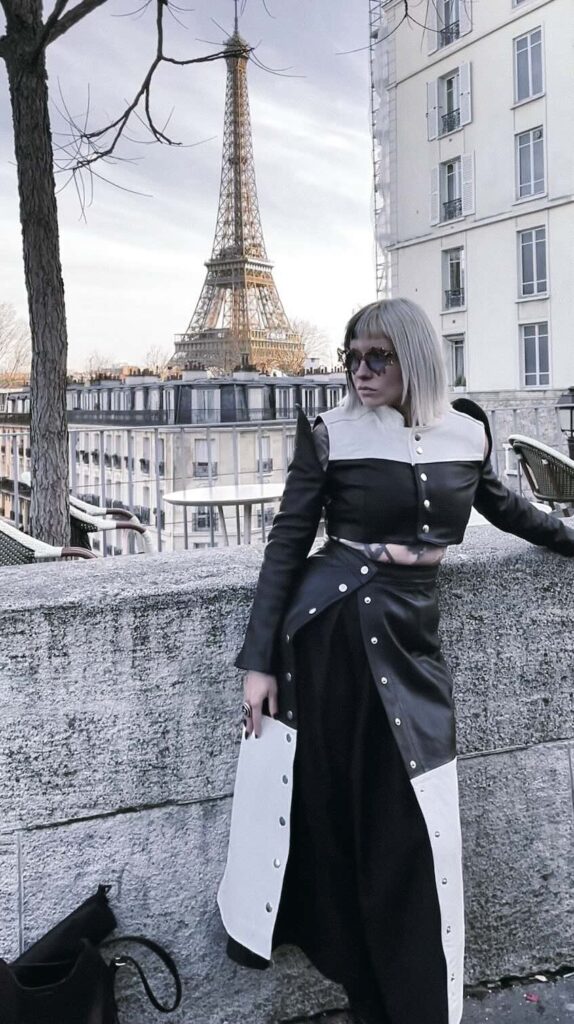
Photos of Justina Snow courtesy of Justina Snow
Coming back to Michelle, I also noticed that over the years, her style changed dramatically: from goth ballerina to baggy androgynous snowboarder. She reflected on why: “I actually can’t imagine how a person can have the same style for their whole lives. I genuinely don’t get that. For me, personal style is pure self-expression. It ebbs, flows, adapts and responds to things that happen to me mentally and physically. I’m not the exact same person I was five years ago, so why would my style be the same? I’ve been deep into a black, avant-garde aesthetic because it reflected how I felt in my life at that moment in time. I have been wildly colourful, mixing pattern and texture because I was in a place that needed that almost aggressive, sensory overload. When I hit menopause I completely lost myself in a frightening way. My body changed so much and I just didn’t recognise it anymore, so my style changed too. I initially hid myself under baggy, boyish clothes and I was miserable as it felt really negative. Over time though, I adapted and worked with this new body and turned the baggy silhouette I was using to hide into a positive style choice. Is this my style for the rest of my life? Who knows! But it’s my style now because it reflects who I am now. In a year, a month, a day, I may change again. For me, that’s the joy in personal style.”
Let Michelle’s story be a reminder that we are changing, learning, and growing, and that style grows with us, whether we mean it to or not. Some days we don’t want to be perceived at all, and that is part of it as well. We don’t owe anyone a look. The beautiful thing about style is that it’s not a life sentence. It’s personal precisely because we write the terms and conditions ourselves—curious about the world, open to it, but not taking orders from it. For the record, when we talked about the ‘fitting’ of a scary new style of jeans for my boyfriend after the fact, he said he came to it with an open heart—he was open to trying it. In the past few years he has been embracing the fluidity of personal style and used ‘I would never wear that‘ very sparingly. But at the same time, as suspected, he felt just a little bit relieved when they were too small and he could stay in the comfort of who he is and has been.

