

Shakespeare once wrote, “All the world’s a stage.” While we do all play out parts, imagine a world where wearing the most flamboyant and extreme Mandalorian suit on a random Saturday in July is normal.
Welcome to the world of cosplay at San Diego Comic-Con, where fans from across the globe gather to celebrate fandom in all its forms. Among the convention’s most iconic elements is cosplay, short for “costume play”, a creative practice that many still misunderstand. At its core, cosplay is the art of dressing up as fictional characters. But in reality, it’s so much more.
This year, BUST attended Comic-Con to speak with cosplayers about why they crossplay—and what makes the hobby so empowering. We also wanted to know if they feel the increasing anti-LGBTQIA+ policies will affect the cosplay space.
Cosplay isn’t just about costumes. It’s a vibrant form of artistic and gender expression. One of its most empowering subgenres is crossplay—when someone cosplays as a character outside their everyday gender identity or presentation. Whether it’s a he/him dressing as a she/her character (or vice versa), crossplay challenges societal norms with flair and intention.
At a place like SDCC, crossplay creates an environment and means to play with gender without the heavy burden of societal judgements. That gender expression and experimentation is the sort of thing that could help a person discover who they are. That is how transgender cosplayer Jordan Olsen explained it to me.
“Gender expression is a spectrum from hyper feminine to hyper masculine, and throughout a person’s life that expression flows and fluctuates”, Olsen explained. “Cosplay helps with exploring that because wearing a costume for play or for fun is more tolerated or accepted. It feels safer to gender-bend a character in a convention where a lot of people are also wearing costumes.”
Creating spaces where people feel safe to play with gender is more important now than ever.
Cosplay as Protest
In today’s political climate, where queer and women’s rights face increasing threats, crossplay and drag have taken on new meaning. What once felt like playful performance now acts as rebellion through rhinestones for some.
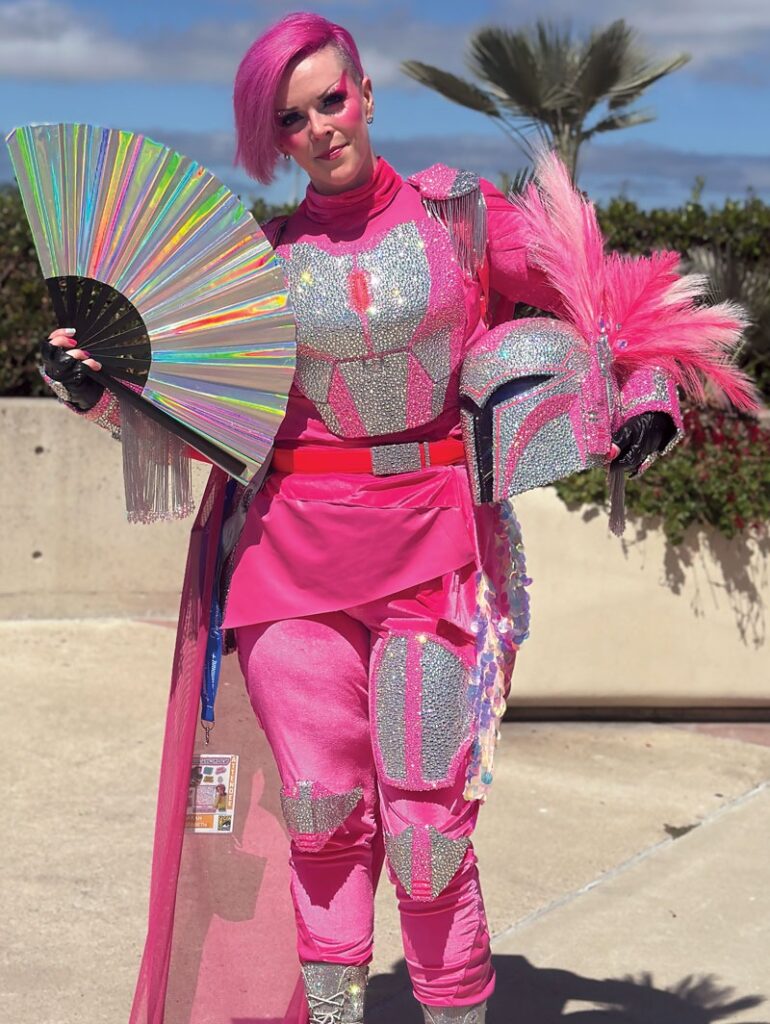
“It’s protesting against the expectations,” said cosplayer Sarah Elizabeth, dressed as the Cunt-a-lorian. “It’s pushing back against what people define as art, and what they expect from women—especially during a time when we’re being fed all this Christian bullshit about making babies and the low birth rate.”
Elizabeth isn’t alone in using cosplay and crossplay to defy the status quo. While rhinestones might not seem like a revolutionary act, the history of cosplay tells a different story—one rooted in cultural expression and creative freedom.
A Brief History of Cosplay
Cosplay in North America dates back to 1939, when Forrest J Ackerman and his partner Morojo wore sci-fi costumes to the first World Science Fiction Convention. But the term “cosplay” wasn’t coined until 1983, when Japanese anime director Takahashi Nobuyuki saw fans in elaborate costumes at WorldCon in Los Angeles.
Sci-fi and fantasy have long provided space for diverse ideas, queerness, and radical imagination. These genres invite fans to envision worlds beyond the constraints of the present, and by extension, versions of themselves beyond imposed norms.
Cosplays used to be seen as something strange; for some it still is. However, Hollywood has normalized cosplay. Think Margot Robbie’s Barbie press tour. The entire tour was in cosplay.
Now it’s more common for people to dress up not only for Cons but to go see the opening of movies, and for themed parties.
However, as geek culture became mainstream, fandoms grew more polarized. Online communities can be both uplifting and toxic. But for many, Comic-Con remains a rare, welcoming space.
Finding Community in Cosplay
“Women and femmes are so often not welcome in fanboy spaces,” Elizabeth said.
She expected her Cunt-a-lorian costume to provoke backlash; instead, it sparked joy.
“I haven’t had one person be mean. So many girls, so many queer people have come up to say they love it. Little kids, everyone—whether they know the character or not.”
Glinda, crossplayer Jaron Stokes, echoed that sentiment. Dressed in sparkling drag, complete with a glittered beard, Stokes said Comic-Con provides a safe space to express gender without fear.

“You can wear whatever you want here,” he said. “If you’re a man, you can dress as Rainbow Brite, wear sequins and glitter, and no one will persecute you.”
That safety is vital—not only for gender exploration but also for mental health. Studies show cosplay builds confidence and supports emotional well-being. For many, it unlocks parts of themselves they’ve long suppressed.
Cosplayer Chris Garnett, who attended SDCC as Boba Fab, described cosplay as a key to his authenticity.
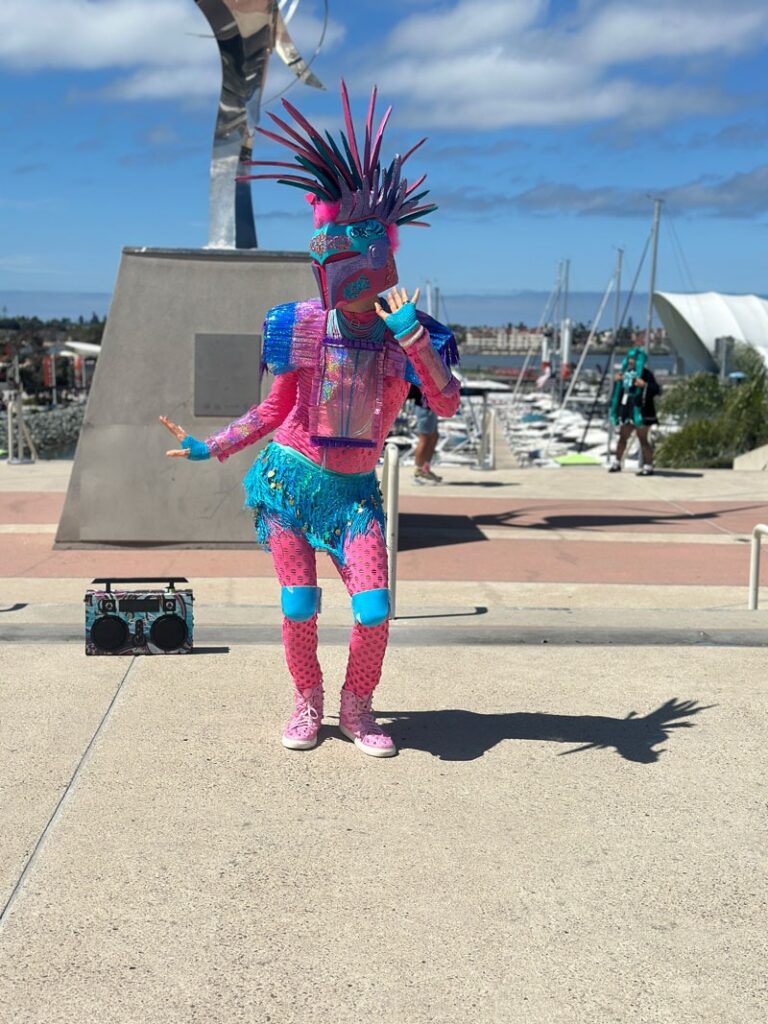
“I lived in my shell during my twenties and thirties,” he said. “Now I feel safe enough to be my most authentic self. Cosplay gave me that. It’s one of the few communities where being queer and letting your freak flag fly isn’t just accepted, it’s encouraged.”
Not Always Political, But Still Powerful
While cosplay and crossplay can serve as acts of defiance, not every participant sees them as protest.
Cosplayers Payton Fitzpatrick and Melanie Holgyn view their practice more as celebration than rebellion.
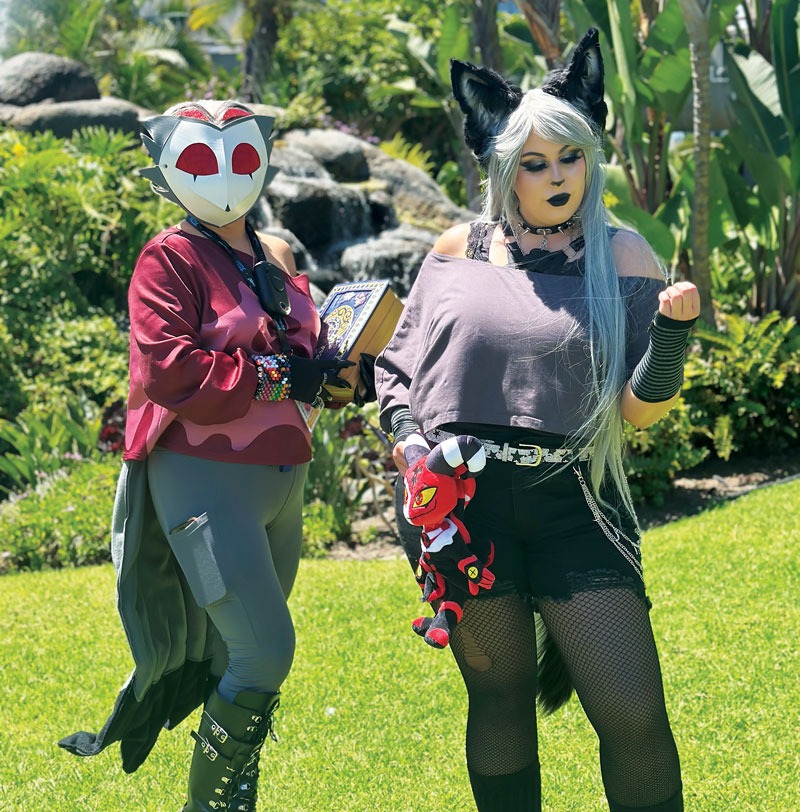
“I wouldn’t call it protest,” Fitzpatrick said. “It’s more like an FU to the system because we already accept who we are. And we embrace these characters who represent the kind of community we want to live in.”
Maybe that’s the real revolution—self-love and acceptance through characters we admire?
That’s how cosplayer Sofia Danylova felt when she saw herself as Lucifer Morningstar from Hazbin Hotel.
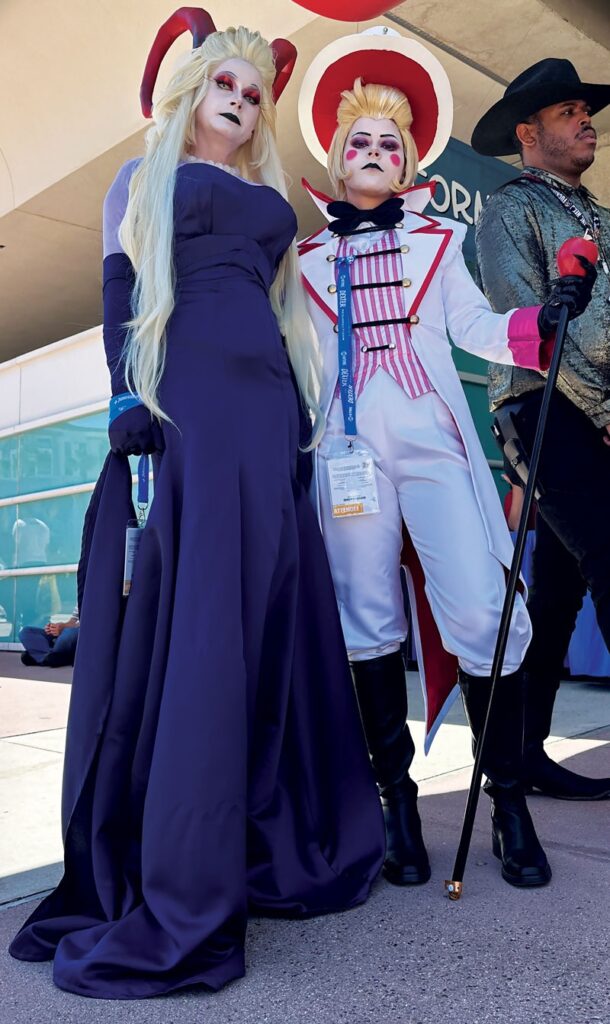
“My first reaction was, ‘Oh my God, I look so good,’” she said. “I look like this character I admire. And I feel empowered because I look good both ways, being a woman and a man.”
Legislating Identity
Despite the joy and freedom cosplay fosters, danger still looms.
Currently, ten U.S. states, including Tennessee, Florida and Texas, have introduced or passed legislation restricting drag performance in public spaces where minors are present. These laws could potentially be used to target crossplay or gender-nonconforming costumes at conventions.
While California remains a haven for LGBTQIA+ rights and expression, the threat of restrictive laws spreading is real.
“I think it would be the dumbest thing in the world if anybody were to start doing that because comic-books at the heart are all about fantasy worlds,” Elizabeth said. “If you start telling people they have to dress as their assigned gender that goes against all that we stand for. That’s not what we’re here for.”
Elizabeth suggested crossplayers will never be deterred, and we’ll find ways to express ourselves.
But Garnett perhaps gave us the best advice, “I think that if we anticipate disaster we start to dim our light,” Garnett said.
Boba Fab is right. We can’t live our lives in fear or anticipation of the worst, that is how the Mother Fuckers win. Let us shine on, and wave our colorful geek flag.
All Images courtesy Isabel Dieppa

