


The Singer-Songwriter Talks About Her New Album, Her Influences and Learning to Love Herself
The last time I talked to Mary Lambert was in 2019; I interviewed her at my local spot over lunch. And I’ll never forget her entrance. This restaurant attracted a mixed clientele but on that afternoon, it seemed like there was an abundance of tech bros. I was waiting at the end of the bar. Suddenly, Mary entered wearing a sleeveless top and a big smile. She sailed through the restaurant (ignoring the bros completely) and enveloped me in a hug. That moment kind of sums up why I respect Mary: she is unapologetically herself.
Of course, 2019 was a different time — both personally for Mary and beyond in the world. Mary was in a good place. She was about to release her great album Grief Creature and had recently met her new partner, Wyatt. They officially separated in January of 2024, however, and are now divorced.
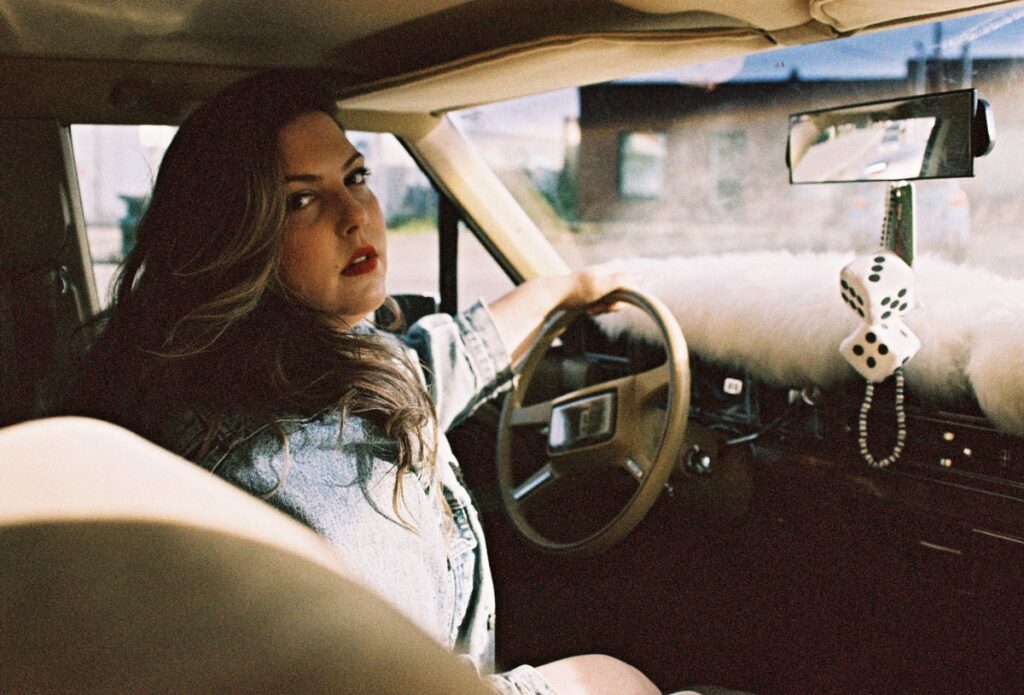
But, like many of the best artists, Mary Lambert is someone who has often turned the painful events in her life into art. Her breakup with Wyatt largely informed her upcoming third studio album. That body of work — which is slated for a December release — is as yet untitled. There are a dozen tracks this time around. Many are breakup ballads. But there is also the Shakespeare-meets-rock-and-roll first single “The Tempest”, the spoken word piece “The History of the Blackberry”, and the midtempo, almost Beatlesque songs like “Tiny Revolutions” and “The Woman Who Stayed.” Perhaps most significantly, this is the first album produced entirely by Lambert herself; she learned audio engineering during the pandemic.
Lambert first came into the public eye more than a decade ago, when she sang the hook on rapper Macklemore’s number one single “Same Love”. That led to Mary’s first EP, Body Love, and its beautiful single “She Keeps Me Warm”. Since then, she has released two more studio efforts: Heart on My Sleeve (which arrived in 2017) and the aforementioned Grief Creature.
Outside of music, Lambert has received the Human Rights Campaign’s Visibility Award and The SAMHSA Special Recognition Award from the U.S. Department of Health and Human Services for her work on destigmatizing mental illness. Mary was also invited to speak at the UN and facilitates the “Everybody is a Babe” workshops which help women recover from body shame.
I recently had the pleasure of catching up with Mary Lambert for BUST.
This will be your first album in six years. Why now? What events — either in your own life or in the world — inspired this record?
There are times in my life where I have had writing blocks for one reason or another, but I find that they often come from an inability to be truthful with myself. If I am dealing with relationship issues, I tend to avoid writing because it requires my radical honesty, and digging deeper into what I need to process may result in hurting the relationship. I had a rather extended songwriting block for several years, so writing and producing other work became my focus.
When I was first imagining this record a few years ago, I intended to write a concept album centered around the women in Shakespeare’s plays with a pop-forward sound. My single, “The Tempest” came from that initial idea. I still hope to make that record in the future. But during the writing and production process of this single in particular, the world got darker and my personal life dramatically changed. I experienced the implosion of my marriage while America funded and armed a genocide. I wrote to survive the pain of repeated betrayal personally, and also to articulate the rage I have felt witnessing the wealthiest people in this country cause catastrophic destruction. I think the best artists are deeply empathic, and when you belong to a destructive and genocidal state, how can you not be broken open every day?
Writing this record was the first time since college that I relied so heavily on creative outlets to buoy me and I don’t think I would have made it through otherwise. Almost every song was written through tears, but they were all necessary and central to my healing. These are the most honest songs I’ve ever written, and I am incredibly proud of myself for embracing my anger, standing up for myself, and still feeling hope and love and possibility.
Tell me a little more about “The Tempest”, which is the first single. It seems a bit more rock-oriented than most of the album — and I mean that in a good way! I can’t help thinking that the lines “You don’t even know me/But you want to tell me how to use my body/If my body was a gun you’d give a shit about me” are directed at the GOP….
100%. The message is pretty much everything I’ve ever wanted to say — or perhaps scream — to the patriarchy. Bodily autonomy is a human right. This is a song about abortion as much as it is about trans rights, immigrants’ rights, and Palestine. The artist Yumi Sakugawa made a post recently that said, “Living is the ultimate creative act and art is one of many creations that can arise from it when we are intentional about disrupting oppressive patterns in order to generate liberatory ones.” [That] really spoke to me. I wrote “The Tempest” because I was angry and I released it because I am angry. And my anger reminds me that I am human and that I refuse to be passive during times of injustice — personally and politically.
What was it like learning audio engineering during the pandemic?
Audio engineering for me has been a slow process of trial and error — emphasis on the error! But I think it’s incredibly rewarding, especially as a woman, to be the arbiter of the actual sound. When you are socialized as a girl, you learn really early on to override your instincts and to defer to authority, and I think it makes many of us feel ill-equipped for certain tasks — or that a man must be present in order for the work to be important. Learning something new requires humility and no one likes to feel stupid, especially as we get older! Being a creative producer is natural, I think, for most artists. But the tougher side, at least for me, was learning my way around the gear and the audio side of things. It’s a lot of listening and training your ear to hear certain sounds and frequencies. I got the opportunity to voice act for a Netflix animated film and also to compose the music for a film called 1946: The Mistranslation That Shifted Culture. So I had to learn pretty quickly how to record myself and to compose to picture, which required a lot of the tools that a producer or engineer would use. I asked a lot of friends and professionals for advice and just tried a bunch of different things until it felt right to my ear.
In all the times we’ve spoken, I don’t think I’ve ever asked you who your inspirations are! Who are some of the women that have influenced you over the years? They can be other musicians, artists or just people you know.
Oh, I love talking about my favorites! I have to go chronologically. The first big musical influence for me was my mom. She’s an incredible singer-songwriter, and was the first example I saw of someone writing through their pain. My mom was the singer in our worship band at church, so a lot of my early influences were contemporary Christian singers. Amy Grant’s Heart in Motion was borderline “blasphemous” in our church, but my mom and I loved it. It was the first time I heard pop music. I sang “Good For Me” at my second-grade talent show and ribbon danced. Such a vibe!
After my mom was ostracized from our church for falling in love with a woman and divorcing my dad, she started listening to Tracy Chapman, The Indigo Girls, Sarah McLachlan and Paula Cole. Those artists have meant so much to me my whole life. Paula Cole’s This Fire is an absolute masterpiece, and it has definitely inspired the album I’m working on.
When I was 12, I took my first babysitting money to Best Buy and bought Jewel’s Spirit album. I listened to that album on repeat for years. I learned to play guitar by ear by stopping and starting each song over and over again until the notes made sense. When I was older, I discovered Tori Amos and Fiona Apple and my life was changed again. Later, I fell in love with Lauryn Hill, Tegan and Sara, Adele, Feist, and Rilo Kiley. All such massive inspirations and influences.
One thing I’ve always admired about you is that you are unapologetically yourself. I just learned that you now lead workshops on body image called “Everybody is a Babe”. Tell me a bit about that.
“Everybody is a Babe” is a four-week virtual workshop I started in 2021 and I run it about once a year. I offer a self-paced course during the months I’m working on music and other projects.
At the beginning of my poetry career in 2009, I wrote a spoken word piece called “Body Love”, about trying to love my body even when I felt undesirable, and I released the music video while I was on Capitol Records. I received hundreds of emails and messages from people who were struggling with eating disorders and body dysmorphia, [which] was life changing. Another poet friend of mine, Sonya Renee Taylor, had just written The Body is Not An Apology, a powerful book about radical self-love, and it made a massive impact on me. In the book, Sonya mentioned running a workshop. I was obviously still in a place where I had no business being an authority on loving yourself, but the idea of helping other people became a major goal. I hated my body, but I didn’t know why and I didn’t know how to make it better. So I thought “what if I write down every major epiphany that opens my heart to loving myself?” There were conversations with friends, books I read, movies I saw, clips on Instagram, conversations I had with myself, research articles I read, poems I wrote, and many other life-changing moments that I recorded along the way. The workshop is a deep dive into the questions and the answers that come up when thinking about self-love, body image and our relationships to food.
I think loving and accepting our bodies, especially when you are a fat person, is a radical act. Loving your body allows you to free up the space that body shame, insecurity, and weight loss pursuits take up so you can fill that time with stuff you actually like doing! Accepting your body as it is allows you to meaningfully take care of yourself and your community without freaking out about cake or what your thighs look like. Anything that points us toward collective liberation is what I care about, and I believe part of my work on this earth is to shake people out of their fixation with body size and weight.
Will you be touring to support the new album?
I plan to! I might have to DIY it because I actually just lost my booking agent. So if anyone is interested in representing a big gay girl who cries on stage, I’m your dream come true!

