


The sun always shines on the beautiful Sinclair family, and it never sets on Beechwood Island. Golden rays illuminate the bloodline whose media empire has such significant international reach, the Sinclairs have become equated with American royalty. On this island, life is a fairytale, and they want for nothing. No one is an addict, no one is a criminal, no one is needy, and no one is a failure. That is, not until last summer, when the terrible thing happened that nobody is willing to talk about. See, Cadence the First (Emily Alyn Lind), Cady, the eldest heir in the Sinclair legacy, inexplicably washed ashore one evening along the coastline. Concussed, left for dead, and afflicted with amnesia, Cady can’t remember how she wound up in the water, or who might’ve put her there. Hoping to piece together the remnants of her cryptic past, Cady returns to the island the following year, assured by her doctors that the familiar surroundings will shake loose her memories from their moorings. Also braving the island heat is her aunt, Carrie Sinclair, played by the renowned Mamie Gummer, a character whose bold nature bears a striking resemblance to the niece with whom she’s sharing the summer.
“Every family is an island unto itself, and you can swallow a lot in isolation,” Gummer tells me early one morning in Los Angeles. “It’s interesting to think about what people do when they don’t think that they’re being watched. What they can withstand, and what they allow just to get through, to the other side of those prison-like walls. You do what you have to do.”
Based on the bestselling book by E. Lockhart, the hot new show from Amazon Prime, We Were Liars, follows the same basic structure as the novel, while also pulling details from other entries in the literary series. On the surface, the Sinclairs are the perfect American family, full of prestige and power. Behind the facade, a tangled web of lies threatens to tear this family apart.
“Secrets keep you sick,” says Gummer. “And they’re cyclical. Even if you have the best intentions, often, you make the same mistakes. They’re just formative. It’s like they shape your brain into something less than functional.”
A landmark of the Martha’s Vineyard Sound, Beechwood Island is owned by the patriarch of the family, Harris Sinclair (David Morse), who resides there year-round with his wife, Tipper (Wendy Crewson). Organized as a de facto private state, the land boasts four independent mansions: Windemere, Cuddledown, Red Gate and Clairmont. Complete with tennis fields, boats, beaches and docks, the entire Sinclair family spends every summer here in a golden haze, sunning and swimming and telling the tallest of tales.
Still, there’s something amiss here, even before Cady’s mysterious nighttime plunge. Building his business from the ground up, Harris has been running The Boston Sentinel since 1918, and over the years, he’s turned a small newspaper into a global sensation, becoming not only one of the most successful men in the world, but also, one of the richest. It’s a position that’s very much deserving of respect, and he’s never let anyone in his family forget their privilege – not even for a second. As the head of a media conglomerate, Harris’s tycoon tendencies trickle down into his treatment of his very own kin, whom he forces to compete for his love and his inheritance. “His position as the head of a media empire also means he controls the narrative,” explains Gummer. “I think that there’s a great weight of responsibility.”
Harris’s toxic games and subtle (and not so subtle) manipulation tactics weren’t quite as noticeable when Cady was still an innocent little girl visiting Beechwood, but as a teenager, the rose-colored glasses are starting to come off. The unpleasantries ring especially loud after her accident, which forces Cady to reevaluate everyone’s motives on the island – even those of her beloved grandfather.

When we first meet the family, there’s three generations of Sinclairs spending the summer at Beechwood: Harris and Tipper’s three daughters, Carrie, Bess (Candice King), and Penny (Caitlin FitzGerald), and the three sisters’ children, Carrie’s teenage son Johnny (Joseph Zada) and his younger brother Will (Brady Droulis), Bess’s teenage daughter Mirren (Esther McGregor) and her younger twin sisters Bonnie (Emerson MacNeil) and Liberty (Manaia Wall), and Penny’s daughter Cadence. For eight years now, Carrie’s boyfriend Ed Patil (Rahul Kohli) has also spent his summers here, along with his nephew Gat Patil (Shubham Maheshwari), who quickly befriended Johnny, Mirren and Cady. For all of their commonalities and differences, each generation is undoubtedly tightly knit, welded together by their proximity, the passage of time, and of course, by their shared secrets. Cady, her cousins and Gat are even lovingly referred to as “The Liars.”
Despite this rather large annual gathering, there’s still the eerie feeling of someone missing from the party, like a gray cloud threatening a storm over a bright sunny day. It’s been a long time, but the memories of Rosemary still haunt this island. A cherub of a child, Harris’s fourth daughter only lived to be eight years old and forever remains perfect in his eyes. None of his other kids really ever stood a chance. “There’s a feeling of some shame,” says Gummer, “and having to constantly measure up is, I imagine, exhausting. Sometimes it was hard to understand why they kept going. They’re just stuck in this paternal ward. They’re still incubating. It’s like Stockholm Syndrome.”
Much like Cady, Carrie represents the black sheep of her generation (she seemed to have a kind of renegade streak, which is something actually that was a bit of a foil to Cadence’s character. They seem to share that in spirit). The eldest of Harris and Tipper’s three daughters, Carrie, along with her sisters Penny and Bess, are keenly aware that no amount of expensive gift giving or thoughtful pie baking will ever truly win them a blue ribbon in Harris’s never-ending games. Not with the memory of Rosemary still hanging over their heads. Just like Carrie tells her sisters, “None of us is going to be his favorite daughter. We grew up, we got messy, and Harris hates mess. So his favorite is always going to be the daughter that didn’t grow up.”
By instilling mandatory participation in his seemingly trivial games, like an annual sandcastle building contest, or a lemon hunt that lists amongst its prizes, say, ownership of the entire Beechwood Island, Harris keeps his kin off-kilter just long enough so that everyone remains dependent on his fleeting approval. As Gummer puts it, “I think they don’t know their place in the world. If they don’t know their place, their standing on that island, on an existential level, it carries over. It bleeds out into everything, including their sense of self-worth.”
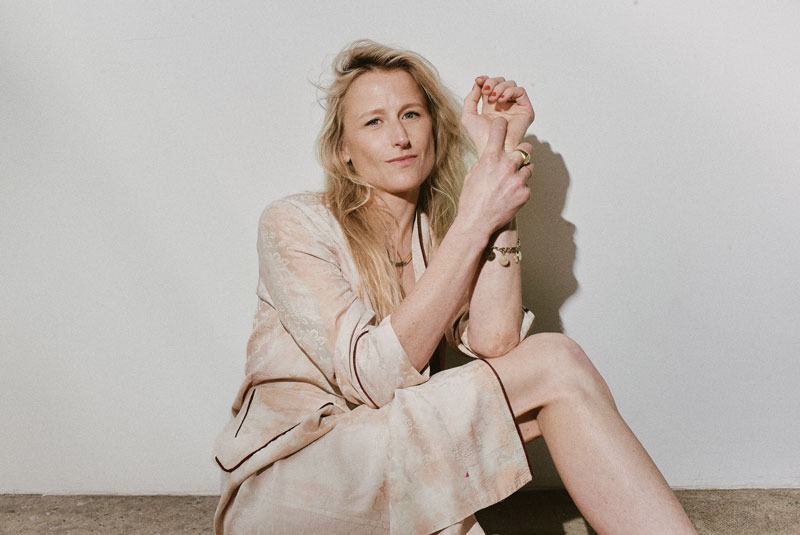
The daughters deal with their disappointments in various ways. Penny detaches, overachieves, and makes her heart a small target. Bess bends to her parents’ every whim, attends weekly dinners with Harris and Tipper, and runs her household like a fortune 500 company so that her husband can bring home the bacon. For a long time, Carrie turned to harder things, like drugs and alcohol, to cope. After her mother’s unexpected passing on the island during what her son and his cousins refer to as their “Summer 16,” old frustrations surface, and the temptation to fall back on bad habits rears its ugly head.
“That spiritual compromise that’s foisted on them all is what is so destructive, ultimately, and has been so poisonous,” says Gummer about her character’s being made to feel like she must earn her family’s love. “It’s like a poison that they all ingest. It’s just the means to an end, like a necessary evil that they all enable and play into. I think that it eats away at them that they don’t do more. I know it eats away at Carrie. I think it’s what makes her relapse.”
After her son Johnny gets in trouble at school for beating up a rival opponent, Carrie mimics her father’s behavior, a defensive act so deeply embedded in her system that she feels as though she has no other option. She drains her trust fund, paying off everyone involved with the unfortunate incident. Now, with her finances skating along at zero, Carrie turns to her father for assistance, who quickly pounces on the opportunity to further mold his offspring to his liking. Harris tells Carrie he’ll help her out of her financial hole, but only if she breaks up with her long-term partner, Ed. “She’s in distress,” muses Gummer. “She has to make this choice between her love and her kid. But it definitely has a deleterious effect.”
Harris has always been conservative, but his recent cognitive decline, paired with his wife’s passing the previous summer, has turned his antics up to eleven. Not only does his overt racism result in the banishment of Carrie’s boyfriend Ed from the island, but it also threatens the blossoming romance between Cady and her best friend Gat. In the eyes of the patriarch, the Sinclairs are blonde, and square chinned. They freckle in the sun. They appear as a monochrome front in the family portraits, a single file line of pastels and off-white cashmere, and there is safety in the redundancy. To Harris, it is his duty to protect his impeccable lineage from any meddling with outsiders.
In reality, all he’s done is caused a massive wave of heartbreak across the island, and in Carrie’s case, possibly dismissed the one person who was helping her stay sober. After all, it was Ed who helped Carrie realize that her addiction is not her fault.
“I think that probably, there had been the narrative that there was a fault in her,” says Gummer. “Some design flaw in her makeup, or if she had made other choices, things would have been easier. And she’s always just felt like a strain on the family for that. But of course, that’s not true. It’s both a disease and an addiction, and I think a lot of her struggles were a result of circumstances beyond her control.”
It’s hard not to be bowled over by Carrie and Ed at first glance. Effortlessly comfortable, their obvious attraction and instant chemistry makes their relationship feel real and lived in. It’s like they’ve always been together, and the audience just happened to get a glimpse into their lives.

“It was pretty immediate,” says Gummer about her and Maheshwari’s onscreen alchemy. “I was so relieved, honestly. It was like a life raft washing up on shore. Just because of everything else that he represents.” Gummer claims she knew the co-stars would shine as a fictional couple during a particularly wholesome moment on set. “We were all sitting on the beach, and we were making sandcastles. That was really easy and joyful. It was so nice to tap into a sense of joy and that he was capable of that. And it gave me something to not want to have to give up.”

She continues, “There was a moment also, honestly, when we were shooting, when Raul, the actor that plays Ed, when he steps onto the island, that unlocked a lot for me. I realized that I had only been playing who Carrie was on Beechwood, and struggling a bit to understand the stakes of all that she was fighting for in it. Like, is it really about all this stuff? The fine china, and the paintings, and the inheritance? But when he arrived, this whole other facet of her life became clear to me. I imagined who she was off the island, how potentially well-adjusted and happy she was. And that gave me something to grab hold of, as far as what it was that she was fighting to protect and maintain.”
Cheekily, Gummer teases, “I don’t think that she’s been entirely forthcoming about all the details about everything that happened, with Ed. There’s no way that he knows everything…I don’t know. TBD. But I think that she’s implying that she’s shared enough with him that it’s made her feel less alone, and less handicapped.”
Losing her mother during the previous summer has also clearly had an impact on Carrie’s mental state, especially as she watches her father unravel without his better half. A clever matriarch, Tipper brought balance to the household, but she also played a few mind games of her own. Tipper’s most valuable possession was always the string of black pearls that she wore around her neck; a sacred object which has long held the adoration of Carrie and her competitive sisters. When one of her daughters would make her proud, Tipper would let them wear the necklace for the evening, and for a few hours, they’d feel the warmth of approval. It might be cute, if the ritualistic finery didn’t so closely resemble carrot dangling.
“There’s some arrested development, which trauma can do,” Gummer surmises. “They all have a lot of blind spots, and things that they’re covering. The best thing you can have as an actor is a secret, and we have so many.” She notes that for the viewers who are paying close attention, there’s a lot being communicated between the siblings non-verbally. “I don’t even know what of all these beats were caught on camera,” she says, adding that she’s unsure how much of their body language is visible. “Just a glance was enough, at times, to allude to things that could not and would not be discussed but were felt and known on a cellular level.”
They might be older now, but the stars still haven’t left their eyes. That’s why when Carrie announces to her family that she’s starting her own jewelry line (a trade undoubtedly instigated by her mother’s obsession with regalia), and explains how close she is to locking in a storefront property where she can sell her goods, her mother’s encouragement fills her with the sensation that so vehemently resembles the feeling she’d get while wearing those pearls. Like the love she’s always longed for is finally within her reach.
“I love all the threads,” says Gummer, her eyes shining. “It’s astonishing, actually, in the book and in the prequel, and in Carina [Adly MacKenzie] crafting the series, and everything that she added to the characters and plot. It all is so cyclical. It’s like this elliptical line. There’s no break anywhere. It’s kind of hypnotic once you start attaching all of those points. You go into a bit of a trance.”
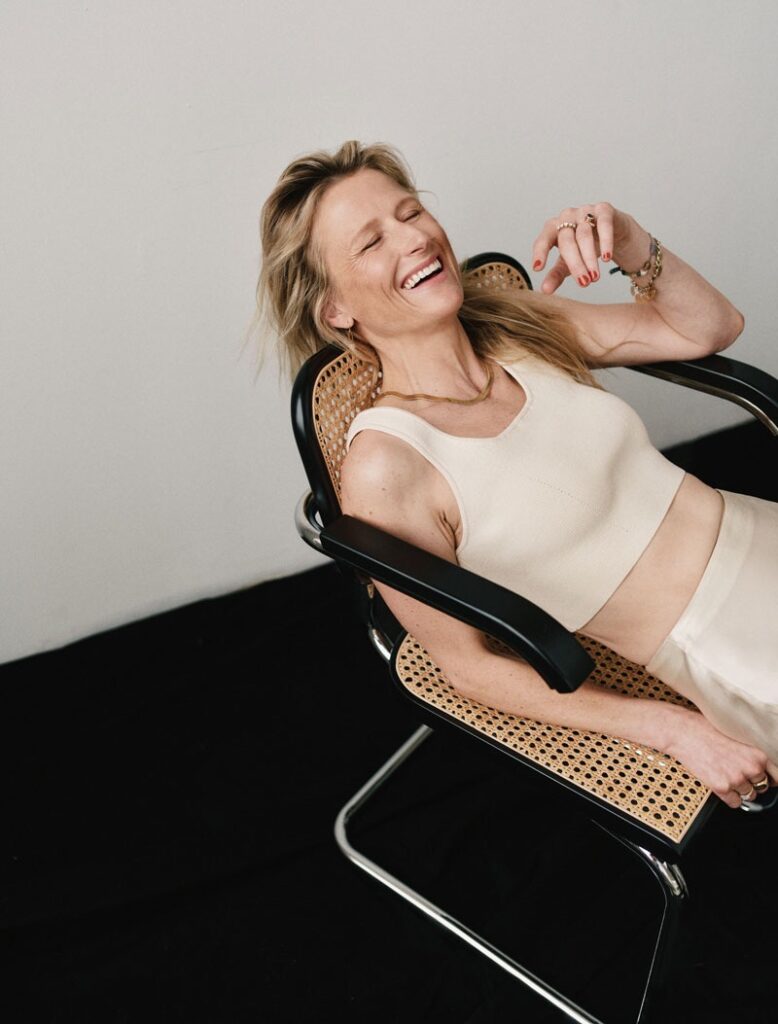
When it comes to living up to one’s legacy, you’d be hard pressed to find someone more experienced in that department than Gummer. Although she’s become a household name of her own accord, some viewers might assume that she owes all her merit to her famous mother. In some ways, Gummer’s own personal experience mirrors that of the fictional character she embodies onscreen.
“It’s sort of a bizarro version of what someone might imagine my life might have been like, or my upbringing, but it honestly could not have been further,” she says. “It’s like my life, but flipped upside down.” The daughter of actress Meryl Streep, also known as the Academy Award nominee that you really don’t want to be up against, Gummer understands that she and her character Carrie share certain similarities, like the fact that both women happen to be one of three daughters, and of course, their luminous parental figure, but insists that’s where the likeness ends. “We don’t put on clothes like that at home,” she quips. “The fact that Harris is committed to instilling this idea that his daughters need to remain dependent on him – that in essence is the opposite of how I was raised. We were all taught the importance of making art, and making it work for ourselves, and as women specifically, never to find ourselves in a position of dependence upon any other person, man or woman.”
The first season of We Were Liars ends with a big twist, but Gummer believes there’s still plenty of secrets left to reveal. When asked what she’d like to see in a possible second season, she fawned over the prequel from E. Lockhart’s popular series, Family of Liars.
“I would love to be able to dig into the prequel to that story, the origin story of the sisters in that summer,” Gummer shares excitedly. “I just think it’d be so fun as a viewer to see those women in the ‘90s without cell phones, and all the fashion. I’d just love to wax nostalgic.”
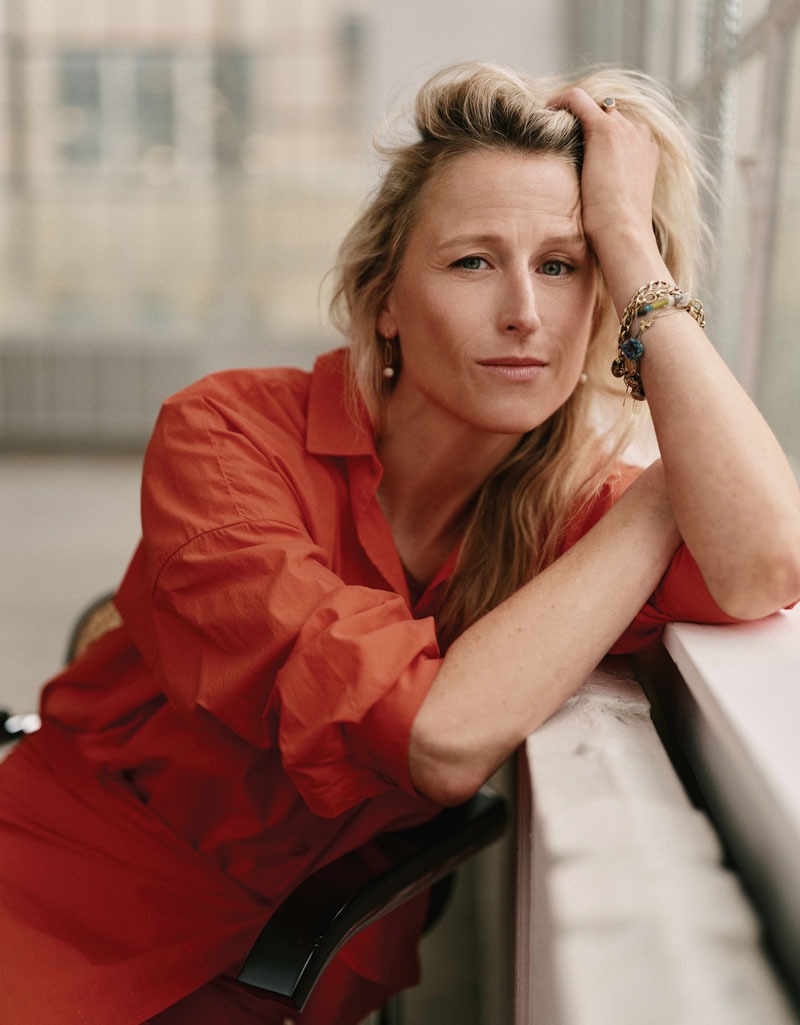
For now, Gummer says that she’ll forever cherish the memories of shooting the first season. Perhaps most importantly, she relishes working on a show where every single episode in its first season was directed by a woman.
“You would forget, and then look around and think, ‘Wow, there’s a lot of chicks in here!’” She laughs, “Everyone in the video village, for the most part, were all women. And not to generalize, but it felt very nurturing. It also felt very effective at the same time. I mean, work was never a fearful or intimidating place to be. It was welcoming. Conversations were had, not shut down. There was a lot of listening.”
She adds, “At no time was there any like, ‘Just say the line.’ You know?”
All Images Courtesy of Emilio Madrid

