

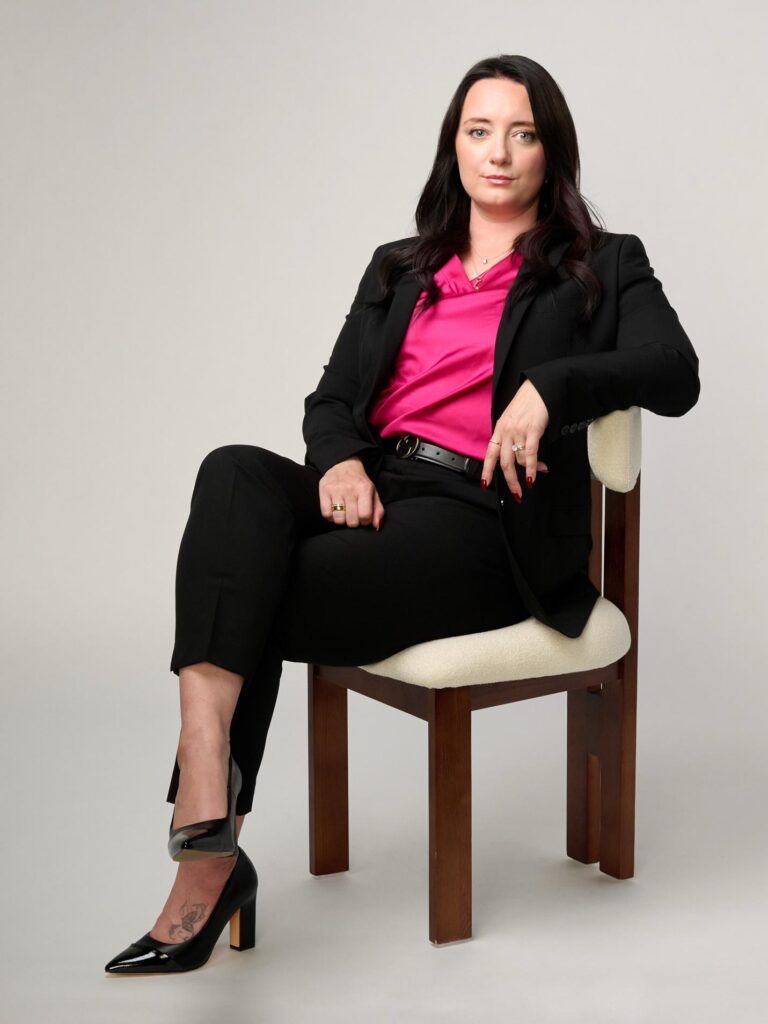
Janna Scott left a government job because she couldn’t see what she was working on. The information was compartmentalized, the transparency was nonexistent, and when they asked her to sign an NDA, she walked.
“Leaving my government position was not simply about being asked to sign an NDA. What ultimately pushed me to walk away was the broader environment of compartmentalization and limited transparency surrounding the work itself. I was often only allowed to see a very small piece of what I was actually working on without understanding the larger picture or broader implications.”
She calls it frightening. She also calls it inevitable.
“I have never been the type of person who is comfortable blindly following rules or processes without understanding the reasoning behind them.”
Scott is the founder of DeFi Tax, a crypto tax platform she built after years of running her own tax practice and watching the same pattern repeat: people making decisions about money they didn’t understand, using tools that couldn’t explain themselves, inside systems designed to benefit people who already knew how they worked.
“What I realized quickly was that many lower- and middle-income individuals are not necessarily paying more because they are doing something wrong. They are often simply unaware of the strategies, planning opportunities, and financial structures that wealthier individuals routinely have access to through high-level advisors, attorneys, and consultants.”
She’s not talking about loopholes. She’s talking about information.
“Wealthy individuals typically have access to experienced professionals who proactively educate them on legal planning opportunities, entity structures, investment strategies, deductions, timing elections, and long-term financial positioning. Meanwhile, many everyday taxpayers rely on very standardized, cookie-cutter tax preparation systems where the focus is simply filing a return rather than actually educating or strategically advising the client.”
Cost basis selection is the example Scott returns to most often. Most people have never heard of it. When you sell an asset, the taxable gain depends on which units you’re considered to have sold first. FIFO, LIFO, HIFO. Different methods, dramatically different outcomes.
“If someone bought Bitcoin at $10,000, $30,000, and $60,000 over different periods, then later sold one Bitcoin at $65,000, the taxable gain could vary dramatically depending on which purchase lot is matched to the sale. Using FIFO could create a $55,000 taxable gain, while using HIFO might reduce that gain to only $5,000.”
Same transaction. Same person. A $50,000 difference in what they owe.
Wealthy clients have advisors who model every scenario before they file. Everyone else gets FIFO by default and never learns there was another option.
“The challenge is not merely calculating a gain or loss. It is being able to justify and defend how that gain or loss was determined.”

Janna Scott with DeFi Tax Co-founder & COO Aria Cissney
Scott built DeFi Tax to close that gap. The platform tracks cost basis across wallets, exchanges, DeFi protocols, bridges, and staking environments, applying the taxpayer’s elected methodology within IRS guidelines. The point isn’t to generate a lower number. It’s to generate a defensible one.
But software is only part of what Scott is building. The deeper project is education.
She’s running a scholarship initiative for students who show aptitude in math, analytics, and financial problem-solving. She plans to meet personally with recipients and their families.
“We believe financial education should begin long before someone files their first tax return or makes their first investment. Today’s students are growing up in a world where investing, digital assets, credit, debt, and financial risk are becoming part of everyday life at younger and younger ages.”
She wants them to understand something most adults never learned: financial decisions have weight. The outcomes aren’t random.
“We hope they gain confidence, perspective, and a stronger understanding of how financial literacy can shape opportunities throughout their lives. Whether the outcome of a financial decision is positive or negative often depends on education, preparation, and understanding, and we want to help give young people that foundation early.”
Scott has built her career in industries that haven’t historically made room for her. Fintech, tax, and crypto remain overwhelmingly male. She felt it immediately.
“There were many situations where I felt dismissed before I had even spoken. Almost as though people wanted to pat me on the head rather than seriously engage with what I was saying.”

Early on, she brought men to conferences with her. Not because she needed their help. Because she knew people were more likely to listen if the information came from a male voice.
“I had conversations with founders of other crypto tax platforms where I would point out major flaws in their calculations or methodologies, and instead of addressing the substance of the discussion, they would smile, nod, and then immediately try to sell me their software.”
She adapted. Not by softening but by refusing to.
“I learned that simply being polite, composed, and waiting to be acknowledged was not always effective in this environment. Speaking directly, challenging assumptions, and sometimes saying things completely outside of what people expected from me actually forced people to pay attention.”
Her team jokes about putting a shock collar on her before major events. She finds that funny.
“Eventually, though, the work itself became impossible to ignore. When you consistently identify inaccuracies, solve problems others cannot solve, and back your positions with real technical and tax analysis, skepticism starts to lose its power.”
Scott doesn’t pretend balance comes easily. She credits her co-founder, Aria Cissney, with keeping her grounded, making sure she steps away, spends time with family.
“Balance is probably not what most people picture. It is not perfectly disconnecting from work or shutting my brain off at 5 p.m. It is having the right people around me, making room for my family, and building a life where passion, purpose, and personal life can coexist without completely consuming one another.”

When asked what she wishes someone had told her about money when she was starting out, Scott redirects. The lesson wasn’t about money. It was about people.
“I wish I had been less trusting in certain situations, and I wish I had encountered more people who genuinely wanted to help others succeed without an ulterior motive attached.”
She learned that the financial industry doesn’t run on ethics. It runs on profit.
“Many people in the financial industry are not necessarily motivated by what is right or wrong. They are motivated by what is profitable.”
Scott is not interested in gatekeeping. The strategies exist and the knowledge exists. The question has always been who gets to learn about them.

