


A vibrant spring garden of tracks from female artists is ready to be picked- spanning metal, folk, punk rock, Riot Grrrl, grunge, blues, alternative rock, indie pop, and even a little country. These offer a fitting soundtrack for longer days in the sun.

Reality Star by Surfbort
March 12
The joy of ’90s indie music is alive and well on Surfbort’s latest album, which has a grunge and Riot Grrrl influenced sound that often calls to mind the brash ferocity of Bikini Kill and Hole, a style that feels both stripped down and robust. The album’s first single, “Jessica’s Changed,” is an immensely appealing earworm. Its verses gesture toward themes of uncertainty and societal rejection, before bursting into an infectious chorus that transforms the song into an anthem of individuality and self-acceptance, expressing defiant joy in the face of a frightening world shaped by harsh standards and cruelty. “I’m a sexy ass bitch in a world gone mad,” frontwoman Dani Miller belts, a refrain that feels especially timely and cathartic given the current political climate.
Another standout track, “Lucky,” carries a similar sense of optimism. Set against fast-paced, grungy guitar work, Miller’s lyrics explore finding beauty around you even when reality feels overwhelming. “Life is beautiful / if you just let go,” she advises on the refrain. Reality Star is an album that confronts the ugliness of our world head-on, expressing rage and frustration, yet ultimately finds joy and meaning through self-love, chosen family, and embracing the weird and unexpected.

Paradises by Ladytron
March 20
British electropop icons Ladytron return with their eighth studio album, Paradises, an expansive, synth-heavy release that packs in 16 dancefloor-ready tracks, making it one of their most immediately danceable albums to date. From the outset, however, the album’s darker tone and frequent ventures into techno noir signal that this is not escapism without consequence. Paradises feels like a natural evolution of the band’s shadowy aesthetic, recalling the moodier edges of their earlier work like Witching Hour, while pushing further into nocturnal territory.
Among the album’s first singles is “Caught in the Blink of an Eye,” a buoyant, toe-tapping track that initially presents itself as upbeat and effervescent. As the song unfolds, however, ghostly layers creep into the melody, and something more unsettling begins to surface. Lead singer Helen Marnie’s lyrics grow increasingly melancholy: “We appear and we disappear / Caught in the blink of an eye,” she sings, meditating on the fleeting nature of time and memory, where moments of joy and connection vanish almost as soon as they arrive.
From there, the album descends further into darkness. The eerie, oscillator-heavy “I See Red” channels New Order at their bleakest, pairing ambient synth beats with a sense of simmering dread. “Oh I see red / I feel it in my blood / And I know what it does,” Marnie intones gloomily, her detached delivery amplifying the track’s ominous tension. In contrast, “Kingdom Undersea” offers a more dreamlike sense of melancholy. Here, Marnie and Daniel Hunt duet, their voices intertwining in a state of ghostly lovesickness: two souls locked in a doomed union as ethereal vocals drift over crisp, mechanical drum machines.
Taken as a whole, Paradises feels like a night spent dancing in a disco housed within a haunted gothic castle where sadness and loss are processed on the dance floor, ghosts linger among the glitter, and every sleek pop hook carries a darker bite beneath the surface. Ultimately, Paradises cements Ladytron’s staying power as singular electropop titans whose musical acumen transcends trends or eras. In an increasingly dark and ever-shifting world, they remain not only just as relevant as ever, but also incredibly vital.

Big Disgrace by Haute and Freddy
March 13
Among the many stand out releases this spring, few albums have felt as eagerly anticipated as Big Disgrace, the debut full-length from Haute and Freddy. After teasing listeners for over a year with a string of irresistibly catchy, retro-leaning pop singles, the duo finally delivers a cohesive album that fully realizes their vision. Comprised of Michelle Buzz and Lance Shipp, songwriters who have previously penned tracks for mainstream pop heavyweights like Britney Spears, Kylie Minogue, and Katy Perry, Haute and Freddy step confidently into the spotlight with a singular alt-pop sound. Drawing from ’80s new wave, punk attitude, and glossy electropop, the album balances underground edge with undeniable pop polish.
One of the album’s strongest moments is “Dance the Pain Away,” a cathartic, glittering slice of sad-pop built on pulsing synth lines, propulsive drum machines, and a chorus engineered for communal release. The track acknowledges the bleakness of the world without wallowing in it, instead urging listeners to move their bodies through despair. This tension between melancholy and euphoria is one that runs throughout the album. Similarly club-ready but darker in tone, the spooky Halloween-tinged single “Freaks” helped build early buzz last fall. Anchored by stomping beats, sinister synth stabs, and playful witches’ laughter, the song nods to underground dance floors and outsider culture. “All the pretty girls / and all the pretty boys / are freaks,” Buzz declares on the infectious refrain, turning alienation into something celebratory and chic.
Midway through the album, Big Disgrace shifts into more atmospheric territory. “Shy Girl” opens with a dreamy, ethereal melody, soft synth pads and hushed vocals creating a sense of intimacy, before gradually picking up tempo and confidence. As the beat swells and the production brightens, the song blooms into an empowering anthem. “I do recall there was madness in your eyes / let it come out tonight,” Buzz sings, delivering lyrics that reject societal expectations in favor of unapologetic self-expression.
Big Disgrace is an energetic, dancefloor-ready debut packed with infectious retro-pop hooks and emotional release. It’s an album designed to pull you out of your own head, away from insecurity, pain, and self-doubt, and onto the dance floor, celebrating the weirdos, the outsiders, and anyone bold enough to be fully themselves.

The Warning by Telenova
February 27
For their sophomore album The Warning, Melbourne art-pop trio Telenova step beyond their signature synth-heavy, dancefloor-ready polish into darker, more potently emotional terrain. The result is a sound that feels raw and unsettled, gritty with tension and threaded throughout with an aching vulnerability. Frontwoman Angeline Armstrong fully inhabits this shift, revealing the breadth of her vocal power and emotional range. Her performances are charged with palpable feeling, carried not only by her voice but by lyrics that cut close to the bone. Band member Edward Quinn described the album’s tonal pivot as “…pushing through insecurity and still creating something that feels alive,” a sentiment that reverberates throughout the record.
That embrace of vulnerability is especially striking on “In the Name of Your Love,” where Armstrong confronts the fear and awe that come with emotional surrender. Rather than romanticizing intimacy as warmth or safety, the song lingers on its destabilizing force, the shock of realizing how deeply another person can wound or unmake you once feelings take hold. “I pull my bleeding heart out as I walk towards you,” Armstrong sings, exposing devotion as an act of quiet self-sacrifice. “I know it takes surrender to make a better world,” she concludes, and the line lands less as reassurance than as a reluctant truth. Her ethereal vocals glide over urgent, fast-paced percussion, creating an irresistible earworm that pulses with longing, fear, and emotional risk.
Another standout is the album’s first single, “The Deep,” which finds Armstrong singing in a lower register, her voice grounded and ominous against dark, eclectic synths and insistent drum patterns. “Alone in your house where I fall at your feet / Follow your words to the edge of the deep,” she intones, again expressing emotional closeness that borders on dependence. The song’s six-minute runtime allows it to unfold slowly, building and releasing tension in waves. It feels cinematic in scope: an emotional freefall that mirrors the uncertainty of giving yourself to someone without knowing where you’ll land.
The Warning marks a significant evolution for Telenova. The album captures a band willing to sit with discomfort, to excavate the most fragile corners of their inner lives, and to transform insecurity into something bracingly alive. Even at its darkest, the record remains gripping and melodic, balancing cathartic vulnerability with sharp pop instincts. In tracing trauma, desire, and emotional surrender, The Warning doesn’t just pull at your heartstrings, it tightens them.
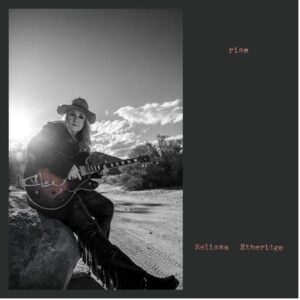
Rise by Melissa Etheridge
March 27
With the release of Rise, Melissa Etheridge returns with her seventeenth studio album, reaffirming her place as a towering figure in rock music and queer cultural history. For listeners who were around in the 1990s, Etheridge is synonymous with an era. Her breakout hits “Come to My Window” and “I’m the Only One” catapulted her into the mainstream at a time when she also publicly came out as a lesbian, a decision that carried real professional risk in an industry still steeped in homophobia. That act of courage now feels inseparable from her artistic legacy, and Rise reflects the hard-won wisdom of someone who has survived both public scrutiny and profound personal loss.
The album opens with “Bein’ Alive,” a fast-paced, retro-tinged rock track that crackles with defiance and joy. Over chugging guitars, Etheridge looks back on the obstacles she has faced and makes a simple, declarative statement: “I chose to survive.” Given her decades-long career and the private and public struggles she has endured, including the devastating loss of her son Beckett to opioid addiction in 2021, the line carries considerable weight. After a brief pause, she triumphantly concludes, “God, I love being alive!” The moment feels like a testament to a resilience that acknowledges her pain without surrendering to it.
Elsewhere, the retro country-flavored “Matches” looks back at Etheridge’s lifelong passion for music and the guitar. “Mama let me play with matches / I’m going to light up every inch of the sky,” she sings, using fire as a metaphor for the creative spark that burned within her from childhood. The song’s warm twang channels the spirit of Johnny Cash, one of Etheridge’s early heroes. Another standout is the rockabilly influenced “Don’t You Want a Woman,” a toe-tapping, swagger-filled anthem that celebrates women who are powerful, unconventional, and unapologetically themselves. It’s a rallying cry against the narrow expectations imposed by patriarchal norms and was fittingly adopted as the rally song for the Kansas City’s women’s professional soccer team, KC Current. Etheridge’s voice here is playful yet commanding, reveling in its refusal to soften or shrink.
Overall, Rise is an inspiring statement of endurance. It captures Etheridge reckoning with grief, legacy, and survival while still finding room for joy and defiance. Whether she is belting out anthems of perseverance or sitting with vulnerability in the face of unimaginable loss, the album showcases an artist still growing, still evolving, and still deeply alive decades into her career. Rise honestly reflects on the dark pains of the past and still insists on moving forward.
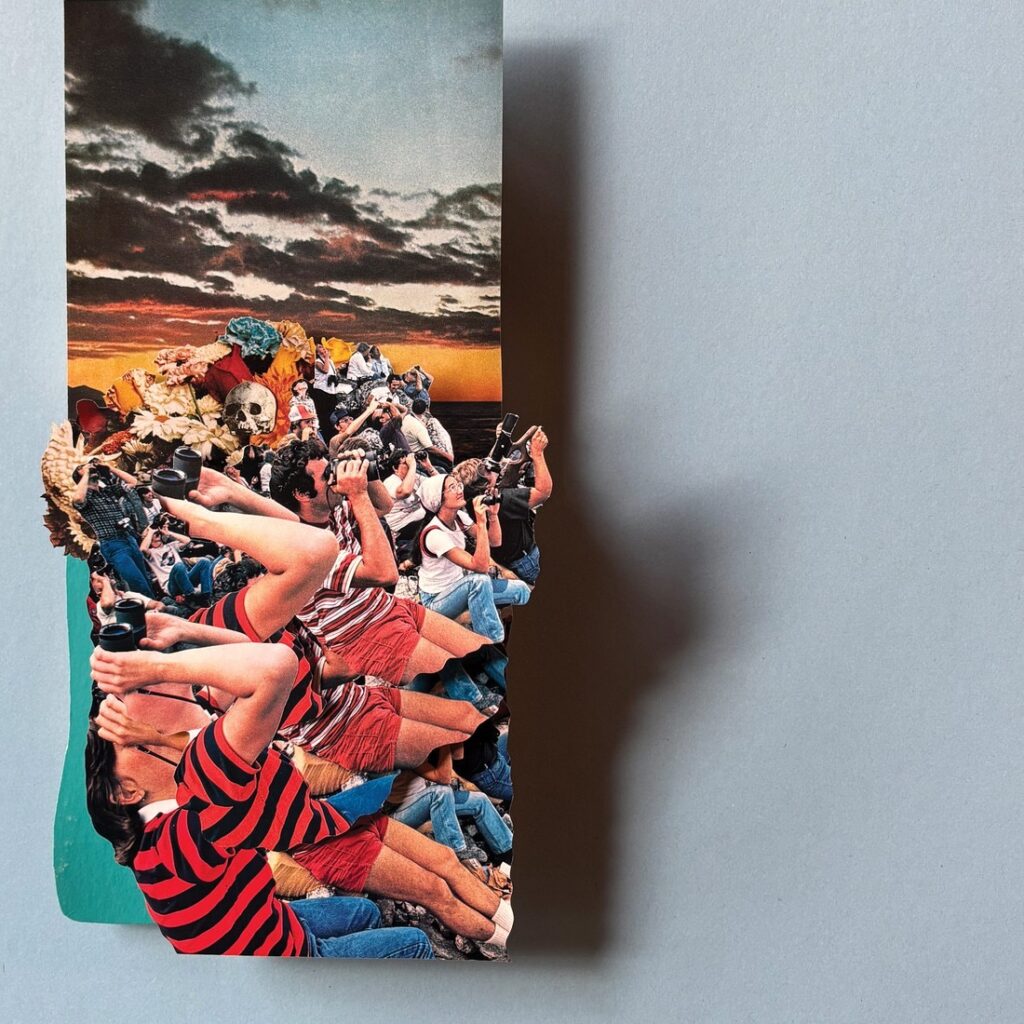
Blinking as the Starlight Burns Out by Paula Kelley
March 27
Paula Kelley’s name may not be the most immediately recognizable, but her influence on the Boston indie rock scene runs deep. A founding member of the seminal shoegaze band Drop Nineteens, with whom she rejoined for their 2023 comeback, Kelley has also spent years in Los Angeles composing soundtracks for independent films. Blinking as the Starlight Burns Out marks her fourth solo album and her first in two decades, arriving at a moment of profound personal significance: Kelley recently celebrated twelve years of sobriety after bottoming out in the excesses of the L.A. party scene. That hard-earned clarity permeates the album, lending it both emotional weight and quiet grace.
The album’s first single, “Party Line,” is a bright, gauzy track built on layered vocal harmonies and a pedaling bassline that nods to Kelley’s shoegaze roots. Yet its sweetness is deceptive. Beneath the dreamy surface, the lyrics grapple with fear, anxiety, and a lingering sense of instability. “Lately been afraid to listen to a message after nine / Want to feel alive but have stability,” Kelley sings, articulating the tension between desire and self-preservation. She has described the song as “a dreamy song about dreams—not the kind that comes during sleep, but rather wishes, anxieties, projections—as a way to work through and reconcile an unhappy past,” a mission the song fulfills with subtle emotional precision.
The album’s second single, “Static,” expands the sonic palette further, revealing the cinematic influence of Kelley’s film-scoring work. As the track builds, it morphs into a compelling fusion of baroque pop and pulsing disco, a dancefloor-ready song tinged with unease. Soaring orchestrations collide with a propulsive beat, creating a retro-pop drama that evokes both exhilaration and anxiety. “Static wherever I belong,” Kelley sings, later concluding, “Fear is only living the truth.” Rather than resisting uncertainty, she seems to accept it as an inevitable companion, particularly in the fragile recalibration of sober life, learning to locate beauty even when fear and self-doubt persist. Elsewhere, “You Are the Stars” leans into a more overtly bittersweet melody, reflecting on transition and the quiet ache of moving into a new phase of life, away from the people and versions of oneself left behind.
Like fellow Boston native Juliana Hatfield, Kelley has a gift for pairing deceptively sweet melodies with deeply felt emotional unrest. Throughout, Blinking as the Starlight Burns Out, she threads vulnerability with pop immediacy, creating songs that feel deeply emotionally resonant. The album captures a restless desire to move forward, acknowledging past damage and present uncertainty while still reaching for joy, beauty, and connection. It is the sound of an artist reclaiming her voice, not by erasing the darkness, but by learning how to live alongside it.
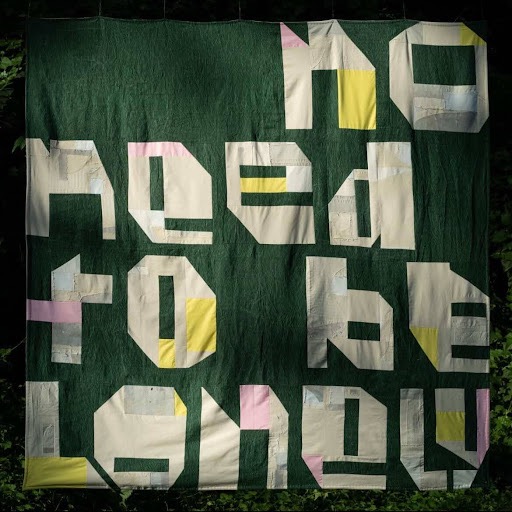
No Need to Be Lonely by Gladie
March 20
With their third album, No Need to Be Lonely, Philadelphia-based band Gladie looks to the best of indie rock’s past, drawing from the raw immediacy of the ’90s and early 2000s. The sound evokes the punchy melodic grit of Superchunk alongside the sharp, unvarnished candor of early Liz Phair. Rather than feeling nostalgic, however, the album reframes those influences through a contemporary lens, pairing scrappy guitar-driven arrangements with an emotional urgency that feels distinctly of the moment.
The album’s first single, “Future Spring,” bursts open with layers of fuzzy, overdriven guitars, their warmth offset by crisp, driving rhythms. Singer-songwriter August Koch delivers her vocals in a conversational, almost confessional tone, anchoring the song’s punchy punk hooks in lived-in intimacy. The track builds momentum through its bright melodic turns, mirroring its lyrical arc toward self-acceptance. Koch’s lyrics confront the pressure to shrink oneself in a hostile world: “The parts that you’ve been avoiding / Oh they’re catching up to you… Why do you give up power / When they don’t care at all?” The music’s propulsive energy gives the words a sense of defiance, transforming self-examination into something bracing and empowering.
On the gritty, tightly wound “Car Alarm,” Gladie leans harder into distortion and volume. The guitars are sharp and abrasive, driven by a restless tempo that mirrors the song’s simmering frustration. Koch snarls her way through the verses, using dark humor to grapple with the absurdity of navigating daily life amid constant chaos and injustice. “Complaining about the traffic / When I’m part of it/Looking for the problem/ When I’m the one who started it/Every day I wake up the same,” she sings, her voice cutting through the noise with exasperated clarity. Koch has described the song as a response to witnessing ongoing horrors while still being forced to function within a system “envisioned without humanity at its core,” and the song’s relentless, almost claustrophobic sound captures that feeling perfectly.
True to its title, No Need to Be Lonely ultimately offers a sense of solidarity and release. The album serves as a cathartic companion for everyday frustrations: commutes, routines, and small personal failures, all unfolding against a broader backdrop of violence and inequity. Through bristling guitars, unpolished melodies, and Koch’s candid vocal delivery, Gladie creates a record that doesn’t pretend to have easy answers but insists on connection as a form of resistance. It’s loud, empathetic, and deeply relatable.

Tell Me How You Really Feel by Katelyn Tarver
March 6
On her third album, Tell Me How You Really Feel, indie-pop musician Katelyn Tarver turns inward, using songwriting as a form of catharsis in the aftermath of the dissolution of her ten-year marriage. The record functions as an emotional reckoning: an attempt to sift through grief, confusion, and self-redefinition in real time. The result is a deeply intimate collection that often feels less like a polished pop album and more like pages torn from a private journal.
The album’s standout is “Price,” a restrained, introspective track that captures the hollow aftermath of heartbreak with aching clarity. Over a sparse acoustic guitar, Tarver’s voice trembles with pain and disbelief as she confronts the emotional vacuum left by divorce. “Can’t tell if I’ll ever know how to trust / Used to know every piece of me / Now I’m just picking up pieces of my life / Guess that’s the price,” she sings, her delivery hushed and raw. As the song unfolds, it gradually swells. Banjos slip in, the percussion quickens, and layered harmonies bloom, suggesting tentative forward motion even as grief lingers. The song’s power lies in its refusal to rush healing, portraying loss as something lived with rather than resolved.
Another notable track, “#1,” finds Tarver in a markedly different emotional register. Here, she trades introspection for buoyancy, delivering a confident pop-rock anthem fueled by bright electric guitars and a propulsive drumbeat. The song celebrates independence and the disorienting thrill of starting over, embracing uncertainty with open arms. Tarver’s lyrics are sharp and playful, poking fun at her Los Angeles life and acting aspirations (Tarver is in an upcoming Netflix series with Molly Shannon) with self-aware humor that keeps the track light on its feet without feeling flippant.
Taken as a whole, Tell Me How You Really Feel maps the nonlinear terrain of heartbreak, from devastation and self-doubt to cautious optimism and renewed autonomy. While the album occasionally wavers in its dynamic range, its emotional sincerity remains compelling. Tarver’s greatest strength lies in her willingness to sit with discomfort, and as she continues to evolve as an artist, her songwriting feels poised to dig even deeper into the complexities of pain, growth, and self-discovery.
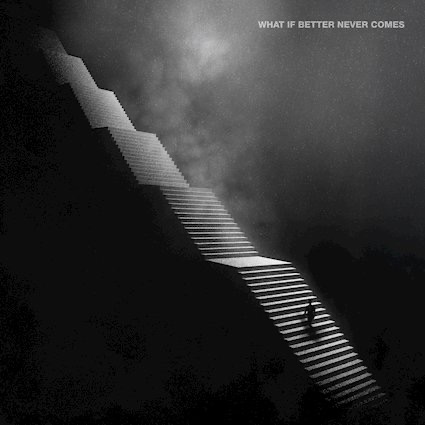
What If Better Never Comes? by Mallavora
March 27
The metal scene is not typically where one expects to find openly feminist artists, but Mallavora defies that assumption. The female-fronted alternative metal group boldly confronts issues such as the misogyny that remains rampant within both the metal scene and society at large. Nowhere is this clearer than on the album’s standout single, “Lilith & Esther,” which features a collaboration with “fairy metal” solo artist BANSHEE. Together, they address misogyny, predatory behavior, and systemic inequality with striking intensity.
The song draws on the biblical figures Lilith and Esther as symbols of female power, women whose strength and individuality were historically suppressed rather than celebrated. In doing so, Mallavora crafts a modern feminist anthem fueled by righteous anger. Crushing metal riffs and feral screams channel female rage against a patriarchal society, while lead singer Jessica Douek’s deep, commanding vocals are paired with BANSHEE’s ethereal, haunting delivery. The contrast between the two creates a compelling emotional tension, balancing fury with resilience. “Women are rising / Warriors parting the red sea,” Douek sings, invoking liberation and defiance. Beneath the song’s heavy guitar work, Middle Eastern–influenced melodies weave through the mix, a subtle nod to Douek’s cultural heritage.
Beyond feminist resistance, What If Better Never Comes? also explores the band’s lived experience with chronic illness. Both Douek and guitarist Larry Sobieraj face this daily reality, and the track “Sick” gives voice to their frustration and pain. Fast-paced guitar riffs and ominous vocal lines erupt into visceral screams as Douek confronts a healthcare system and society that repeatedly dismiss the chronically ill. “Why are we pretending that everything is fine? / ’Cause the system is broken and we’re out of time,” she sings, articulating a sense of urgency and exhaustion that feels painfully real.
As the album unfolds, Douek reveals the full range of her vocal ability, incorporating R&B, soul, and blues influences that push the boundaries of the alternative metal genre. What If Better Never Comes? ultimately offers a compelling and emotionally charged reinvention of modern metal, one that wields distortion and rage as tools for social critique, unflinchingly pointing to the deep fractures in the world around us.

Until You’re Satisfied by Yonaka
March 13
It’s hard to put the shape-shifting, Brighton-based trio Yonaka into a single box. Their sound is constantly in motion, pulling from metal, ’90s alternative rock, blues, and punk, and their second album Until You’re Satisfied reflects that restlessness. The result is a compelling, cohesive collection that still allows each track to stand apart, shifting moods and textures from song to song.
The addictively catchy “Trouble Follows” blends retro pop sensibilities with high-energy rock. Over a thudding bass line, lead singer Theresa Jarvis delivers sneering, sharp-edged vocals about a doomed romance. When the chorus hits, her voice opens up into a blues-influenced swell. “There ain’t no soul searching, baby / That could fix this mess,” she sings, dismissing a love she knows will never be right.
That sense of emotional dysfunction carries over into “Problems.” The track opens with Jarvis singing in a softer, more mournful tone over slow-burn guitar work, her delivery recalling Portishead’s Beth Gibbons. As the song builds, it erupts into a grunge- and metal-inflected refrain. “It’s like I said / I’ve got problems,” Jarvis admits, not with self-pity but with weary acceptance.
Jarvis has described the album as “about love, but not all gooey—it’s the dirty bits and the harsh bits that happen to everyone whether you admit it or not.” Until You’re Satisfied lives up to that promise. There is little romance here, but plenty of heartbreak, self-awareness, and unresolved endings. By transforming pain and chaos into dark, hook-laden pop songs, Yonaka crafts an album that is as emotionally raw as it is irresistibly catchy.

