


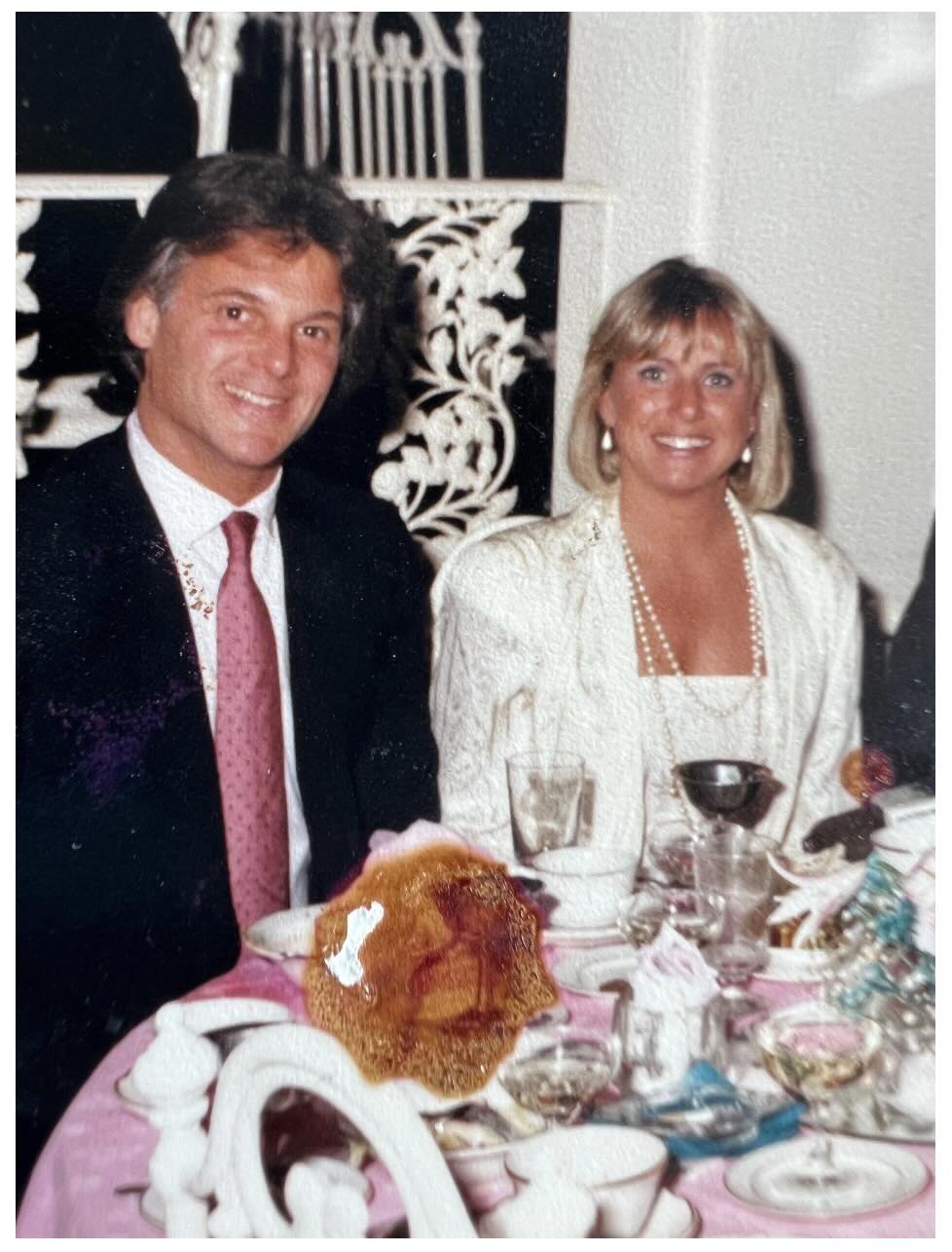
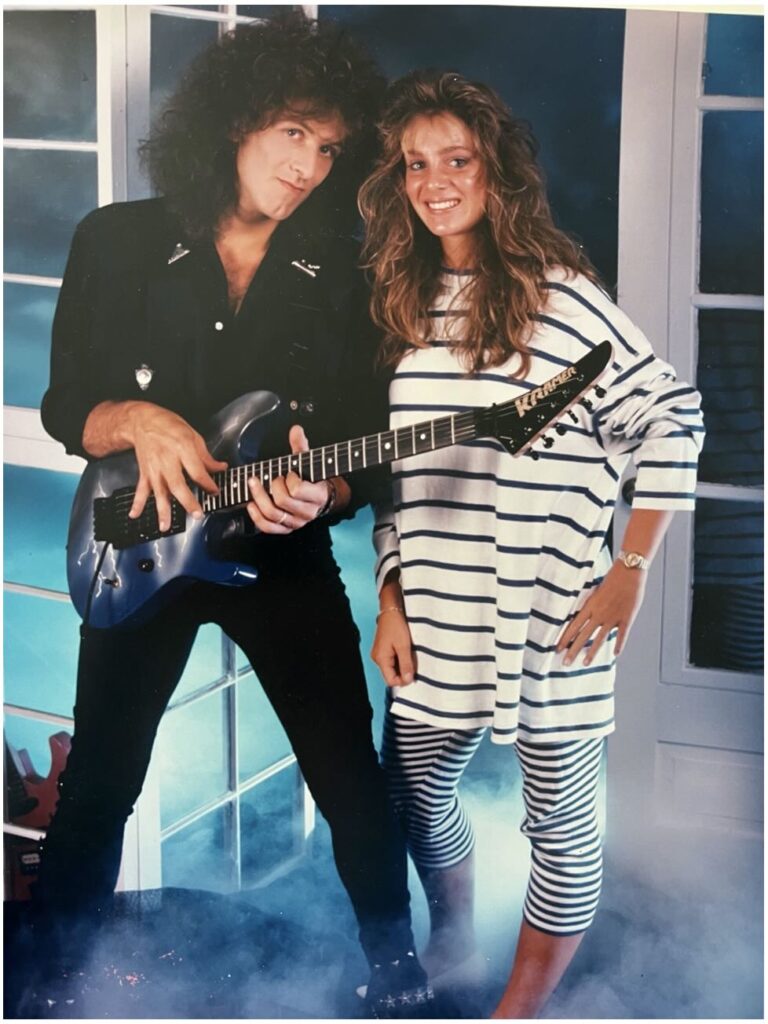
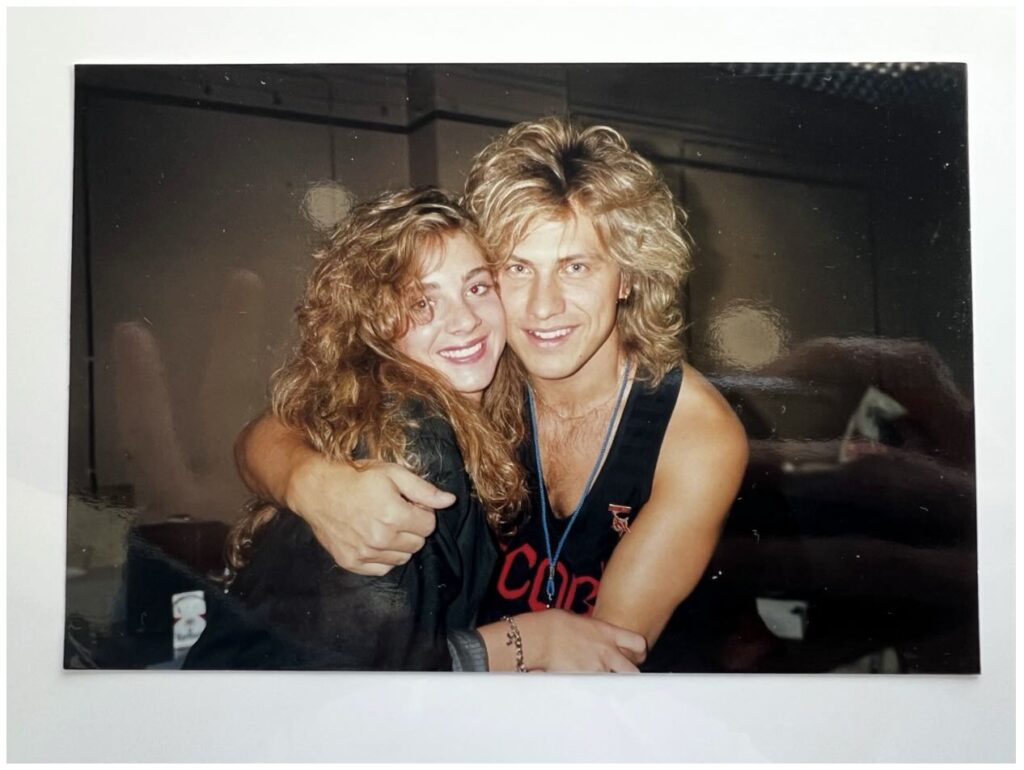
Danielle Diamond grew up watching the world sparkle. Her childhood unfolded backstage at rock concerts, between private jets and dressing rooms, in the spaces where the lights dimmed and the artists took off their armor. Bon Jovi sat at her dinner table. Van Halen crashed on the couch. Her father built a guitar empire from the ground up. The dream, from the outside, looked complete.
But when Danielle came home from school each day, she didn’t run to the stereo. She stood quietly at the front door, listening—trying to guess which version of her mother might be waiting on the other side.
That contrast—glamour and instability, success and sorrow—shaped her. And it forms the backbone of Happy Adjacent, her forthcoming memoir slated for 2026. The book is unflinching but tender, full of grit and grace, and written with a kind of emotional precision that comes only from living a story long before telling it.

“I used to think if I could just get everything right, she’d be okay,” Danielle says, reflecting on her mother’s decades-long battle with bipolar disorder. “Perfect grades, perfect body, perfect behavior. That was the deal I thought we’d made, even if no one ever said it out loud.”
Her mother—a radiant, intelligent woman—tried everything to stay afloat. Prozac. Electroshock. McLean Hospital. The battle was never quiet, but it was always private. Danielle learned how to smile through it. To carry the family’s shine even when her world was trembling.
“There was always a show going on,” she says. “But the real performance was at home.”
The title Happy Adjacent is more than metaphor. It describes a way of living—near to joy, brushing up against it, but never quite crossing the threshold. “I was constantly chasing that feeling. The belief that if I got the job, the relationship, the apartment, I’d finally feel good,” she says. “But every time I arrived, I felt… nothing. Like I’d reached the end of a rainbow and found a very stylish empty room.”
She was young when she learned to spot the difference between the life people present and the one they’re living. While her classmates imagined rock stars as gods, Danielle watched them grieve and spiral and try to outrun themselves. She saw Eddie Van Halen struggle with addiction. She saw Madonna retreat in a man’s presence. She saw behind the curtain before most people ever saw the stage.
And then she lived it. Early graduation. The Moscow Peace Festival at seventeen. A soap star boyfriend. NYU. MTV. By 21, she’d amassed a résumé—and a personal reckoning. Her mother’s death, by suicide, didn’t stop her. It silenced something. Danielle moved forward like a woman underwater.
“I controlled everything I could,” she says. “My food, my schedule, my body, my emotions. I thought if I didn’t let myself feel it, maybe it wouldn’t destroy me.”
Grief doesn’t play by those rules.
What eventually cracked the facade wasn’t a breakdown—it was a conversation. With Eric Clapton. “I told him about my mom. He told me happiness was an inside job. It sounded cliché at the time. But it stayed with me.”
It was years before she could even attempt that job. A yoga class. A moment of stillness. A mind that wouldn’t stop spinning. “I realized I had never really sat with myself,” she says. “And suddenly I understood—this thing I had been running from was never outside me. It was my own mind.”
She doesn’t frame it as a triumph. This isn’t the story of someone who found enlightenment on a retreat. It’s messier, more human. Danielle still gets overwhelmed. Still wrestles with the urge to do more, to prove something. But she’s no longer pretending.
That honesty is what defines Happy Adjacent. It’s not interested in transformation for the sake of narrative satisfaction. It’s about recognition. About naming the dissonance between a life that looks enviable and a heart that feels empty. It’s about how early wounds shape adult identities. And about what it means to live beside joy long enough to understand that you’re allowed to claim it.
“I think most people are walking around with this unspoken question,” Danielle says. “Why don’t I feel better? Why, after all I’ve done, all I’ve achieved, do I still feel like I’m outside my own life?”
October’s Mental Health Awareness Month offers a timely backdrop for Danielle’s story to enter the conversation—not as diagnosis or prescription, but as deeply lived truth. Happy Adjacent doesn’t speak from a podium; it walks beside you. At a moment when mental health messaging is often diluted into slogans and swipeable mantras, Danielle is offering something more lasting: a clear-eyed look at the silent struggles many carry behind polished exteriors—and a reminder that naming the pain is its own kind of healing.
That question lives at the center of her book. But she doesn’t offer a simple answer. What she does offer is space. For grief. For contradiction. For the years it takes to understand your parents. For the ways we build defenses that eventually become cages.
Today, she’s a teacher. Of yoga, of meditation, of boundaries, of self-forgiveness. She’s also a mother. A daughter still. And finally, a writer.
When asked what made her finally write the book, Danielle pauses. “I stopped thinking about it as my story. And I started thinking about the people who needed it. The kid who’s scared to go home. The adult who’s still performing. The parent who doesn’t know how to explain their pain. I wanted them to know they’re not the only one.”
It’s a story about the spaces between things. Between fame and family. Between control and surrender. Between appearances and truth. And ultimately, between surviving and living.
“I’ll always be a work in progress,” Danielle says. “But at least now I’m in the room. I’m not standing outside anymore.”

