


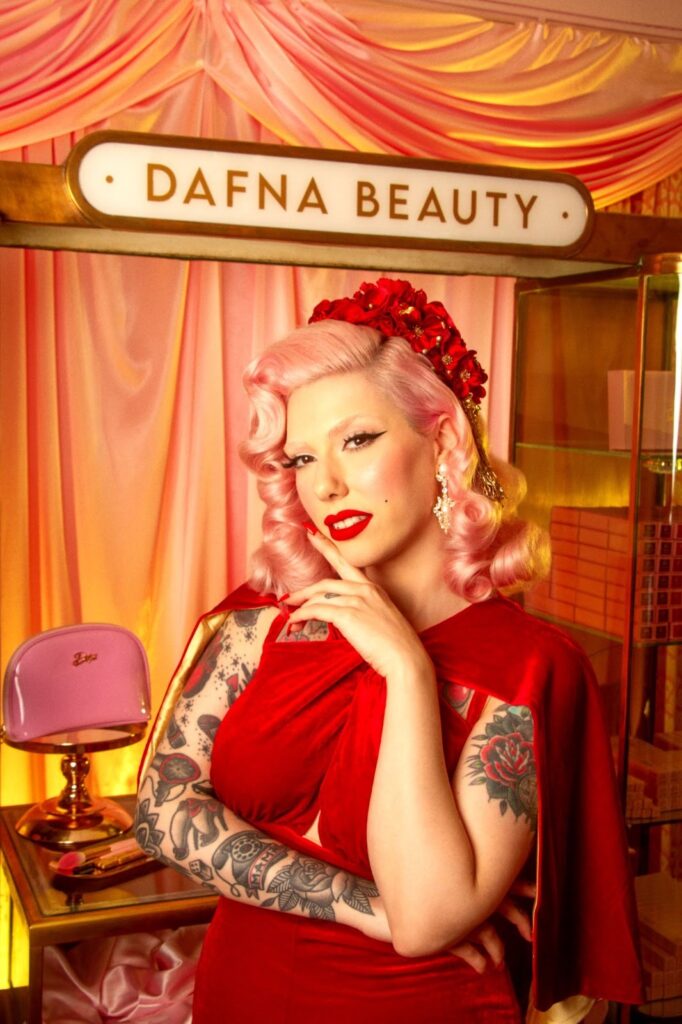
Pinup model and makeup mogul, Dafna Bar’el (@Dafna_Barel), is the founder of Dafna Beauty, a vintage-inspired vegan cosmetics brand bringing Old Hollywood glamour back to the modern makeup bag. Known for her signature pink-on-pink palette and ultra-femme aesthetic, she reimagines the iconic silver screen starlet in striking colors and irreverent charm.
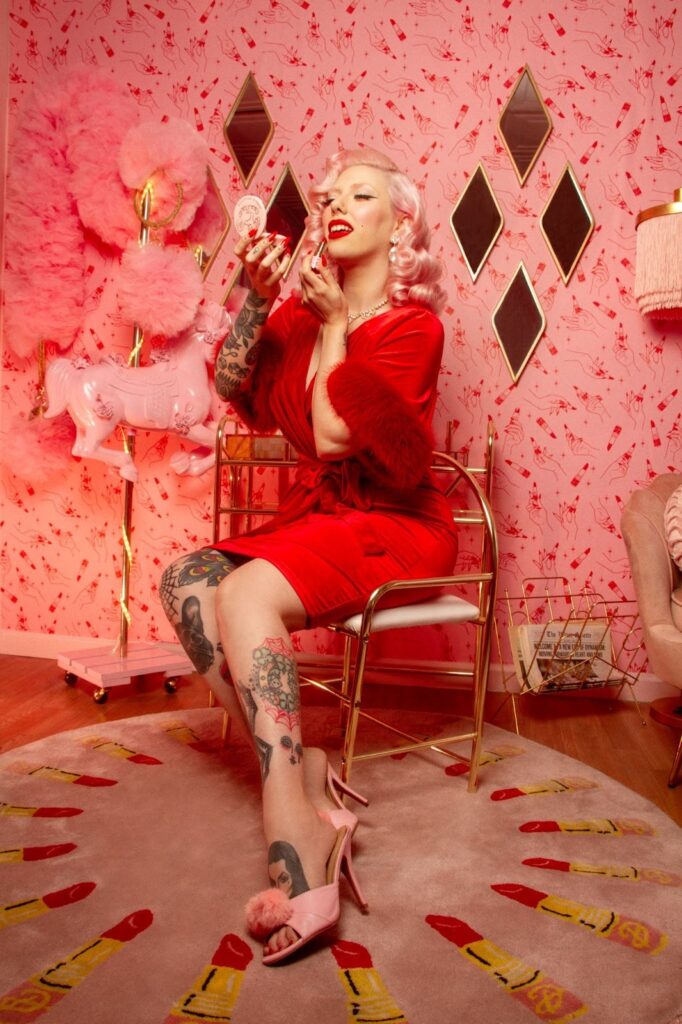
Often sweeping her rose-quartz-colored hair into a playful poodle updo, she balances the sweetness with crimson lips and cat eyes sharpened to dagger-like precision. Her cruelty-free wardrobe shimmers with technicolor vibrance, from pastel velveteens to crystal gloves, faux furs, and bold animal prints.
Whatever the ensemble, Dafna’s style remains unapologetically pink. Bar’el’s devotion to a shade dismissed by many as feminine and therefore frivolous, invited us to look closer. We explored her commitment to the controversial color and her experience embracing mid-century elegance while rejecting the limitations placed on the women who wore these styles.
You’re known for your femme-forward look. When and what inspired you to go pink?
Randomly enough, my “color scheme” before going pink, about eight years ago, was all red and black. My hair was those two tones, my wardrobe was pretty much all in those colors, and even my furniture at home was all red and black. At the time, I was doing bridal hair and makeup and was working on building my website. When I started designing it in the red and black color scheme, it felt more like a BDSM website than my actual bridal work, which was more vintage-y and romantic.
I scratched that design and started over with a pastel pink color scheme, fell in love with it, and then slowly, this shade took over my life—from my hair all the way to my home design, which doubled as my studio for appointments.
I found this color creates a very happy, calm, and pleasant atmosphere. It definitely invites a more feminine energy and brings a child-like, playful feeling to many women when they enter a super pink space.
Why do you think pink evokes such a strong and, at times, polarizing reaction from people?
I feel like we’re taught to disregard things that are socially considered “feminine” as silly or immature, even unimportant. Usually, if it’s something mostly women relate to, a lot of people will instinctively look down on it. Even more specifically, many women will prefer not to relate to it.
I was like that as well when I was a goth teenager. I hated pink and thought people who loved it lacked depth. I think that was a very “I’m not like other girls” phase, and I’m happy to report that these days, I tend to care more about the opinions of women than men or boys. A lot of men feel a little uncomfortable and out of place when they enter my pink beauty shop, but as women, we tend to feel that way in many spaces, so I don’t mind if men experience it once in a while as well.
As a feminist and founder of a mid-century-inspired cosmetics brand, how do you think vintage aesthetics intersect with modern feminism?
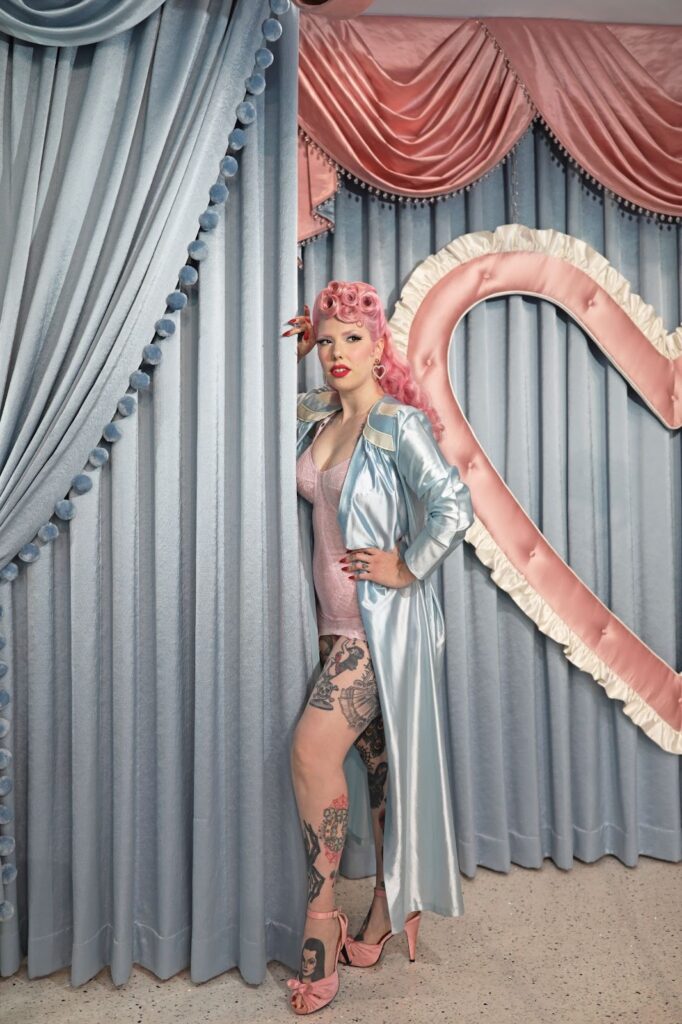
I love this question. I think reclaiming the vintage aesthetic as a feminist is one of my favorite things. I love to embody this contrast by embracing a very 1940s–1950s inspired aesthetic while sporting tattoos, colorful hair, and wearing only vegan clothes and shoes.
I hope that this contrast speaks for itself, but I still occasionally encounter more conservative people who might say something like, “Finally, a woman who dresses like a real woman,” and it really makes me cringe. I think everyone, especially women, should dress how they want and be free to express themselves. Vintage looks don’t necessarily need to be hyper-feminine or even match your perceived gender. There are so many ways to express yourself using vintage style.
I feel we can have nostalgia for these beautiful aesthetics without idolizing the times or political climate they came from, and without wishing we were born in eras where racism and misogyny were even worse than today.
How does your love of mid-century clothing and makeup style support your approach to sustainability?
I love that vintage style means you mainly source vintage items, support small brands, or even sew your outfits yourself (which is my favorite hobby). It feels a lot more sustainable and special to me than shopping fast fashion—if you have the option to avoid it, which I understand is not accessible to everyone.
I also try to carry this mindset into my business and how I curate my makeup line. I focus on concise, classic staples, emphasizing quality rather than quantity.
Many people feel like they can’t take fashion risks and would rather blend in than risk embarrassment. What advice do you have for people looking to dress more authentically and stop hiding behind trends?
My first piece of advice would be: don’t follow trends. You can stay updated and use trends as inspiration if they align with your aesthetic, but the trend cycle is ever-changing. True style is timeless.
Start by finding an era or a style that draws you and brings you joy. Figure out which silhouettes feel the most comfortable and flattering, and don’t be afraid to experiment. It might be intimidating at first to dress more eccentrically, but you might be surprised by how positive the feedback is—and, most importantly, how good it feels to actually “do you.”
How do you wear nostalgic vintage clothing without tipping into costume?
I think part of the trick is not being afraid to look like you’re wearing a costume. When I have inspiration for a look I’m excited to put together, it is kinda like a costume in my mind. I think about what kind of vibe it gives, who it channels, what decade it belongs to. And then I style it according to this idea, so it is kinda like a costume to me. But at the same time, to not make it look too “costumey,” I would say that actually going all the way—styling your hair and makeup to match the outfit, and accessorizing—makes it look like a complete and intentional look rather than wearing something that might feel like it’s wearing you.
Which wardrobe detail do you feel has the power to transform a look entirely?
I feel like shoes have a lot of power in transforming a look. They can take it from casual to evening, change your posture completely, and make something like a pencil skirt look awkward or amazing depending on the shoe you choose to pair it with.
I really like the look of high heels, but I also like my comfort, so lately I’ve been opting for something more like a platform with a moderate angle that adds height but also doesn’t ruin my day.
Are there any fashion rules you purposefully break to challenge traditional femininity?
I’ve always been extremely feminine in my style choices, but lately I’ve been enjoying living out my “boss lady” fantasy and wearing pants, suits, padded shoulders, and I recently even made my first vest. It’s fun to change it up, and also it’s way more functional when working long days vending at events and needing to work more physically but still feel stylish.
What’s one piece of advice you can share when curating a look?
Personally, for me, I feel like hair and makeup are a huge part of an outfit. I like to change it up, experiment, and try to complete the look using the right hairdo and makeup. One outfit can be styled in several different ways if you just change the hair and makeup significantly, and I feel like it’s something fun to explore.
Who are your style icons?
Definitely Dita Von Teese. Her timeless elegance, attention to detail, and endless glamour are something I look up to.I also take a lot of inspiration from drag queens. I love the DIY aspect of this art form and the opportunity of creating a complete character that is maybe an exaggerated version of myself. This idea also makes it so that I don’t feel the need to dress up as “her” every day to feel like myself.

