

As we wake up each day in a culture increasingly haunted by the alt-right, we’re inundated with conservative aesthetics and imagery. From tradwives to “clean girls,” Mormon Wives to stay-at-home girlfriends, these popular trends are tied to values rooted in white supremacy, patriarchy, and capitalism. As the country continues its descent into fascism, it’s more urgent than ever to spotlight women, trans, and femme-identifying individuals who resist conformity through punk aesthetics and art. BUST spoke with punk artists across LA and beyond, to explore what it means to look—and live—punk in Trump’s America 2.0, and why rejecting beauty ideals crafted by men and colonizers remains a radical act.
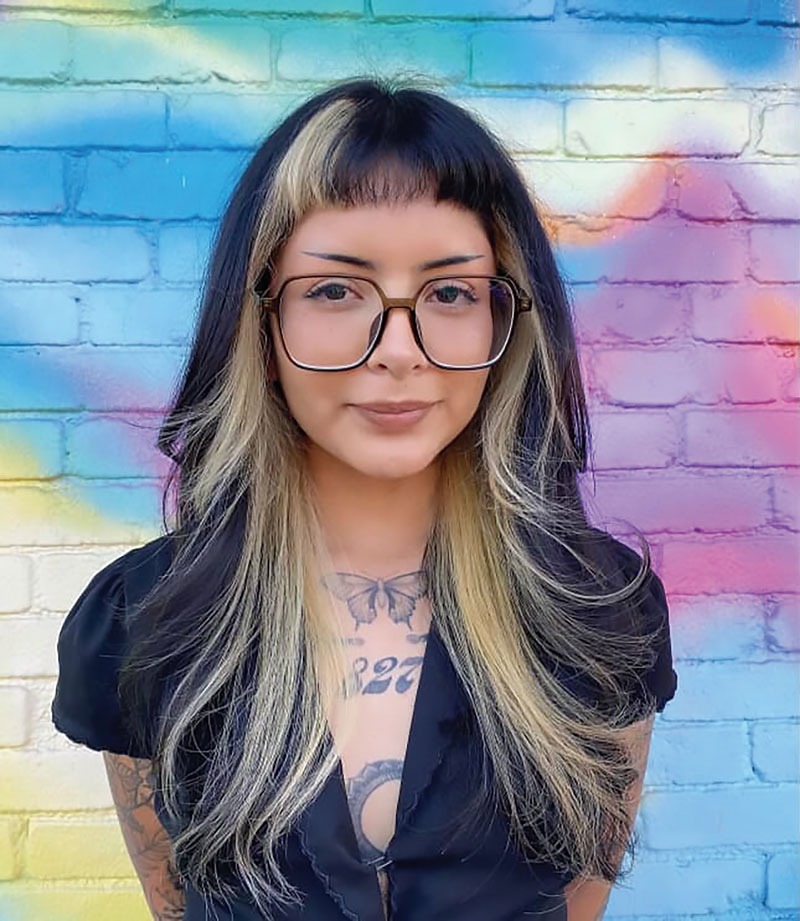
Bri Morales, a LA-Based hair stylist who specializes in bright and alternative hair coloring, discussed searching for alternative icons from a young age, and turned to the person many GenZ women did. “Because of Hayley Williams from Paramore, I would love to dye my hair orange, pink, purple, green, any color that you can think of. That’s how I got into coloring hair and also why I wanted to specialize in it. With colored hair, I felt so confident, and honestly just really cool, and I wanted other people to feel the same way. [Colored hair] is a really nice way to be able to show that you’re a little bit rebellious.” Bri opened her own hair suite to offer a safe, affirming space for femme, queer, and alt clients to experiment freely—something she says can still be hard to find in LA. “It was really important for me to have a space where alternative people can come and feel safe in my chair and get the kind of hair that they want”. Bri emphasized the power of wearing colored hair, “My clients are trying to push themselves out of their boundaries and show people ‘look, I don’t care what you think about me because I like the way that I am and I don’t have to be what society wants me to be. I want to do this for me.’” You can find Bri’s work @cosmogalbribri on Instagram.
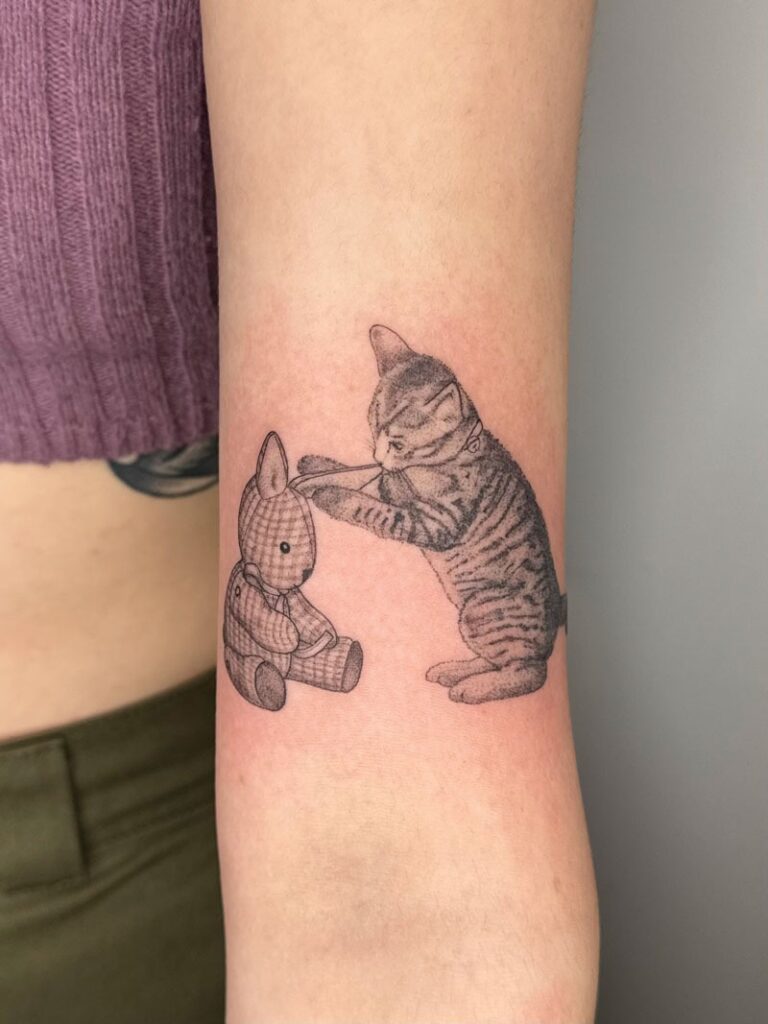
Another aesthetic form that allows people to express defiance against hegemonic norms of “traditional” femininity are tattoos. Tattoos have recently been the center of discourse on TikTok, with many women creators explaining why they’ve decided to remove their tattoos for fear of not appearing elegant or feminine. Milla, tattoo artist and creator of the tattoo studio GirlfirendxLA, rejects the notion that tattoos can’t be feminine, viewing them as a powerful form of identity. “Tattoos definitely are one of the greatest forms of self-expression! You literally get to customize your character and make yourself completely unique to anyone else.” In the recent discourse about being a tattooed woman or feminine-identifying person, Milla shared, “Having tattoos, especially having a lot of visible ones, is a huge form of resistance against the current “clean girl aesthetic” trend that we are facing. I think it shows that people, women especially, can still be feminine, confident, professional, beautiful–all things that the clean girl/trad wife aesthetic seems to claim–while still having a tattoo.” Milla opened up her own studio, GirlxfriendLA in 2022, which houses several women and femme-identifying tattoo artists. “What inspired me was that for so long, spaces like this didn’t exist in the industry.” As Milla explained, “Only within the last few years have we seen female and queer artists truly grow and flourish in the tattoo world, and spaces like ours open up where femme clients are truly respected and prioritized.” On the political nature of sporting tattoos in a conservative country, Milla proclaimed, “Tattoos are definitely political. They’re a form of resistance—intentional or not.” You can find Milla’s work @lambxchop or @girlxfriendla on Instagram.
Punk resistance isn’t just worn—it’s lived and unleashed. Beyond bold aesthetics, I spoke with working women artists who channel their defiance into sound, visuals, and verse, refusing to let a conformist culture dull their edge.
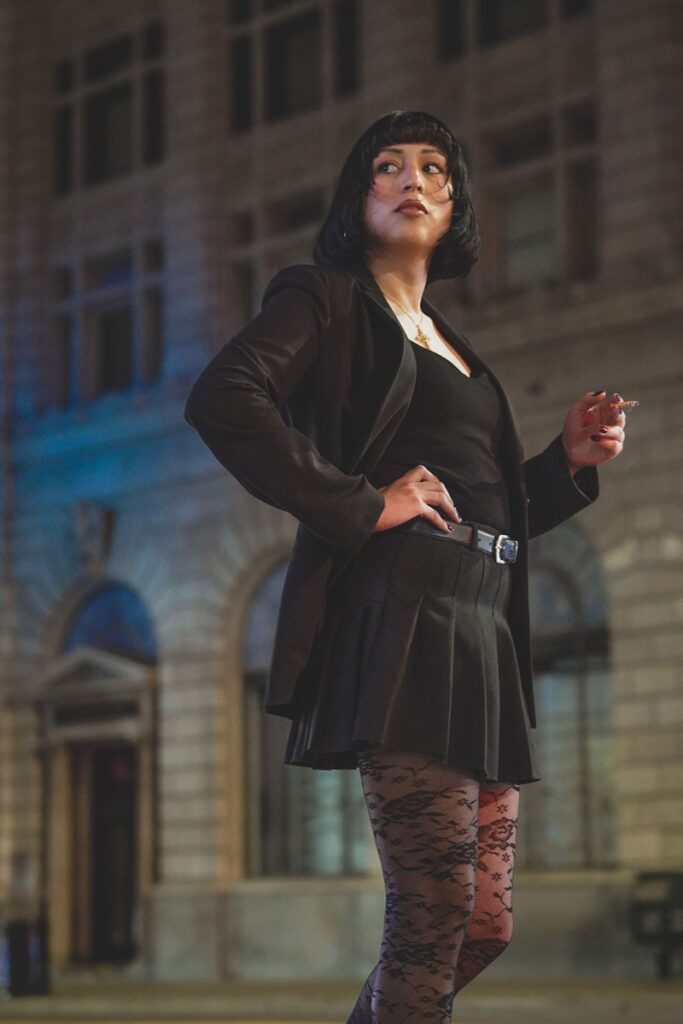
Vero Muerte, a punk/goth singer and multi-disciplinary artist was drawn to the punk and goth art scene for its inherent defiance against rigid forms of feminine aesthetics and patriarchy. Her new single Diabla—“gothic maximalist pop of feminine rage”—was a deliberate response to the current political climate. “My song Diabla came from my genuine anger towards the current political climate and needing to let those emotions out in a way that would empower me, and hopefully others”. Vero goes on to state, “It’s about embracing my villainization. If some believe I’m bad or evil simply because I’m trans or want to express myself in a way that goes against the gender binary, then I will happily be that villain. I’d rather use it to feel more confident instead of feeling defeated or helpless. Feminine rage is so important right now because there has been such a push back to return to patriarchal ideals. Femmes are reaching a boiling point and the only way out is through that rage, in order to feel a sense of catharsis and as a way to create further change. Maximalism is important because we shouldn’t be quiet or too cool to care. We should be loud and in people’s faces even if it makes them uncomfortable.” Vero went on to powerfully state, “Punk art and alternative aesthetics are more important now than ever. The further we get to breaking the glass ceiling, the harder those groups are going to push back. Ultimately, punk art can serve as a tool to stand against groups that are trying to strip us of our rights or break families apart.” BUST readers can follow Vero’s work via socials @vero_muerte and streaming services under the artist name Vero Muerte.
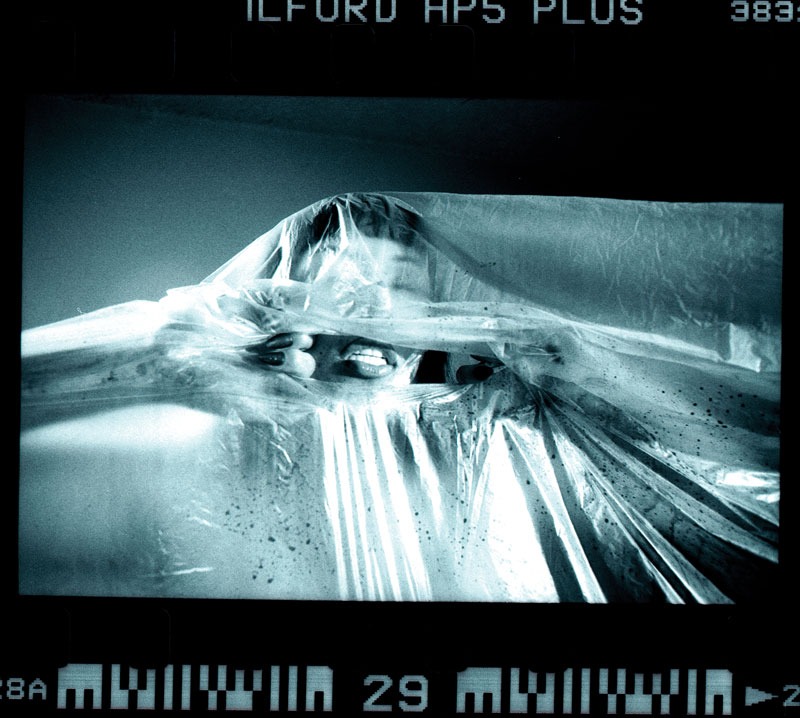
For Vianney Harelly, a fronterize multidisciplinary artist originally from Tijuana, Mexico, punk is engrained in their identity as both an artist and activist. “I would definitely say my expression through the way I dress and present myself is deeply inspired by punk/alternative subcultures”, stated Harelly. “Fashion is both a creative outlet and a form of resistance. After moving from Tijuana to San Francisco and struggling financially, I began making my own jewelry and drawing inspiration from Black, Trans, and Indigenous punk communities. I am very inspired by their creative mixing and matching of colors, textures and patterns. For the past years I have been heavily inspired by the alternative fashion of people in Mexico City and the punk community that has been out on the streets marching loudly to preserve the culture that gentrification and Eurocentric values have tried to overshadow and erase.”

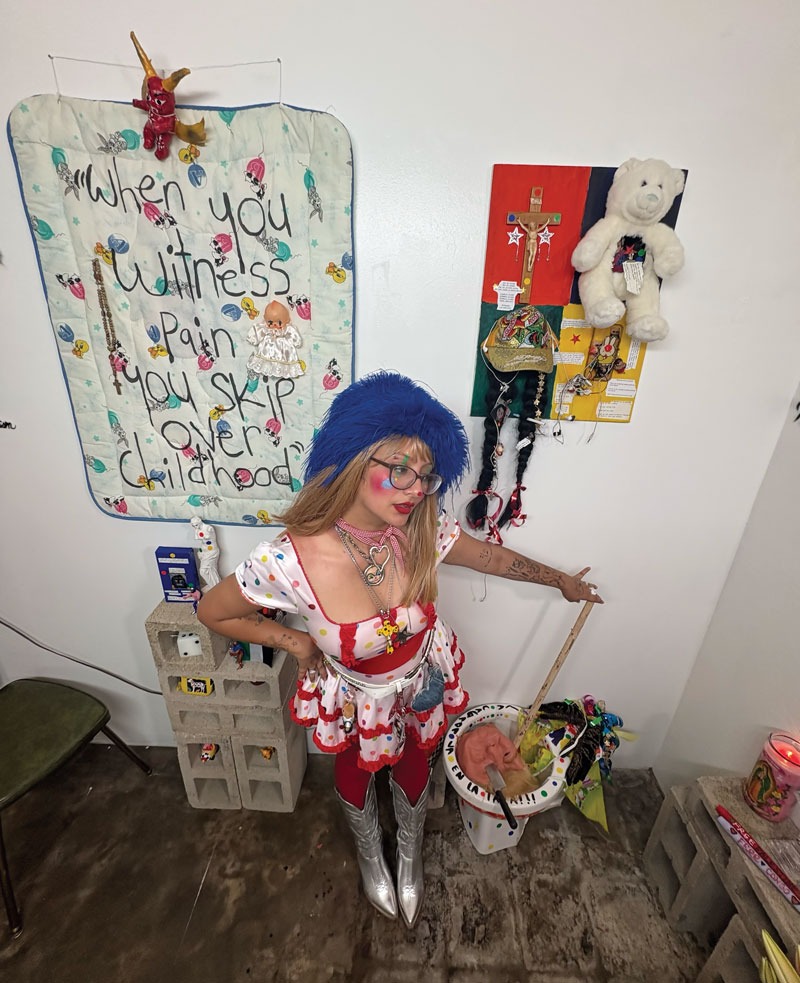
Multidisciplinary artist and Creepy Gals founder Linda, feels similarly towards the importance of subcultural representation in today’s society. “I was always daydreaming and making up characters and drawing… I was creating my own corner of the world,” she recalls. That corner has since evolved into a vivid, irreverent fantasy realm blending bimbos, clowns, and devils—what she lovingly calls “kitschy Lovecore Valentine fantasy with a side of filth.” Rooted in DIY spirit and punk resistance, Creepy Gals celebrates femmes, queers, and weirdos who refuse to conform to the growing pressures of conservative culture. “The themes and imagery that I explore are the very thing conservatives hate the most and shame us for. Our freedom of expression means that they lose control over us.” From immersive Valentine’s shows to collectible toys, Creepy Gals is more than an aesthetic—it’s a joyful act of rebellion. Linda’s work has become easily identifiable and well-loved across the city of Los Angeles, and has encouraged thousands to take a stroll on the weird side. Follow her work at @creepy.gals or creepygals.com.
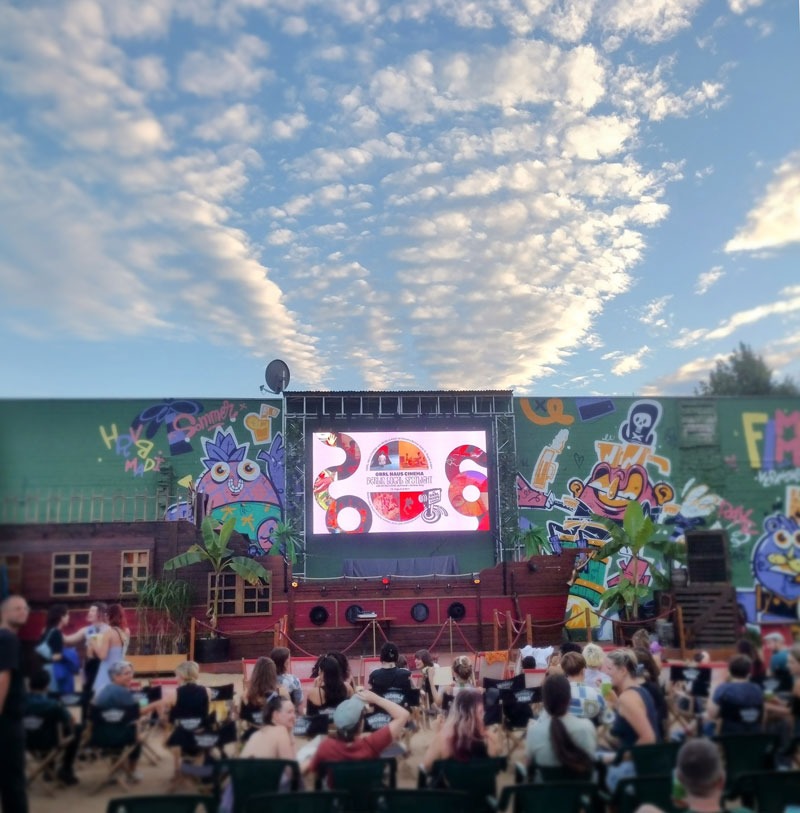
Film is one of the most accessible ways to spread political imagery, and GRRL HAUS, a nonprofit film festival and collective, is dedicated to promoting the works of women, trans, non-binary, and genderqueer filmmakers. Thanks to their work, feminist punk visual aesthetics have had the ability to cross the country and the globe. Anastasia from GRRL HAUS described how important it is to democratize filmmaking and punk visuals, as she stated, “GRRL HAUS is rooted in punk and riot grrrl. As a teen in the ’90s, I identified as punk and riot grrrl, and that energy definitely inspired the creation of GRRL HAUS. That spirit still runs through everything we do.” In particular, GRRL HAUS seeks to make filmmaking accessible and realistic to women, nonbinary, and femme filmmakers. “As a nonprofit, we embrace the DIY ethos, underground culture, and the values of self-reliance, resourcefulness, and creative experimentation that defined those scenes. And of course, the name GRRL HAUS is a nod to the riot grrrl movement, which continues to inspire us.” BUST readers can follow the organization’s work on Instagram @grrlhauscinema or visit grrlhauscinema.com to join the mailing list and stay up to date on calls for entries, upcoming events, and ways to get involved.
Trap Girl, a feminist punk band who recently opened for Bratmobile, has been touting feminist punk resistance since the band’s formation in 2014. Drew Arriola-Sands, the front woman of the band, describes their artistic work as fostering much needed community during a political era that thrives on divisiveness and separation. “We speak to women, non-binary people and queers of all forms. They see themselves in our songs, they feel the rage because they have experienced a lot of what I’m singing about because I went through it too, we understand each other. I suppose that makes it political, we are one as people in those musical moments.” Jocelyn Aguilera, the bassist for the band, discussed the important role their band plays in feminist punk visual culture and in feminist punk resistance. “Trap Girl brings trans, big, and brown to the forefront, so by default, we are 100% punk. Like Alice Bag said, ‘People of color, queer folk, women – all were present from the very beginning of punk’–so we’re not just participating in punk culture, we’re taking back what punk is. My identity as a Brown South Central Rockera isn’t something separate from being punk—it’s exactly WHY I’m punk.” When asked how punk and hardcore music function as resistance today, Aguilera stated, “white supremacy isn’t new. It’s literally what this country was built on when colonizers forced the U.S. into existence as a nation state. Our music is a form of femme resistance because we refuse to make oppressors comfortable. We’re everything colonization has tried to kill. When we refuse to be “respectable,” we’re giving permission for others to be exactly who they are without apologizing for it.”
Images Courtesy Of: Blonde Streaked Hair In Front Of Rainbow Background (Bri Morales); Kitten Tattoo (Milla); Vero Muerte Portrait (Michael Anthony Carbajal), @Carbeyvisionary And Vero Muerte Portrait, Plastic (@Acid.Cowb0y); Balaclava Anti Trump Photo And “When You Witness Pain” Self Portrait Harelly); Grrl Haus With Mobile Kino Screening Berlin Local Showcase (Anastasia Cazabon)

