


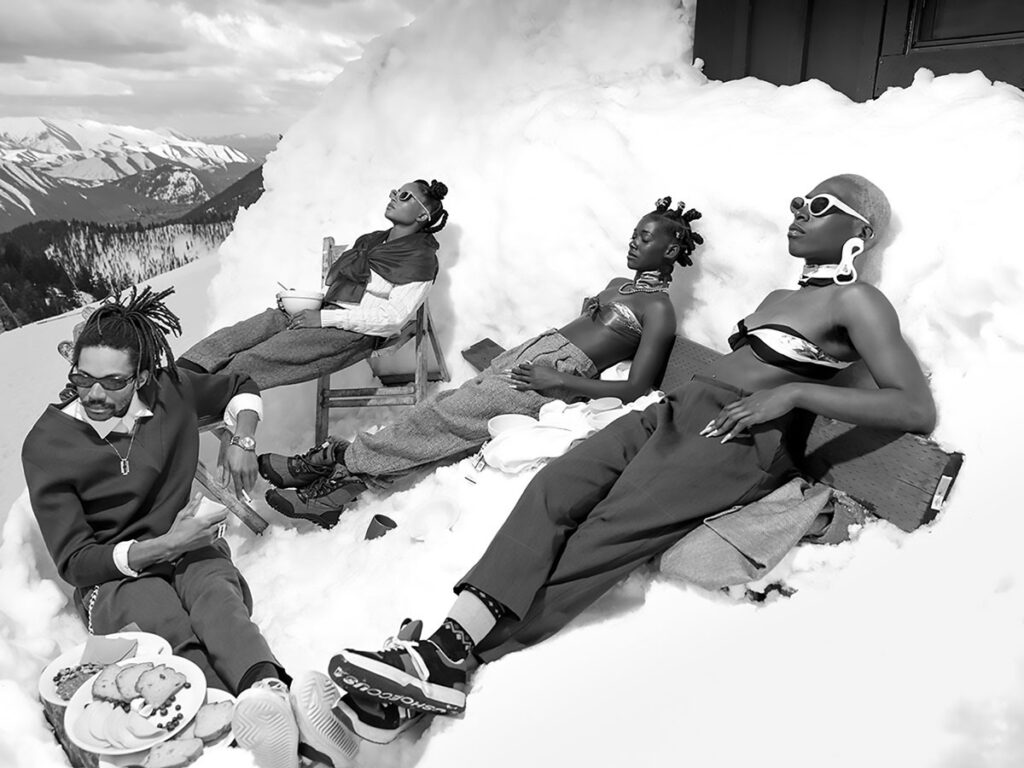
Growing up in the ski town of Sun Valley, Idaho, as a child of Colombian descent, Sofía Jaramillo always felt like she didn’t quite fit in, particularly in the outdoor and snow sports spaces so ubiquitous to the area. As a professional photographer/visual artist, she decided to use her medium to reimagine the narrative of historically white ski culture. Sofia recreated iconic ski photos, most of them taken in her own Sun Valley Resort, using a community of people of color. By creating the kind of imagery that she wished she had seen when she was a child, and placing people of color front and center, Jaramillo’s images challenge the stereotypes of who belongs in snow sports and promote a new narrative. The result is A New Winter.
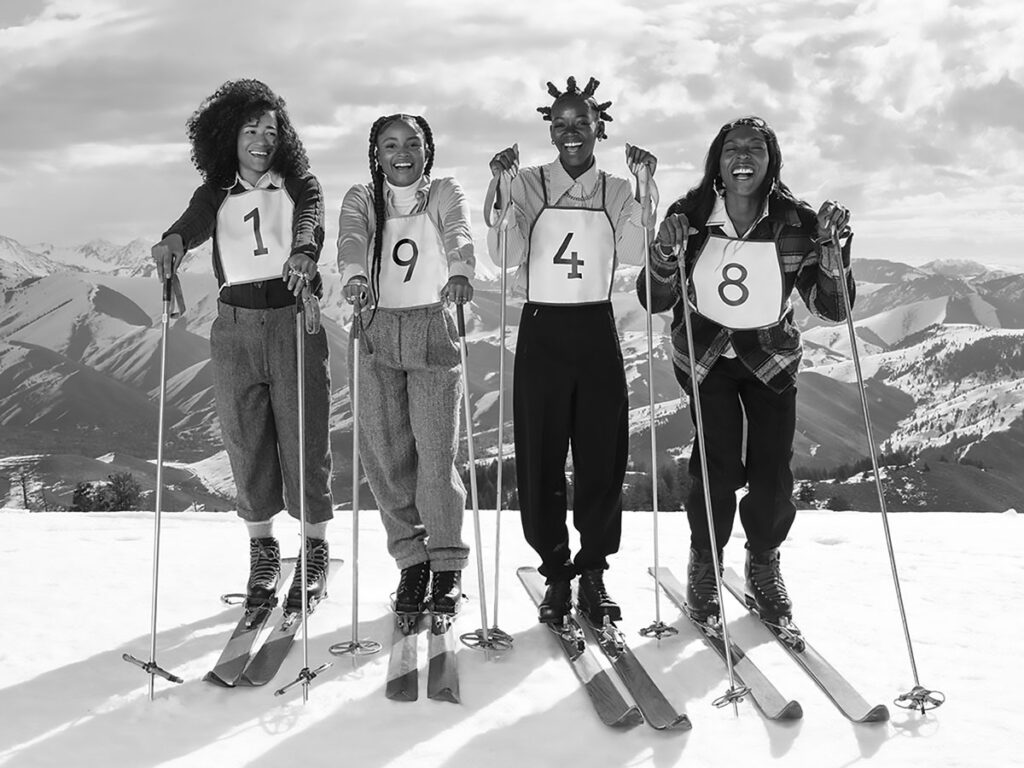
Sun Valley has a long history with skiing. From being the country’s first destination ski resort and operating the country’s first chairlift, to drawing celebrities to its slopes and churning out countless Olympic athletes, Sun Valley is synonymous with ski culture. This history is apparent when visiting the town’s historic Sun Valley Lodge, where over 200 photos line the walls, depicting famous visitors to the area, starting from when the resort opened in the 1930s. It was while on a visit home and looking at these photos that Jaramillo noticed that there was only one image with a person of color—musician Louis Armstrong. “When I saw those images, I thought to myself, How does this relate to who we see on the slopes today?”
The images Sofia saw represented some of the first marketing images of skiing in the U.S. and, as she says, marketing images define culture. Interested to see if she could find any more imagery depicting people of color in Sun Valley’s ski history, Jaramillo spent a day at the local library with an archivist. The search came up with only two, including the one of Armstrong. She began to think what it might look like to reimagine this history and create a new narrative of ski and snowboard culture today—a more inclusive one.
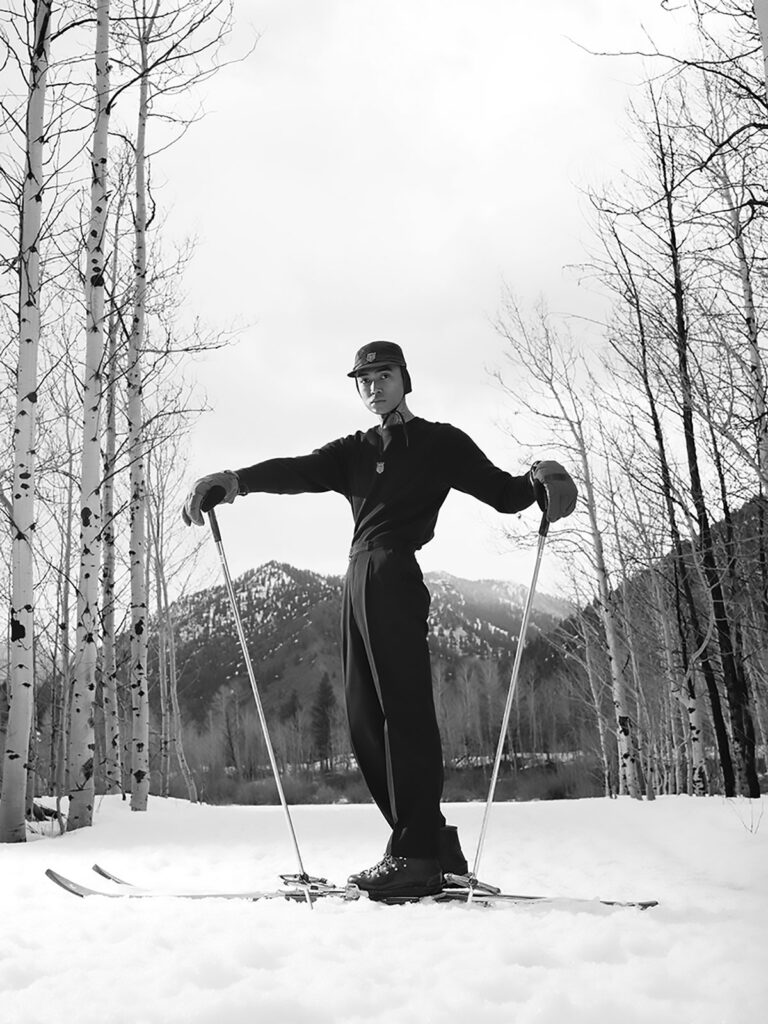
Jaramillo had the idea to recreate some of ski history’s most iconic images, many of them shot in Sun Valley, using people of color as her subjects. But she’d never undertaken a project like this; her background was in photojournalism and adventure photography, working for publications like National Geographic, The New York Times, and companies like The North Face and Patagonia. So, she sat on the idea for three years. In that time, the idea was always at the back of her mind, and she began to slowly assemble members of the future crew of A New Winter.
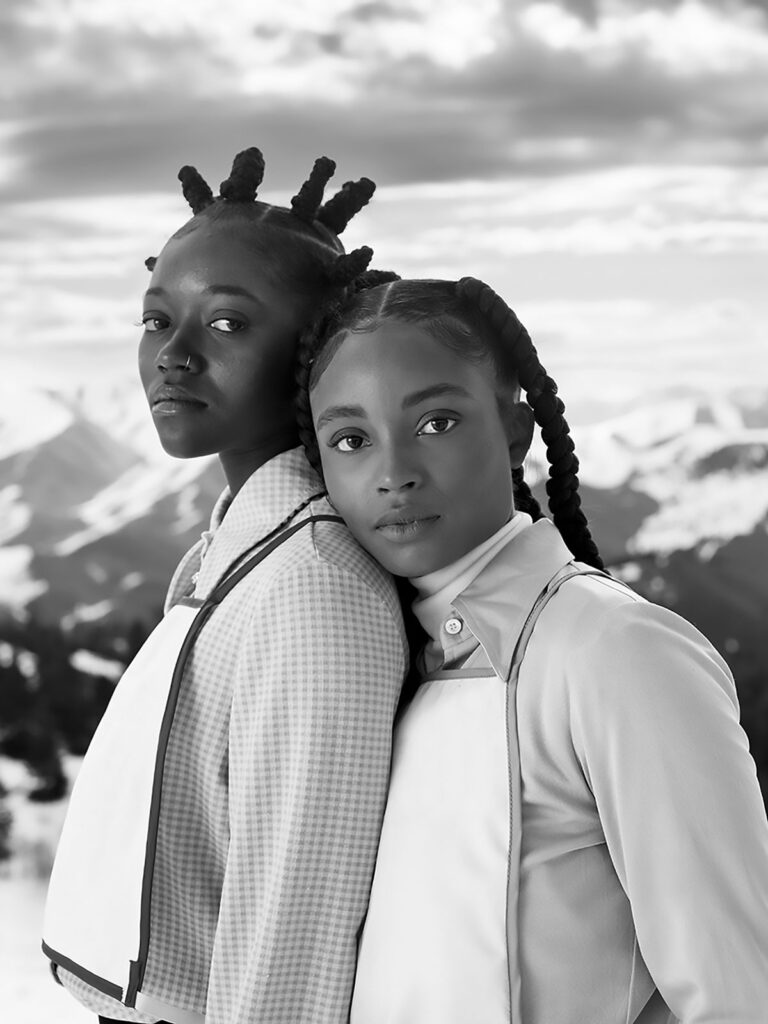
Finally feeling burned out in the commercial world of photography, Jaramillo decided to jump headfirst into the project. She had met an amazing stylist in New York specializing in vintage styling and a lighting director and a producer, both from Boise. Jaramillo felt ready to amass the rest of her crew, a welcome reprieve from the solitude of editorial photography and a chance to create a communal creative space.
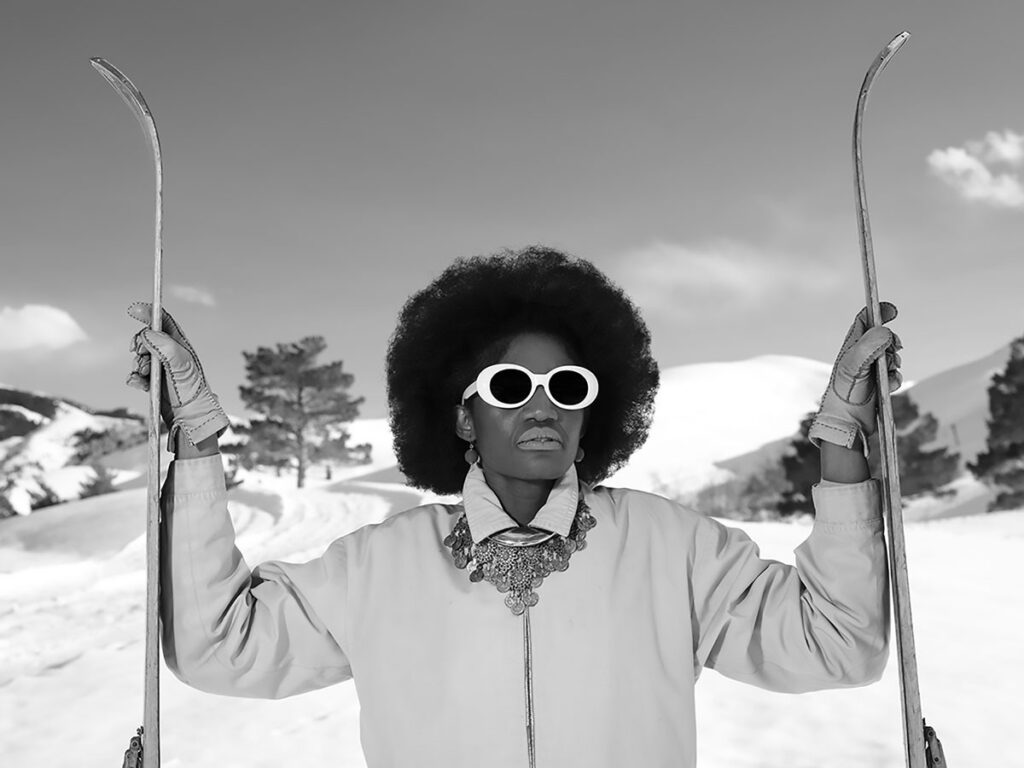
The images in A New Winter were shot over the course of two years, with the first being, in Jaramillo’s words, a “concept year,” which she self-fundraised. “I worked my butt off on the worst jobs ever, for way too many hours, and set those funds aside so I could get a team out,” she explains, “and by the second year, we had the concept, and we had some images we could use to get more support,” which she found in a grant from the organization Protect Our Winters. Going into the first year, in the fall of 2022, Jaramillo nervously approached Sun Valley Resort about the concept, as she would need them on board to shoot on Bald Mountain. “I knew I’d be asking them to confront a part of their past.” A member of Sun Valley’s marketing department recommended she present the concept to Sun Valley senior leadership for full approval, about 100 members of the resort’s top brass. “That was really efficient, because then everyone knew what it was, from ski patrol to restaurant managers—and I had to work with all those people,” Jaramillo explains. “I couldn’t have done it without them. Sun Valley showed up in a big way, from donating housing to having Sno-Cat drivers move picnic tables from the top of the mountain to ski patrol digging pits for us—everyone was really excited to be involved. That was something I did not anticipate: how much I needed the community and how much they showed up.”
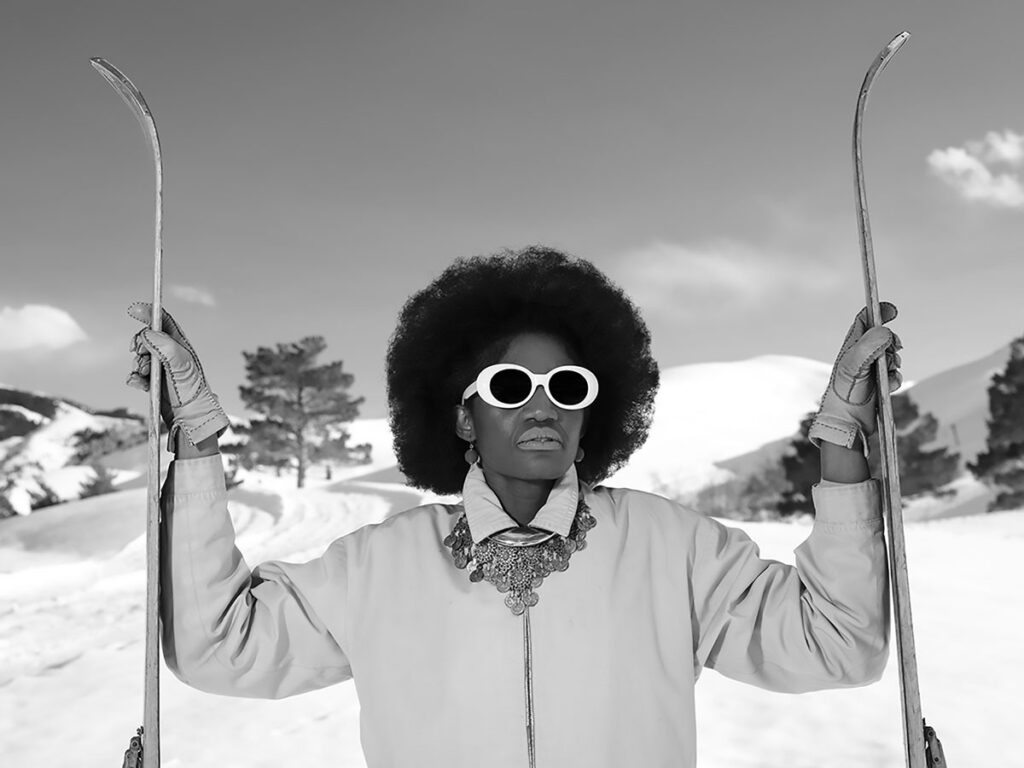
Jaramillo also reached out to the Regional History Museum about incorporating some ski artifacts into her photos, a request initially met with hesitation. So much hesitation in fact, that in her first year, she was only loaned one item from the collection. However, after seeing how carefully Jaramillo and her crew handled the artifact on set, by the second year, the Museum had given her full access to their archives, which resulted in about 90% of the clothing in the photos of A New Winter being vintage relics from the Museum collection.
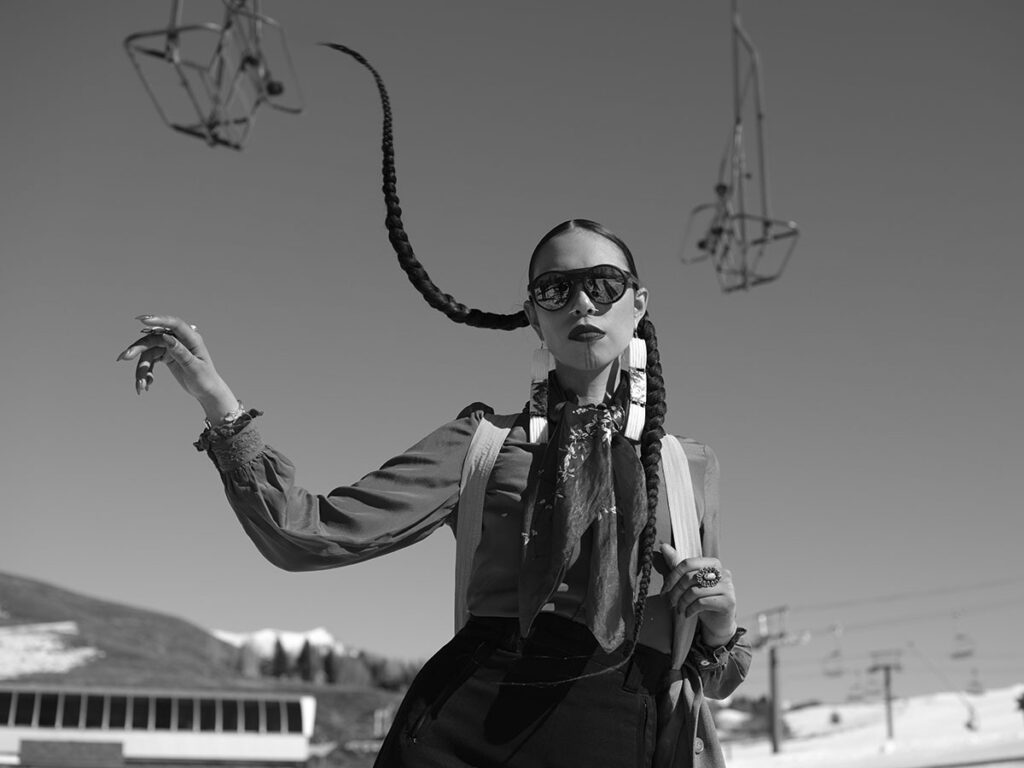
In that first year, Jaramillo’s goal was to recreate the photos she’d chosen down to a T—lighting, location, clothing, posing, everything. “I wanted people to walk into the room and see the photos and think this is a historic image,” she says. She had amassed a community of people of color from the outdoor and fashion industries alongside athletes from snow sports as her models. Jaramillo had a representative crew as well, all with various ideas, backgrounds, and visions—and it was this collaborative feeling that ultimately pivoted her vision slightly.
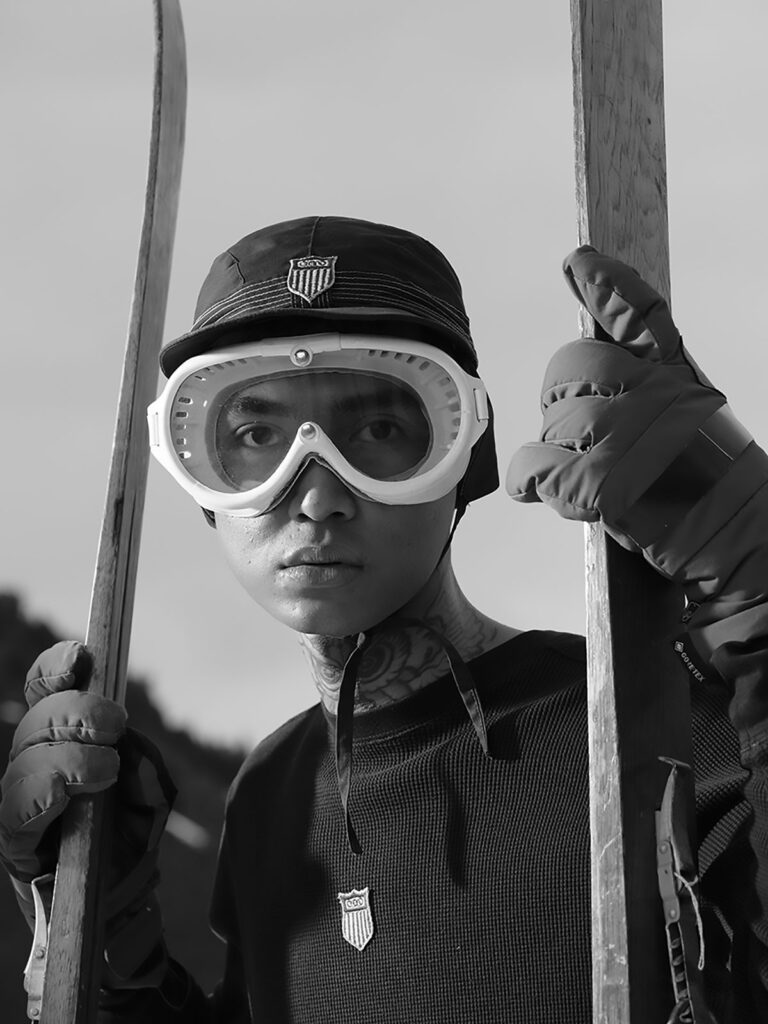
Jaramillo’s amended vision took full flight while shooting the photo Judith Kasiama, which features the founder and CEO of Colour the Trails. “Because of the creativity she brought, I realized, once we were out in the field shooting, that the most powerful images were actually the ones where we branched beyond,” explains Jaramillo, “because there’s this moment between the model and I where we go from simply reimagining to really creating something of our own and bringing our own creativity to it.”
As part o the collaborative nature of the project, each model was also asked to bring an item or piece of clothing to contribute to the set as a way of expressing themselves. One of the best depictions of this is in one of the stronger images of the project, Quannah Chasinghorse I, featuring supermodel and founder of Native Youth Outdoors Quannah Rose Chasinghorse (who generously donated her time for this shoot, believing in this project enough to waive her day rate). The inspiration photo is a still image of Audrey Hepburn from the 1963 movie Charade, where Hepburn, adorned in all black, a hood, and large sunglasses, sits on a deck overlooking a ski mountain, with a table of food and wine in front of her. In the contemporary image, shot on the deck of the Roundhouse, a restaurant that sits halfway up Bald Mountain, Chasinghorse also wears black and a hood, though in the form of her own handmade wolverine fur jacket from Alaska, along with mink earrings adorned with porcupine frills and Sacagawea coins. No sunglasses hide Chasinghorse’s piercing eyes, though, which stare directly into the camera. Any kind of large frames on her face would have distracted from the facial tattoos, a traditional hand poke style called Yidįįłtoo, which she proudly displays.
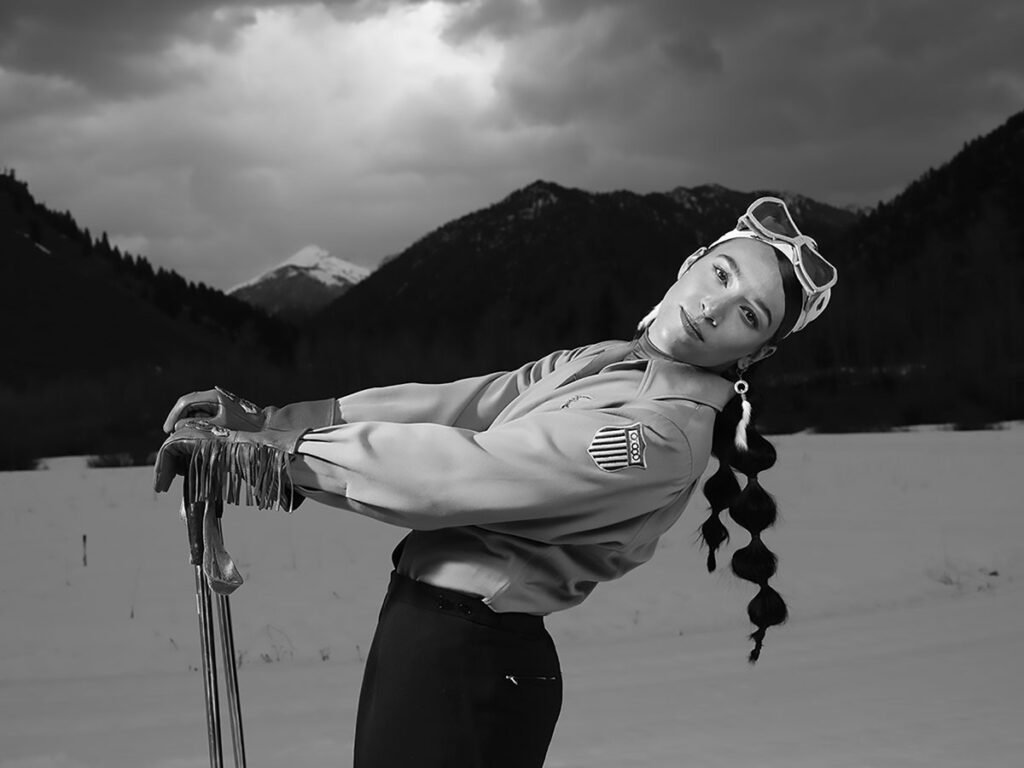
Other models featured in A New Winter include surfers and activists Farmata Dia, Autumn Kitchens, and Yasmeen Wilkerson; snowboarder and model Rizki Nugraha; Burton snowboarder Emilé Zynobia, professional skier and musician Mallory Duncan; and snowboarder, food-justice advocate, and model Iván Jiménez.
While Jaramillo’s original goal with A New Winter was to simply do the project and prove to herself that she could, after the first year, she realized that she had something really special. “After we shot, I was like, damn these are good! We need to get these into galleries and museums.” After year two, and with fourteen images selected, Jaramillo’s work was featured in two local Sun Valley galleries, at the Ochi Gallery and at the Sun Valley Museum of Art as part of their exhibit Snow Show: Winter Now, which coincided with the 2025 World Cup Alpine Championships in Sun Valley.
The project is ongoing, though, with plans for not only more images but eventually a book as well. The sales of the current images go toward creating more works, which Jaramillo plans to do over the next couple years. “The project itself has sparked this new level of creativity in me where I’d like to explore what this project does with a different theme,” she says. “Essentially this project is juxtaposing the past and the present in order to highlight current social justice issues, and I want to think about how I can do that in other ways, not just through snow sports.”
For more information or to purchase images from A New Winter, visit https://www.sofiajaramillophoto.com/.
Main Image From A New Winter: Director/Photographer – Sofía Jaramillo Producers – Shandi Kano And David Klayton Casting And Styling By – Terumi Murao Director Of Lighting – Aaron Rodriguez Hair By – Endo Robinson Makeup By – Chelsea Luckett
Color Images Courtesy Of: Audrey Hepburn (United Archives/Getty Images); Claudette Colbert (Earl Thiessen Collection/Getty Images)

