

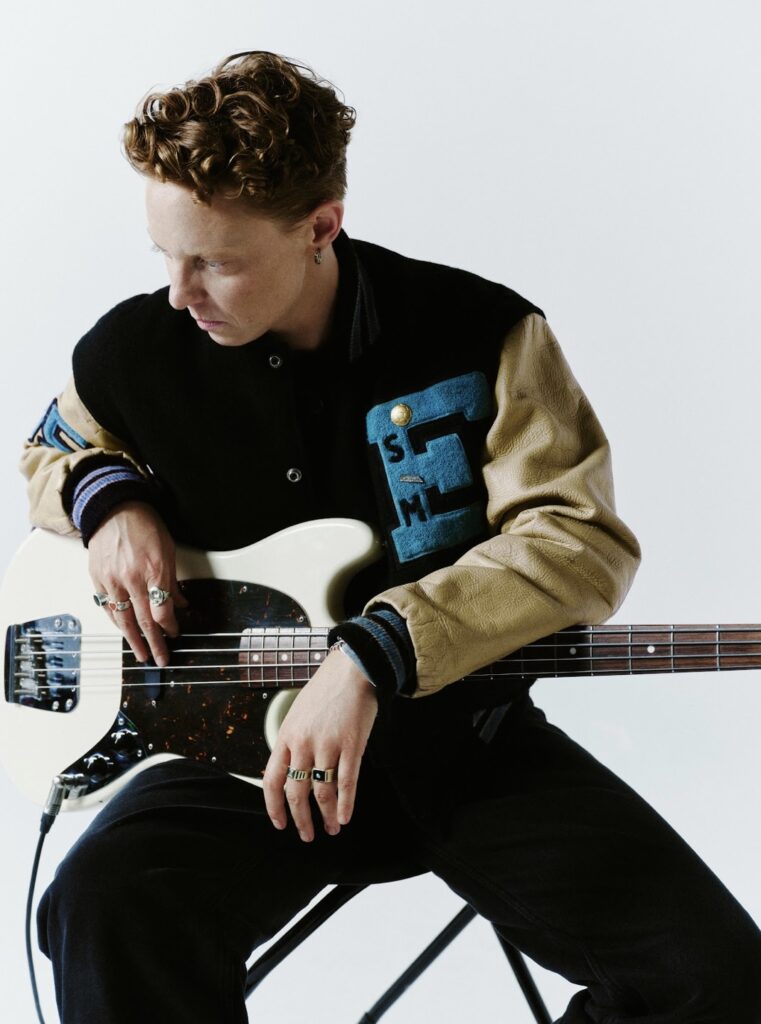
It is a Saturday afternoon when South London-based electro-pop musician La Roux (the stage name of Elly Jackson) greets me on a Zoom call from a wooded area near Pine Knob Music Theatre in Michigan. She is currently on tour with Hilary Duff, marking her first time touring in more than a decade. Sitting in the sunshine and sipping coffee, Jackson greets me with a warm smile, and it is immediately apparent that returning to the road, and to large venues and huge crowds, has been a rewarding experience.
As an opening act on such a large-scale tour, Jackson describes the experience as a kind of training ground, allowing her to further hone her “stage craft” while performing for audiences of 10,000 to 15,000 people, many of whom may not already be familiar with her music. It has given her a chance to reacclimate herself to life on the road before embarking on her own upcoming tour in support of Old Flames, her fourth album and first in six years.
The deeply personal and vulnerable record still delivers the dance-floor-ready jams Jackson is known for, but there is a noticeable shift in both sound and lyrical direction. Reflecting on the album’s honesty, Jackson says, “I definitely tried to be more vulnerable and honest on this record. I probably wasn’t aware of how much I was hiding in ambiguity and metaphor in my past.”
If you’re a millennial, chances are you are well acquainted with La Roux’s ’80s-influenced, synth-heavy electro-pop earworms “Bulletproof” and “In for the Kill,” which became ubiquitous in 2009 and throughout the early 2010s, thrusting Jackson into the spotlight at the tender age of 21.
With newfound fame and success came astounding opportunities and accolades, including a Grammy win. But the attention also brought pressure from a major record label and producers who placed immense expectations on the young star. The stress contributed to anxiety and panic attacks that would sometimes leave Jackson unable to perform.
By the time she began work on her second record, Jackson found herself increasingly unhappy, dealing with a manager and male producers whom she felt wanted to control her career and push her to sacrifice her artistic integrity in the name of maximizing profit and exposure. That included opportunities to work with well-known mainstream DJs on projects she felt were at odds with her artistic vision and sound.
The more Jackson defended her integrity and creative vision, the more she was accused of arrogance. Staying true to her artistic convictions ultimately contributed to the breakdown of both her relationship with her former management company and her record deal.

“I think they were annoyed that I wasn’t happy to jump at every chance to make money, even if I hated the route. They didn’t like it. It just irked them. They didn’t like it that I didn’t want to do something because of my views and my values. They were just like, ‘you’re a little bitch.’ Well, I’m not actually. Being an actual artist in this industry, especially as a woman on a major record label, is not what they really want. They just want someone who will do what they’re told to make as much money as possible for them. And when I turned down opportunities to make, in their eyes, millions of pounds, they just told me it was arrogant.”
Jackson notes, however, that she still had the same level of control over her work; she simply had to “fight for it way, way more.” And she remains proud of everything she has produced because she has never compromised her vision.
As a result of her unhappiness with both her management and record company, Jackson walked away from her major label after her second record. She released her third album, Supervision, independently on her own label, finally achieving the independence and creative control she had fought for.
Commercially, however, the album faced an unfortunate obstacle: it was released just before the start of the pandemic, leaving Jackson unable to tour and promote it.
Old Flames picks up where she left off, with Jackson once again maintaining complete creative control. She composed, wrote, arranged, and produced the entire album, creating a highly personal work that explores new territory both lyrically and sonically.
While Jackson first built her name with ’80s-influenced dance-pop, this time she looked to another era for inspiration, drawing from the pop, R&B, and hip-hop of the ’90s and early 2000s. She cites artists including All Saints, Ace of Base, SWV, and Mariah Carey among her influences.

“I think it’s still intrinsically La Roux, that’s always the thing I start with really. The references are different, but it’s still very intentionally a La Roux record,” she said. “It’s kind of just everything that I loved when I was younger and trying to pull stuff that I’ve never pulled reference wise into my musical world.”
Jackson has long embraced retro influences throughout her musical career, explaining, “I’m very rarely into what’s happening now. It’s quite rare that I’m feeling how everybody else does about pop music now. I’m usually feeling like, ‘What? I don’t get this.’ And that’s why I look back and try to bring something back from a time that I did get into it…When there was like a groove, and a funk, and a soul still in pop music, and I miss it basically.”
Now 38, with four completed albums under her belt, Jackson is standing tall with a greater sense of confidence, pulling back the curtain on her personal life and struggles through her music.
Many of the tracks on Old Flames remain atmospheric and dance-floor-ready, but a noticeable darkness runs through the album. Its hooks are often tinged with heartbreak: this is pop with a bite.
Some of the bittersweet and melancholic tones stem from a recent heartbreak. Jackson endured the end of a 17-year relationship, an experience that echoes through many of the album’s tracks, most noticeably on “Falling.” There, Jackson confronts loss while searching for a path forward. On the slower-paced song, her heartache is visceral, carried by her emotive vocals and melody.
Lyrically, Jackson refers to her former partner on the album using she/her pronouns, marking the first time she has done so publicly. The decision led to her publicly coming out as gay, a term she feels better reflects her identity than lesbian or queer.

While Jackson had alluded to her sexuality in the past, this marks the first time she has fully embraced the label.
“I think I never found a way to do it before that felt really natural. I was still in my George Michael era of not gendering properly. I guess when you become more comfortable with yourself, this stuff just isn’t on your mind anymore. Like so many gay people do, I’d probably not quite accepted myself yet, but I didn’t know that. I think it’s a journey, and I think I’ve come through it in a way that I haven’t been aware of. It enabled me to sing about things in a more natural and authentic way without me even realizing that I was doing it,” Jackson said.
“It would be madness for me to not say it. It would also kind of dishonor the relationship. It would be so much more hard work to not do it,” she added.
Among the experiences that inspired the emotional turbulence propelling much of the album is Jackson’s experience coming to terms with and healing from a marijuana addiction that had begun to overwhelm her life.
Jackson addresses this struggle most overtly on “Lose Myself.” While the lyrics might initially sound like it is about losing oneself through romantic love, a closer examination reveals a darker meaning: Jackson’s love and obsession are not for another person, but for a drug to which she had developed a dependency. “I just wanted you so much, your love / Just keeps me holding on / And now I want to leave,” Jackson sings.
Jackson eventually came to understand that her marijuana use was partly a means of self-medicating symptoms related to her AuDHD, a diagnosis she had not yet received.
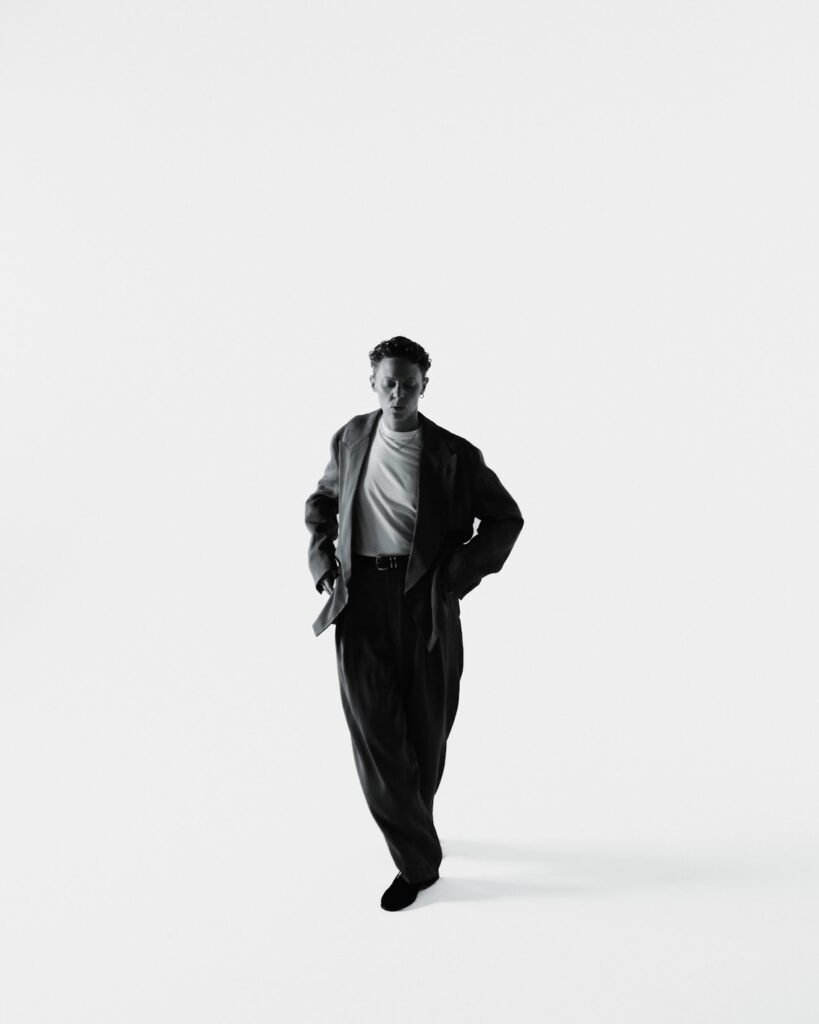
When Jackson wrote “Lose Myself,” she was not initially attempting to explore her addiction. Instead, she later realized that the lyrics had subconsciously captured the pain of her dependency.
Jackson explained that she was in Spain collaborating with a band she knew from her “indie sleaze” years while working on the track, and the group was smoking heavily throughout the recording process. By then, she knew she had been battling an addiction to marijuana for a decade and needed to stop. That realization ultimately seeped into the lyrics.
“Only afterwards, I looked back and said, okay my subconscious is saying something without my knowledge in any way shape or form. I wrote the chorus first, so I’m not even sure how it relates, but I guess it’s a let go, a shake off from the whole process, a kind of therapizing yourself. Your subconscious tells you shit you don’t know about yourself in your songs a lot.”
In press materials for the song, Jackson also notes, “The song is kind of a fight to try to get me to have enough love and respect for myself to break out of that cycle.”
Receiving the diagnosis for AuDHD also helped La Roux better understand difficulties that had sometimes affected her both professionally and personally. While gaining the diagnosis did not provide a quick cure for her struggles, it gave her a framework for understanding and managing them. It also gave her a label and explanation she could offer to the people closest to her.
“I think it helps you just confirm things and communicate to the people around you, the people that love you. Especially if you have a burnout or a meltdown, or suffer from over sensory, which I used to struggle with a lot. It’s just having a way to be able to explain that without them being like, no you’re just being a dick or you’re not just managing your emotions. I think it’s really helpful, but it doesn’t fix it. It just helps you manage.”
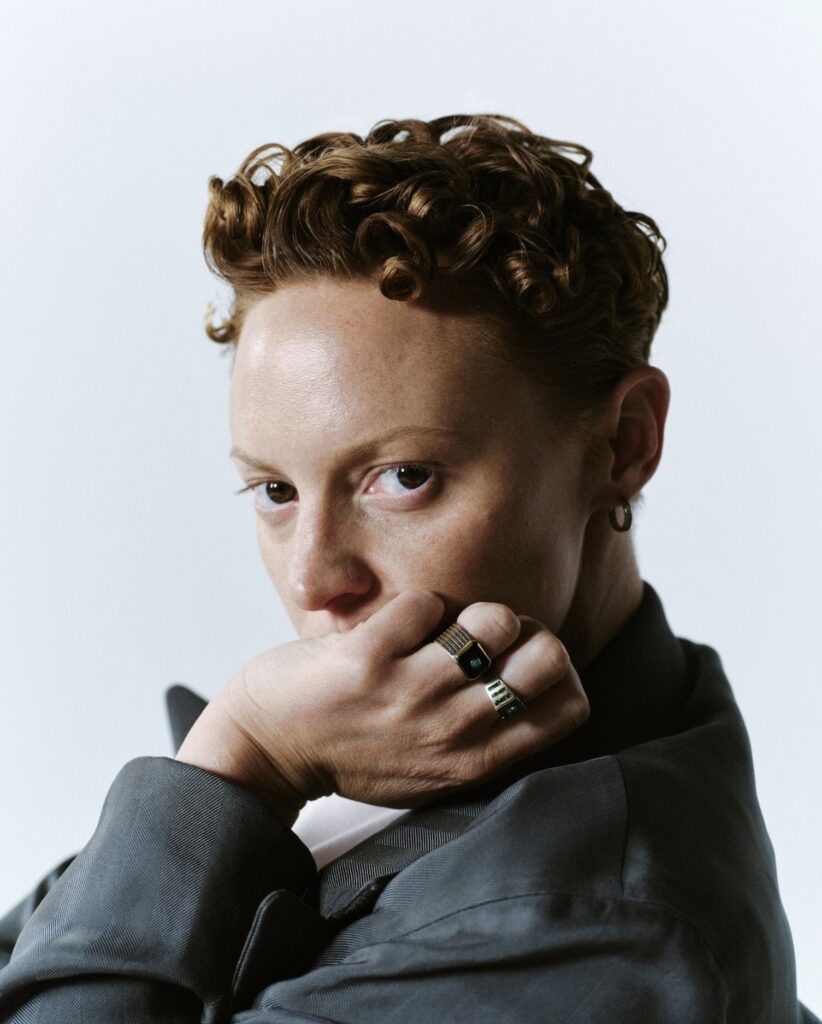
The second-to-last track on the album is the sunny and upbeat “Babyline,” accompanied by a music video that shows Jackson dancing joyfully in an oversized turquoise suit to ambient keyboards and percussion. The image feels like a visual representation of the weight of her recent past finally lifting from her shoulders.
The lyrics find Jackson acknowledging her strength and ability to face and move beyond her demons despite lingering insecurity and doubt, turning the song into an anthem of personal endurance in the face of hardship. “I’m not scared of being honest/ I’m not scared of being me,” she sings. Later, however, she reveals that self-doubt still lingers even in the face of courage, asking, “How can I ever get it right if I am my own enemy?”
Jackson doesn’t claim to be bulletproof here. Instead, she presents herself as human and imperfect, looking toward the road ahead with renewed optimism.
Ending the album with such a hopeful track was intentional, Jackson explains.
“The whole point is that you come through it all in the end. I don’t want to leave people with this feeling of, and then what happened? Where did you end up? It’s meant to be a journey where there are fun moments, but it probably was a more troubling time than I realized until I looked at the record as a whole. By the time I finished it I felt completely different, so much happier. I felt like myself. And I wanted people to feel like they’d completed and rounded off a journey in the end.” She later commented further on her personal journey by adding, “I think it’s the work I did within myself and the brave steps I took within my personal life to get to where I ended up by the end of the record.”
It’s clear that the journey has been a difficult one for Jackson, but it is one that has deepened her art, resulting in a record of devastating lows and euphoric highs that ultimately points toward the light at the end of the tunnel.
Through Old Flames, Jackson proves herself to be an artist of immense talent who is still willing to take risks and evolve nearly two decades into her career. By excavating her raw pain and laying bare her truths, she has reached new heights as an artist while offering a sense of hope to those finding their own way out of the darkness.
Photos Courtesy of Shan Steward

