


Mother Sister Daughter Stranger by Hank Phillippi Ryan
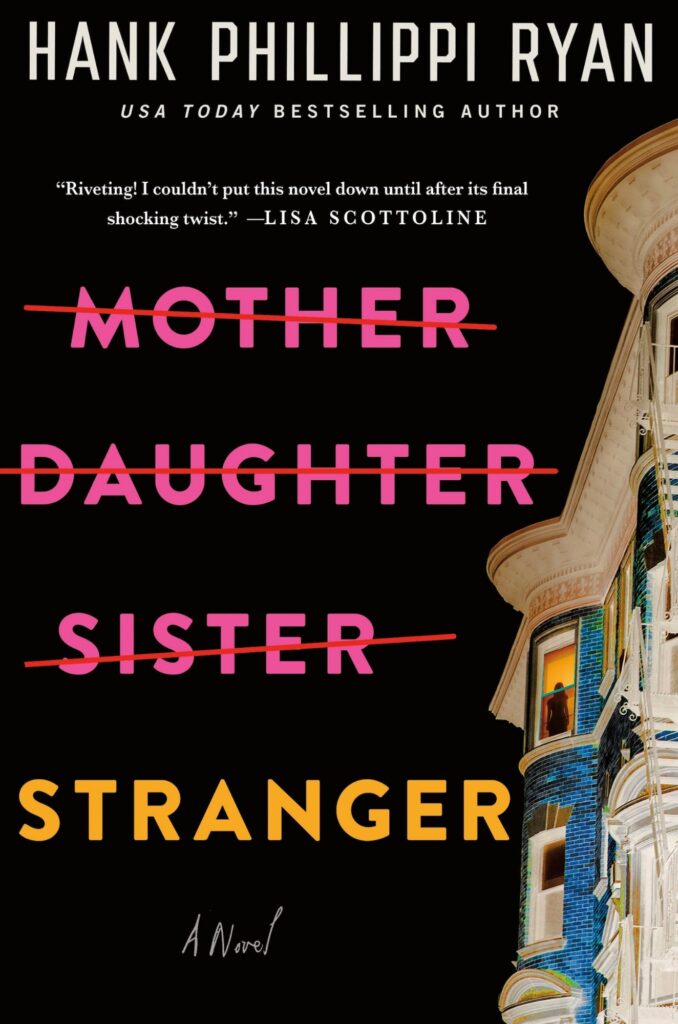
It’s the anniversary of the tragic and fiery plane crash that killed both of their parents and left Eliza Ramsey and her sister, Bea, as the sole survivors. Now, Bea is missing, and it seems the Ramsey family might be imploding yet again.
The police think Bea might have left on her own, but Eliza knows her sister. For all her quirks and shortcomings, Bea would never leave her 11-year-old daughter, Piper, much less without saying goodbye. Just like she’d never miss the annual family visit to the cemetery to honor their late parents.
Now, Eliza must sort through her own murky memories of the accident to unravel the mystery of where her sister went, all while making sure her sweet, perceptive niece is none the wiser to the devastating circumstances hanging over the both of them. Is it possible Bea skipped town on her own accord? Or, maybe, does someone have a reason to keep the Ramsey sisters scared and silenced? By confronting family secrets and hard truths that some hoped would stay buried with their parents, Eliza races against time to save her sister. That is, if it’s not already too late.
A beautiful love letter to sisterhood for all its ups and downs, Mother Daughter Sister Stranger by USA Today bestselling author Hank Phillippi Ryan is a riveting thriller packed with twists on nearly every page. Natural prose coupled with the sharp and relatable Eliza Ramsey as the main character make this an easy book to devour in one sitting.
- Review by Zoë Lourey-Christianson
Visceral by Maria Fernanda Ampuero
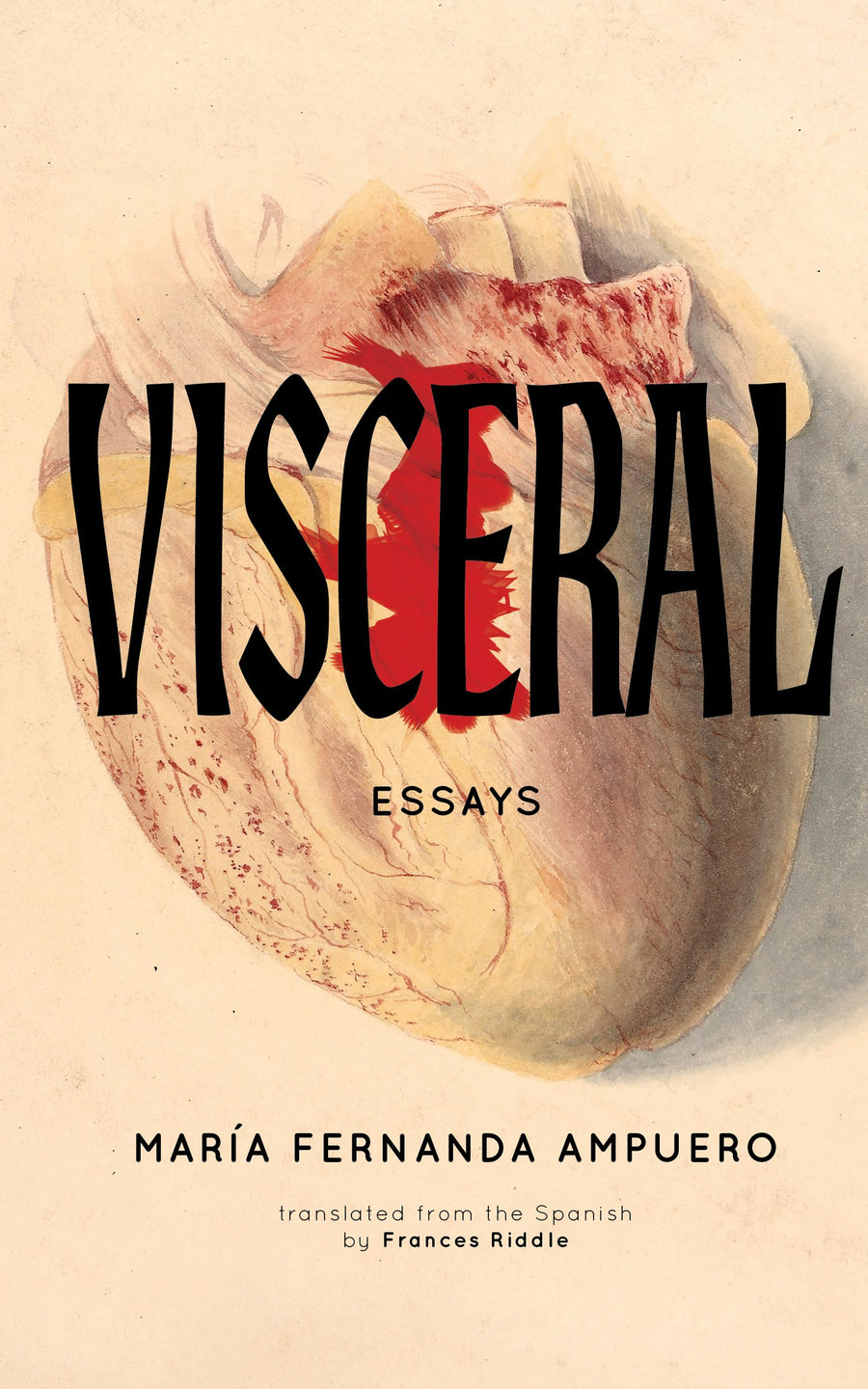
Visceral is an immersive and deeply personal collection of essays from award-winning Latin American short story writer Maria Fernanda Ampuero. Visceral plops readers into what it’s like to live in the body of a woman in a world built for men. Ampuero is a master of tangible writing–she gently holds your face to the front of the ugly thing then makes you look at it, breathe it in. The stories in Visceral are her own, reflecting themes of death, life and everything in between. Her ability to sew humor and nuance into stories about, for instance, being kidnapped or discovering a dead body is unmatched. You’re hooked from the first line every time. It’s as if you open the book and she just starts speaking. Some parts of Visceral make us wonder if Ampuero had to carve a part of herself out to write the book, and if that was painful? Then the other parts of the book remind us that’s the whole point–to feel the pain, to hold it, to set it down. With autumn comes a palpable shift in the air, a time of growing pains and new opportunities emerge; a season representative of closure and transition seems the perfect time to parse Ampuero’s tales.
- Review by Emma David
Desire Lines by Kristen Millares Young
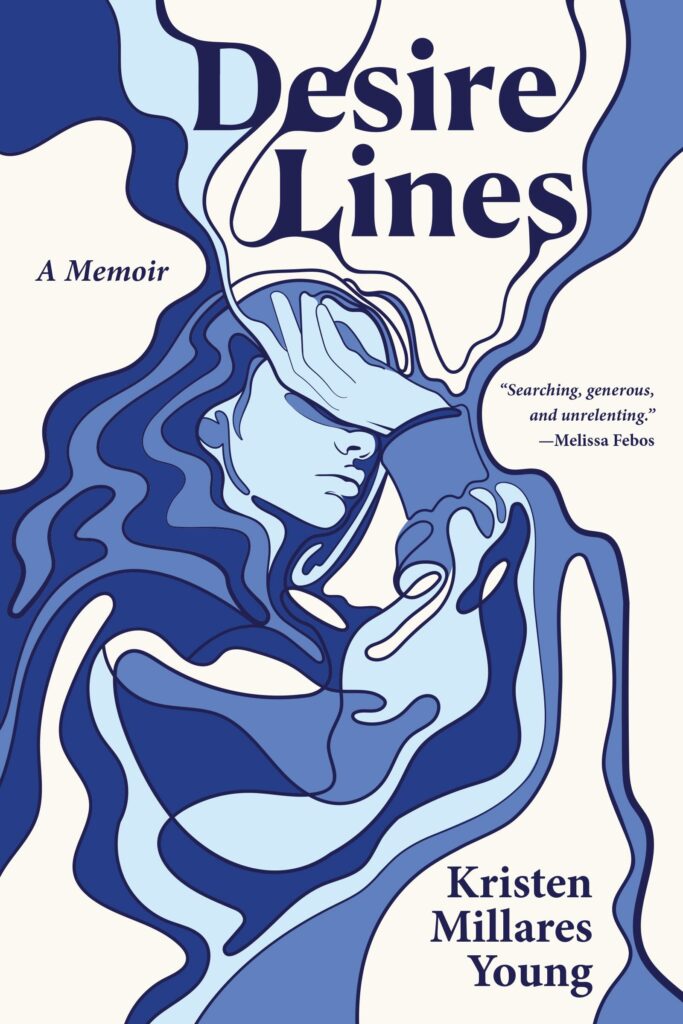
Kristen Millares Young is back with a brand new book following her 2020 debut novel, Subduction. While many have become familiar with Millares Young through her work as an investigative journalist, in Desire Lines the Harvard grad turns the lens and pen onto herself, crafting a creative, refreshing take on the memoir that perfectly encapsulates a life filled with nuance, hope, devastation, desire, disgust, and curiosity. In an age of political precarity, the memoir has never been more important; storytelling acts as an important tool in feminist praxis, as it reveals the inner workings of systems of domination that have attempted to render themselves invisible, and re-centers humanity in a world increasingly consumed by capital, technology, and isolation. With this, Desire Lines carries on the work of a memoir in a profound way. Across her collection of essays, Millares Young paints vivid pictures of some of her life’s most potent moments, such as her battle with ovarian tumors, and her journey in understanding her diasporic identity. Namely, one of the most prominent threads throughout the work is how Millares Young finds refuge in her journey to connect emotionally and intellectually with the divine feminine, as the work traces her discovery of the cult mother god Cybele, whose legacy was largely buried as the world shifted towards christianity. On this, one aspect of Millares Young’s work that really shines through is her continuous mission to find alternative forms of connection and knowledge (in this case, matriarchy) in a world where the institutions we have been told to trust have continuously proven themselves untrustworthy.
In a society that has constructed family obligation to be something that appears so systematic, and rooted in patriarchy, Millares Young’s choice to follow the guide of an alternative understanding of the world around us feels profound and critically important. Desire Lines certainly lives up to being bestowed as one of the most anticipated feminist books of the year.
- Review by Emily Lauletta
Kiss, Slay, Replay by Rachel Harrison

Vampires, werewolves, witches, aliens, the occult, and haunted houses. If there’s a classic horror trope, Rachel Harrison is going to twist it into something new. And she does just that in her latest, Kiss, Slay, Replay, a time loop horror story where guests are forced to relive a wedding reception from hell. The only one who knows it though, is Willa Sullivan, one of the bride and grooms’ best friends who also happens to be stuck in a loop herself. Albeit a depressive one. She’s excited to celebrate their nuptials, to spend a weekend with her friends. But the event brings her face-to-face with her ex-fiancé. She hasn’t seen him in months and, surprise, he’s brought a date. When Willa meets Danny, the groom’s childhood best friend, she welcomes the charming distraction. That is, until a masked killer emerges from the woods and starts slaying the guests. Just when she meets her maker though, she wakes up. At first, she chalks it up to a bad dream. Then it happens again. And again. Until Willa finally understands the gravity of the situation. She’s stuck in a time loop, and unless she figures out to escape, she’s destined to relive the same bloody day on repeat.
Kiss, Slay, Replay has all the ingredients of a classic time loop tale: fear (existential and non), humor, and the conditions. It also has all the ingredients of a classic Harrison horror novel: wit, gore, and a main character with something deeper to say. Time loop stories are about breaking cycles. Here, with each death, readers come to understand that Willa is working to escape two different hells. The internal one triggered by her breakup, and the external one caused by the universe playing some sick joke on her. Each repeat brings her closer to the realization that in order to escape the latter, she must first confront the former. And it’s these kinds of twists that make Harrison’s novels not just gripping and fun, but also satisfyingly relatable. Because who hasn’t been trapped by their anxiety? Who hasn’t felt the absolute relief of finally breaking free of it?
- Review by Samantha Ladwig
The Birthing Tree by Amanda Peters
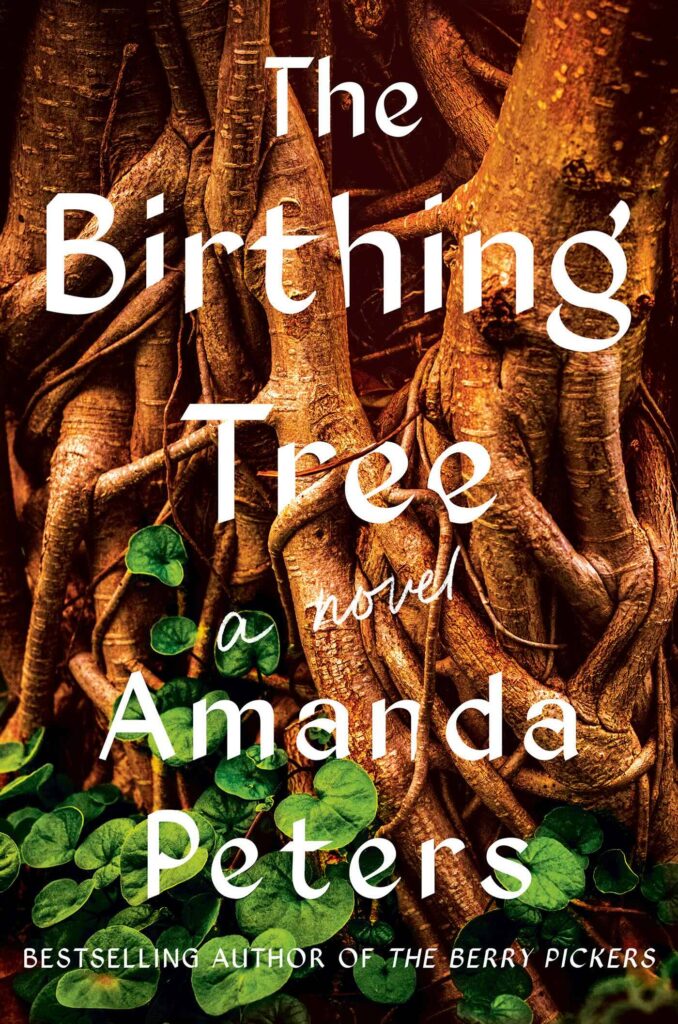
There is a tree in the woods outside of a small Nova Scotia town that has held generations of Mi’kmaq women as they’ve given birth, many of whom have been guided by Aliet Paul’s beloved grandmother, Kiju. But it’s a history that Aliet has moved away from, both physically and internally. Maybe it’s because her mother died while giving birth to her under that tree? Or that, despite her wish to know, the people in her life deny her the identity of her father? Or it could be the absence of the boy who filled her young adult days with a tenderness she hasn’t found since? Author Amanda Peters understands that it’s never just one thing that motivates us. It’s often the result of a combination of events and instances, big and seemingly small. Because each of these reasons is why Aliet left. And each of these reasons is why she returns to her childhood home when she receives news that her grandmother has passed. What she finds when she arrives though, is a changing community. And when the town’s focus lands on the birthing tree, Aliet understands that only she can save it. To do so, she must confront all that she left behind.
Reclamation, in all its forms, takes center stage in Peters’ sophomore novel, The Birthing Tree. There are many similarities between the author’s first and second novels: buried truths, family secrets, a woman in search of her identity. There is even a brief overlap in the setting of both novels, the land they share and the farms that shape its image. Yet The Birthing Tree, with its story of young love and return to tradition, manages to offer readers something new. Peters is an expert storyteller with a gift for tapping into the heart of her characters, the inner roots and workings of each one. The result of this kind of understanding is a moving and sensitive work about identity and land protection.
- Review by Samantha Ladwig

