

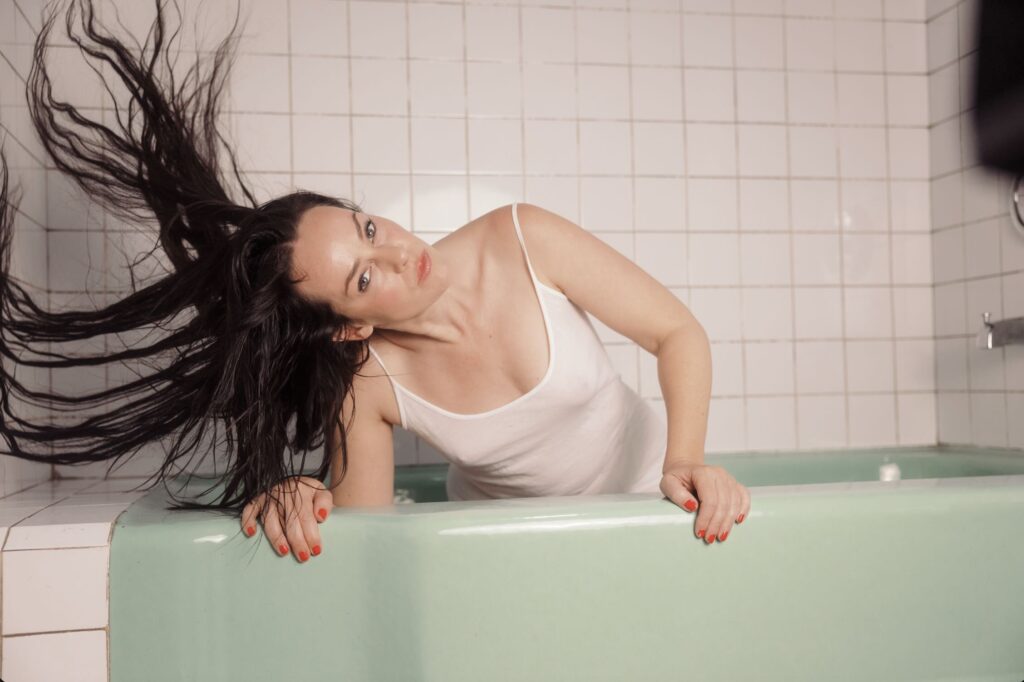
With a new album and a Netflix show, Jena is ushering in a new sci-fi renaissance intent on rebuilding spaces where all people can evolve.
On a sunny day, Jena Malone is in a car driving to the airport. Dressed in a simple white top to beat the LA heat, her fresh face smiles through the camera as we settle into our interview.
Jena has a busy summer ahead of her. She released her latest album, Flowers for Men, and premiered a new show on Netflix, The Boroughs, by Stranger Things creators Matt Duffer and Ross Duffer, in May. Upon listening to the album and checking out the show, there seems to be one theme that connects both works and Jena’s life: science fiction.
“It’s so weird because it’s been a recurrent theme in the past 10 years. As I’m experiencing what it feels like to be human in the present day, I’m really trying to figure out how to plant seeds for the future,” Jena says.
Jena agrees that her life has taken on a sci-fi theme and shares that she has been reading a lot more sci-fi recently. One classic that has played a major role in her life process and journey as a mother and artist is Parable of the Sower by Octavia E. Butler. She shares the following quote as an anchor:
“All that you touch you change. All that you change changes you. The only lasting truth is change.”
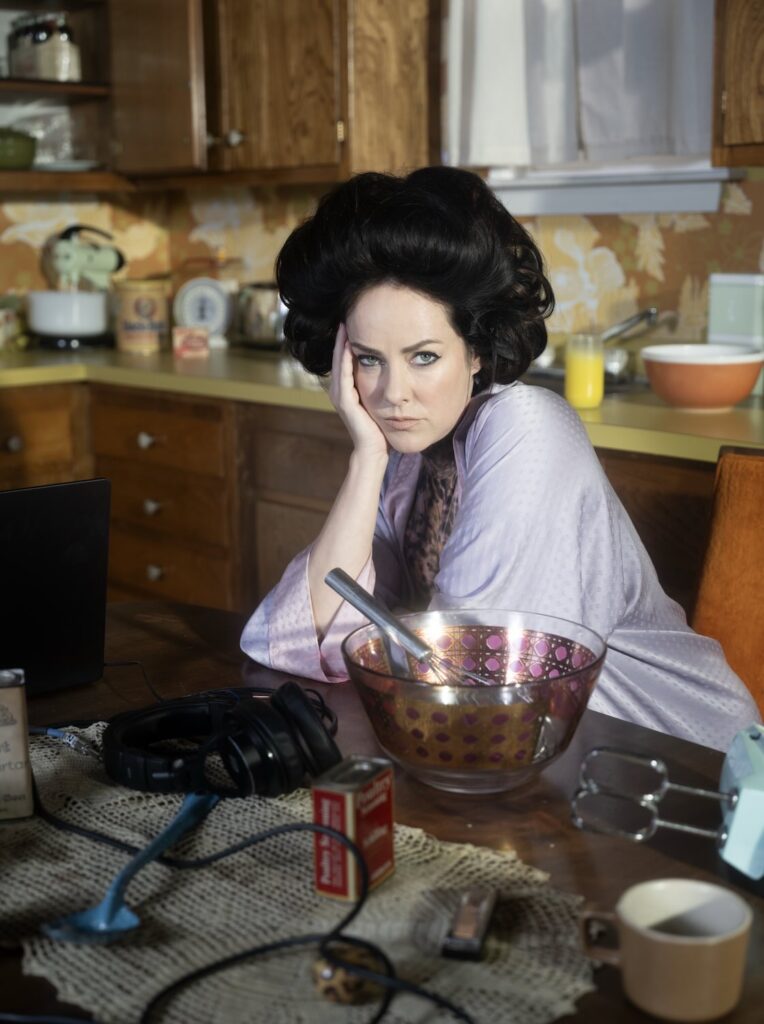
Change is in the air and that constant change is what brings us together to speak about everything she has going on. As we settle in, we start talking about what inspired Flowers for Men.
Described as sci-fi folk, the album has an ethereal sound that makes the listener feel like they are listening to something out of this world. It was produced by Jamie Jackson, who wrote and collaborated on every song.
“I think she was the one who really helped me discover the sort of template of this cinematic, from-another-planet-potentially soundscape that we were able to carve together.”
Sonically, the album sounds like it’s other-worldy and really takes a listener to different places. What grounds the album are the lyrics. Jena goes to new and different narrative places as a songwriter. She says her new album is inspired by the birth of her son and how that has changed and shaped her process.
“You can’t help but be in a constant state of evolution and change. I think when you become a parent, what’s really beautiful, and it’s funny, it sounds like I’m such a triple Scorpio, it’s a dark way to think about this, is that your whole life burns down. It’s definitely like a fire-type metamorphosis. But it’s kind of the most sacred thing that can happen because, as everything burns down, what remains is usually the truest.”
For Jena, this has led to writing new myths and stories for herself and her son in Flowers for Men. As a feminist woman raising a boy, Jena says she thinks about changing things more “and offering stories and parables and myths that can help know better how to be a woman in this time,” she says. “Having a little boy has been a really beautiful process of teaching him how to understand women, and me understanding his masculinity and his space. I realize through seeing him, there’s not a lot of stories that I can offer to him so he can understand what it is to be a woman in 2026.”
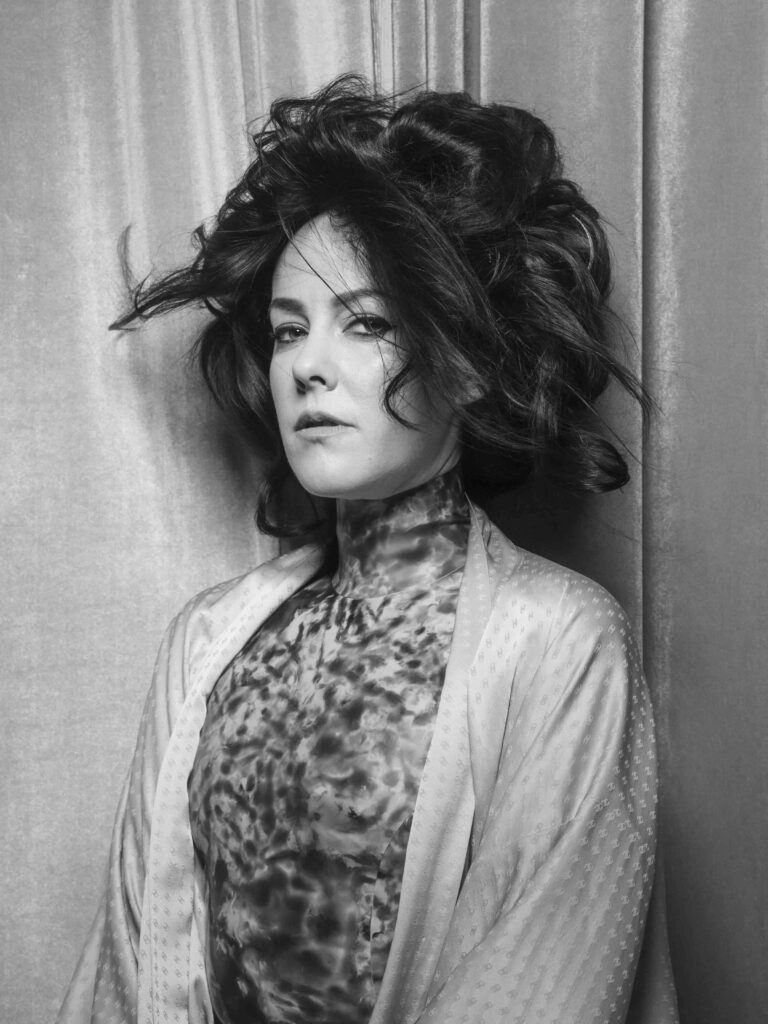
Parenthood has also changed her artistic process into a much healthier one. While she admits to not having as much time, she says that now, when she uses her pockets of time for art, her time management is much more intentional.
“I feel like parenthood just gives you such a higher operational level, which also feels kind of sci-fi in a way. You know? Where it’s like I’m in the same body, I’m doing the exact same things, but all of a sudden I’m able to do it so differently, at such a different level. And the only thing that’s changed is now I’m tending life, you know? Whereas before I was kind of just surviving.”
In a similarly sci-fi way, the album has an interesting play on time. As Jena writes new myths to help her son understand his masculinity, she is also talking about womanhood today in 2026. But the album isn’t just for her son. This album is also something Jena created for her inner child, which brings in the past.
“The more people talk about and hold their inner children, I think the more potential somatic healing we have,” Jena says. For this album, she was making music she imagined her teenage self would reach for.
“I feel like when I was 12, 14, I was really into Ani DiFranco, PJ Harvey, Liz Phair, and I’m just coming to this awareness that maybe I’m making music for my 14-year-old self, you know?” Jena says. “I feel like somehow we just become what we love. We become what we look up to, and I think that I’ve just looked up to that type of music and those types of storytellers for so long that it’s nice to kind of arrive in a space where I’m entering that zone. It’s really sweet.”
While Jena has been making music for 20 years, she is also a prolific actress. Some of those same themes of creating new myths to challenge old ideas and bring about change are also found in her new show, The Boroughs.
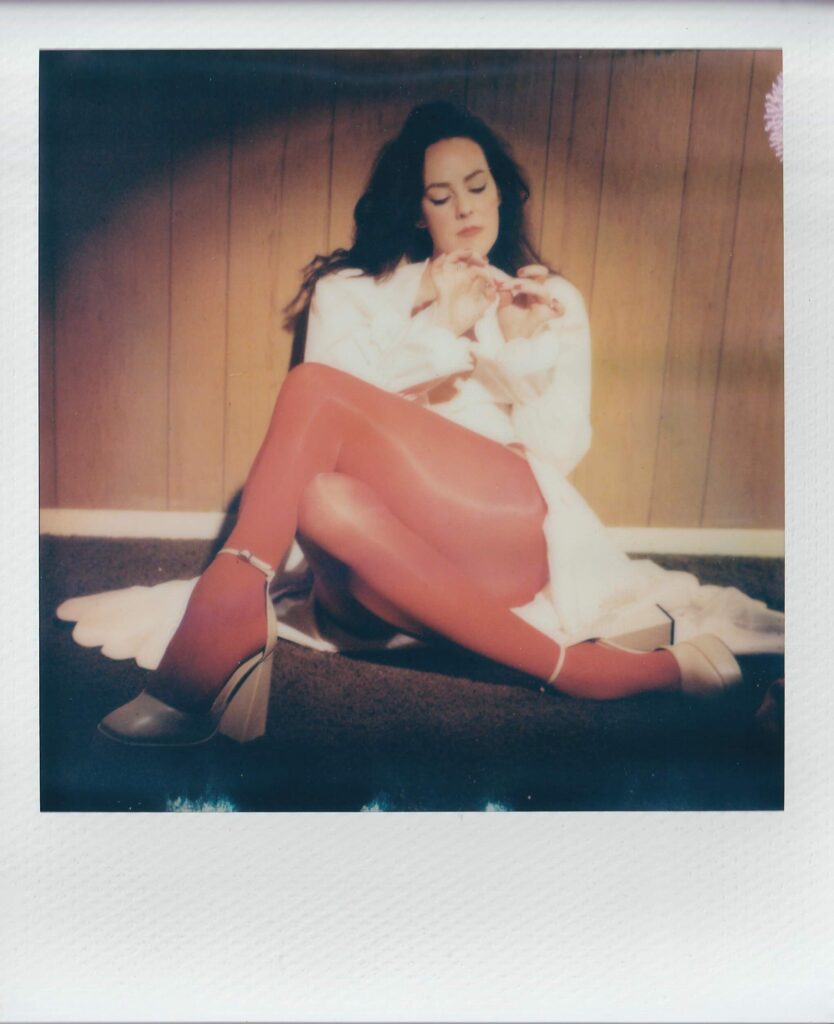
In The Boroughs, Jena plays the daughter of Alfred Molina. The show opens with Jena’s character dropping off her father at a retirement city for the elderly, The Boroughs. Once Molina is moved in, he starts to notice strange alien-like happenings, and hijinks ensue. Is he losing his mind, or are there actually aliens and supernatural things happening in The Boroughs?
Her character is a part of the “sandwich generation,” adults who are themselves parents, taking care of young children while also tending to their elderly parents.
“It’s a certain age, where you’re tending small children and tending your parents, and sort of in this double-edged sword of tending that you’re A. wildly unprepared for, and B. not really valued or monetized. It’s just a really hard space that I think a lot of people are finding themselves in, particularly with a lack of elder care and child support,” Jena says.
The show looks fun and whimsical in a way the Duffer Brothers know best, while also challenging society’s ageism.
The series stars many Hollywood heroes, including Alfred Molina, Geena Davis, Bill Pullman and Alfre Woodard. In this show, Jena got the opportunity to learn from some of her own heroes.
“I get to play with Alfred Molina, who’s just the best human on the planet. The cast is incredible. Geena Davis has been a hero of mine since I was a tiny girl. Getting to work with her and see her process, and getting to know her as a human — she’s such an amazing advocate and an ally for women’s rights, and she’s done so much in film and TV. It just felt like a really cool opportunity to get to be moderately of service to an older generation and just to play, you know, and learn a few things,” Jena says.
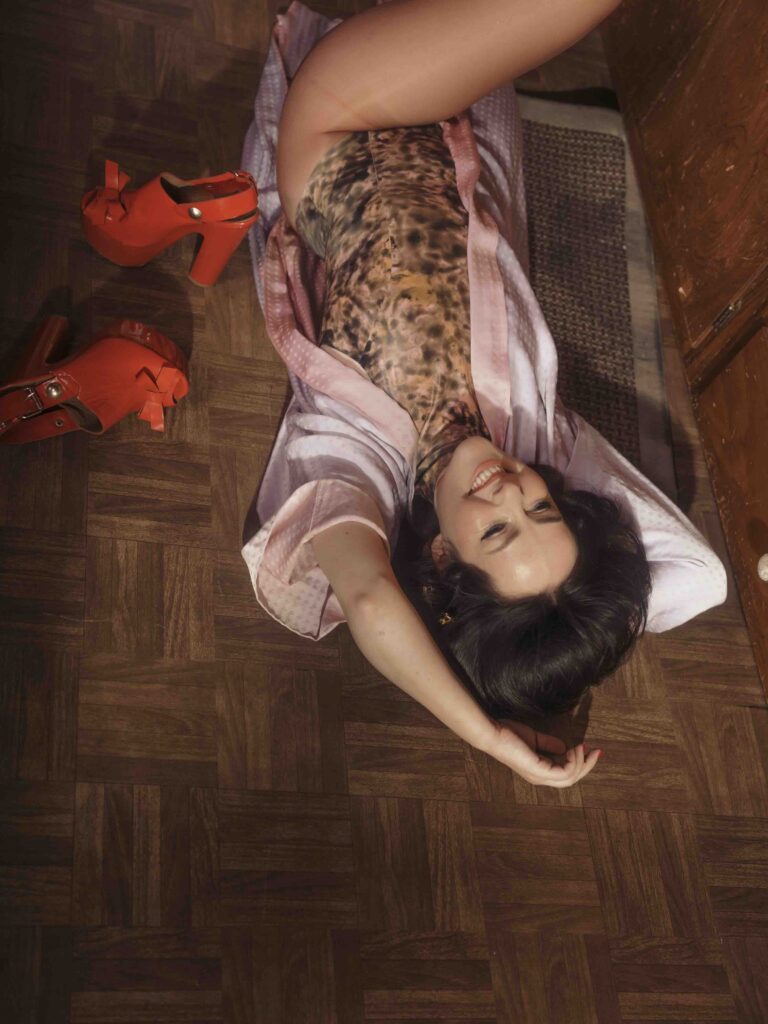
In a way, the show has a meta challenge of society’s ageism. It confronts the very real issues families face with elder care while also allowing these heavyweight actors to have their own whimsical, Goonies-style adventure. We never age out of adventure, which ties into the theme that Jena has also been exploring with her music: creating new stories and myths for new generations.
“We’ve been given certain narratives that have moderately failed us to really understand all of our humanity, all of our capacities, all of our wants and needs, and just how special we are. I think that those capacities don’t end at 40. They certainly don’t end at 50, and they’re not ending at 70. What’s amazing is that this story gets to sort of allow our heroes to look a little different. They’re so deserving of that space, and it was so fun to watch them having their own heroic moments. I love it,” Jena says.
As our conversation continues and we notice the way Jena’s artistic projects seem to rhyme in a poetic sense, I wonder if she feels one of the reasons we are currently in a sci-fi renaissance is perhaps because of the absurdity of the world.
Jena thinks for a moment and answers: “I mean, it feels so absurd. I think that we are definitely not at the beginning of realizing the absurdity. It’s sort of been a long tunnel. We’ve been in such a birthing process to kind of birth this new way of seeing the world and being in the world, that I feel like the next maybe 10 years, 15 years is going to be a real shift in how we can hold each other,” Jena says.
More sci-fi shows like The Boroughs are being financed, produced, thought about and supported. “It just shows that if there’s a will, there’s a way, and we want different. We want to learn new things. I love seeing a general population waking to that,” Jena says.
Jena says she is in a space where, if there’s work to be done socially, she should be doing it.
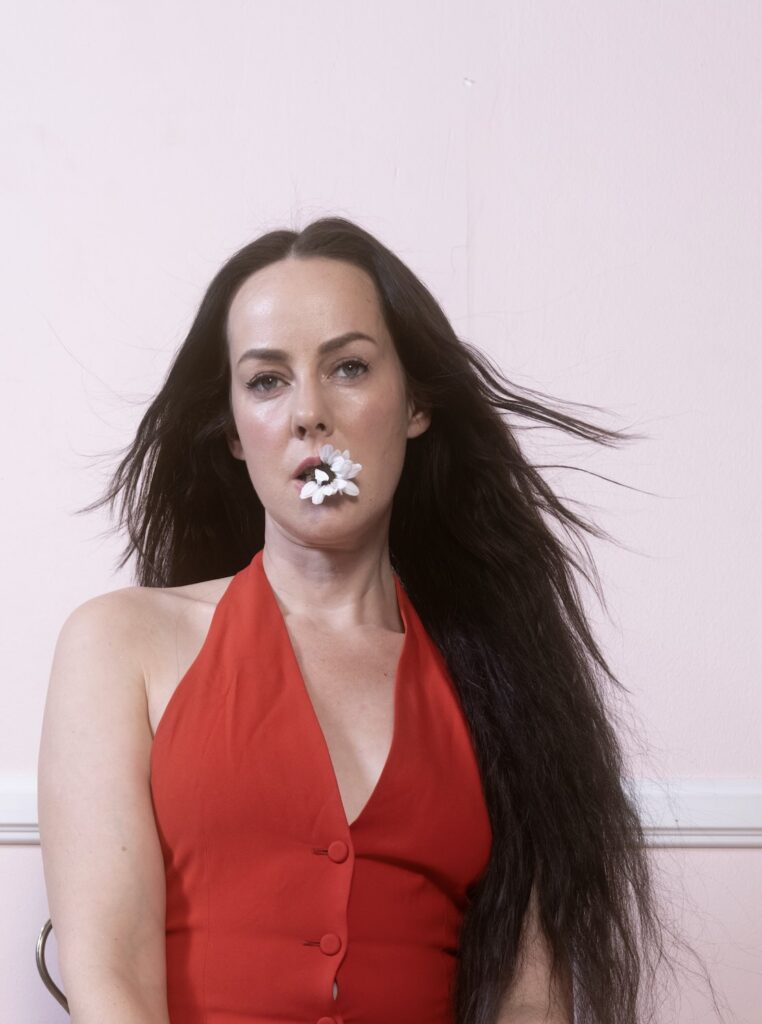
“It’s so cool to be aware and awake and alive and an artist, or rather just someone that wants to be part of pushing narratives and ideas forward.”
And it’s not just rewriting myths and stories. Jena also wants to rethink industries in a way that is more fulfilling for artists, like touring.
Over the last 20 years, Jena has made music and has only toured once, at the beginning of her career.
“I hated it. I was like, ‘This is not for me.’ It was such a toxic masculine environment. Everyone was a man, and I felt so minimized, and it just didn’t feel creative and fun. It also felt really taxing. Even in my 20s, I was like, ‘Wow, this is like the…’ You know, you go from show to show to show, and some audiences aren’t paying attention, and it just seems like such a hard thing to do.”
Although she has intentions to tour, she says that in these moments she is figuring out how to reclaim that space for herself.
“As I was building the tour, I realized that you can’t tour as an independent artist in 2026. It’s really hard. There’s no way to make money. It’s a losing apparatus. So I’ve actually canceled the tour, and I’m wanting to reform and reconfigure a new way to do it because the deeper I looked into it, not only would it be put into the red, but it’s putting yourself in another situation that’s potentially very hard and not that creatively fulfilling,” Jena says.
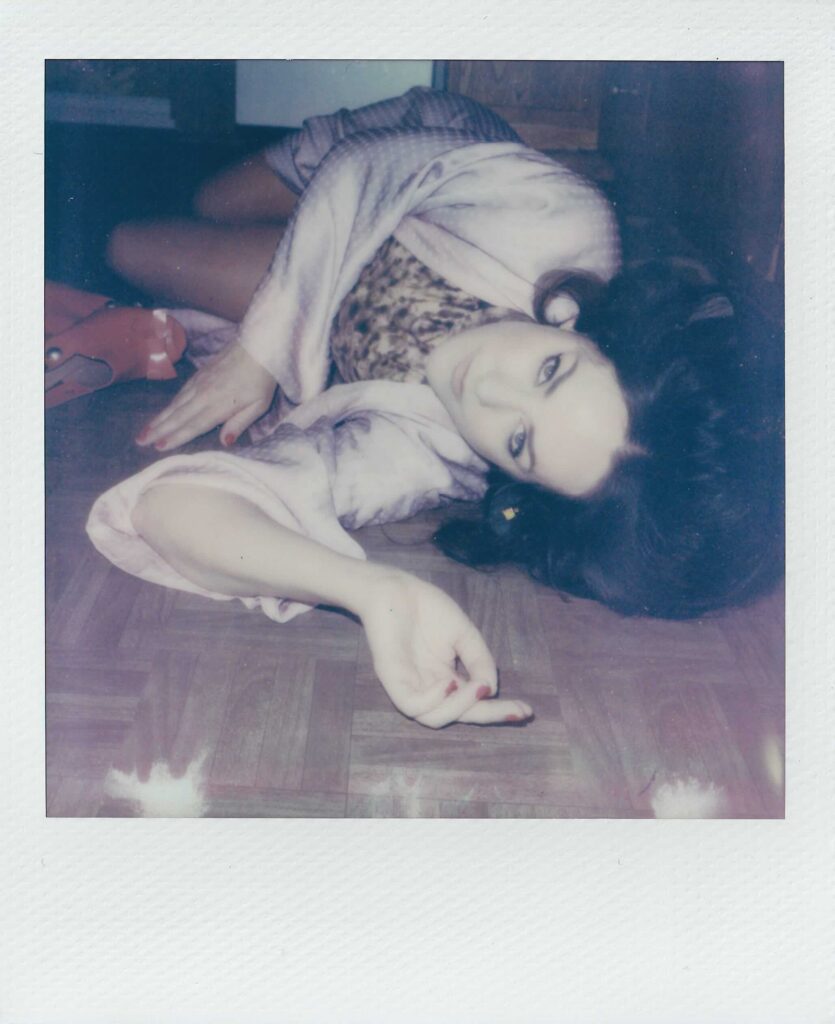
The tour for her new album is currently on hold while she continues to figure out a way to better reconfigure touring.
There is something especially fitting about discussing all of this while Jena is in motion, heading toward an airport, suspended between one destination and the next. Much like her music and the themes she continues to return to, the conversation itself feels evolutionary. As she talks about change, evolution, and becoming, it’s clear those ideas appear in every aspect of her work right now.
Even when she speaks about the exhaustion of touring or the realities of balancing motherhood and creativity, there is still a sense of hopefulness underneath it all. Jena does not speak about transformation as something easy or glamorous. Instead, she speaks about it as something necessary. There is destruction in it, but there is also honesty.
That honesty is part of what makes the Flowers for Men album, and this conversation feel so intimate. The album may sound ethereal and cinematic, but emotionally it is deeply grounded in lived experience. Whether she is writing about motherhood, identity, healing or survival, Jena approaches each song with emotional transparency. The result is an album, and a conversation that feels deeply personal while also inviting us to see ourselves.
While she is reconfiguring touring, she will still be booked and busy spending her time promoting the new album, the new show and gearing up for summer with her son.
“There’s a few other projects that we’re looking at and just some acting stuff. I’ve been writing and trying to assemble some of these writings potentially. I think that there’s a really small and interesting book of poetry there that I’d like to focus some time on, and I want to work in my garden. That’s enough work for me right now. I love that.”
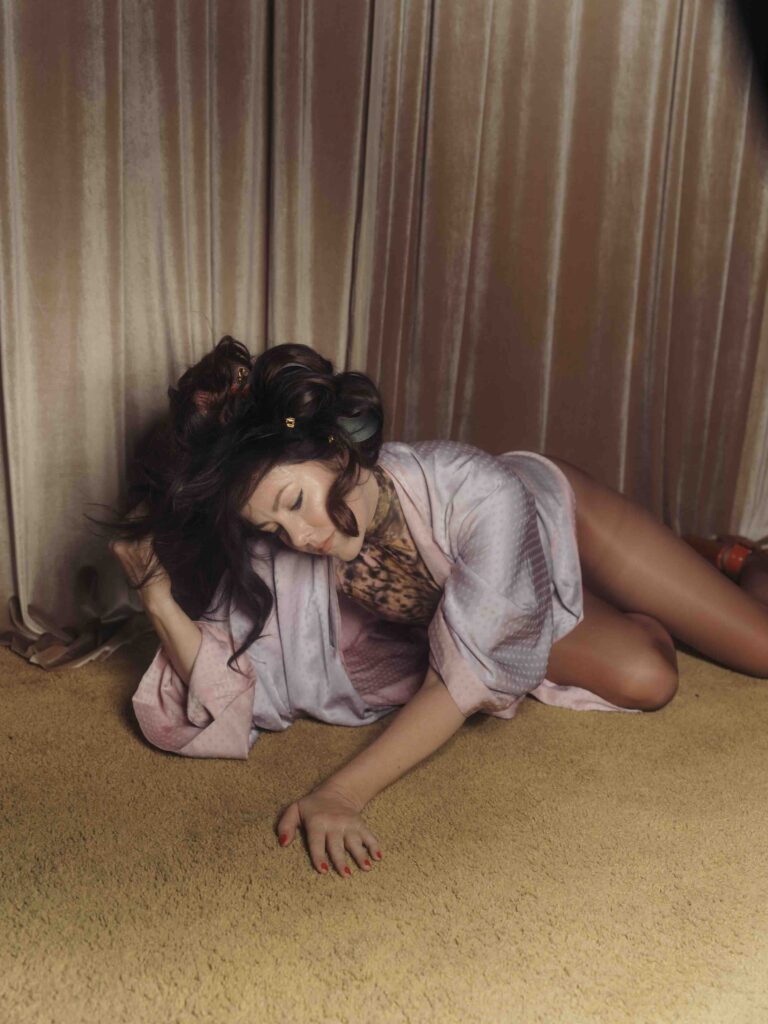
During this conversation, one thing becomes clear: Jena has put herself in a position where she can be “the matron” to help bring along the changes she hopes to see in the world. Whether it means creating new myths, challenging toxic masculine spaces or supporting projects that introduce a new way of thinking, she seems committed to helping reshape the narratives around her.
And it reminds me of something she said earlier in the conversation about her triple-Scorpio energy and burning everything down to start anew. Maybe we are in a renaissance of sci-fi, or maybe we are currently in the middle of burning everything down so we can rebuild a better, more accepting world?
As the car continues toward LAX and the interview begins to wind down, Jena’s excitement about the future remains evident. There is still more music she wants to make, more stories she wants to tell and more ways she hopes to grow creatively. But she also sounds more grounded than ever before.
Maybe part of the larger lesson running through everything she is currently creating is the idea that transformation does not always have to come from force. Sometimes it comes from care, and from slowing down enough to listen to yourself clearly. Sometimes it comes from being willing to imagine something different.
That willingness to imagine different futures, emotionally, creatively and socially, seems to sit at the heart of Jena Malone’s work right now. Whether through music, film or conversation, she is searching for stories that make space for people to evolve.
All images by Elias Tahan @eliastahan

