

For decades, women have been praised for their resilience. They juggle careers, raise children, care for aging parents, support partners, and somehow continue showing up for everyone around them. Society applauds their ability to “do it all,” often holding up endurance as the ultimate measure of strength.
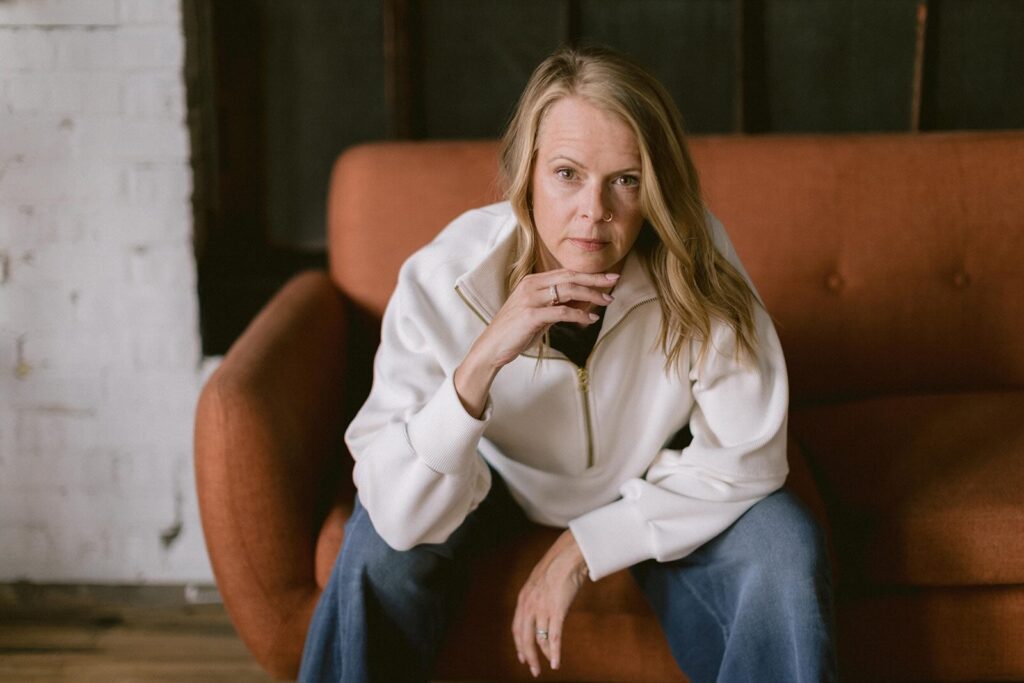
But according to therapist Erin Barbossa, LMSW, founder of Lion Flower, that definition of resilience may be doing more harm than good.
“We’ve unintentionally confused resilience with endurance,” Barbossa says. “We’ve praised women for how much they can carry without asking what it’s costing them.”
As a licensed therapist, Barbossa has spent years working with women who appear to have everything together on the outside but privately struggle with exhaustion, loneliness, and the feeling that they’re never doing enough. The common thread isn’t weakness, it’s masking.
The Hidden Cost of Always Being Strong
Masking is the disconnect between what someone is experiencing internally and what they allow others to see.
“It’s not usually about being fake,” Barbossa explains. “It’s about staying safe.”
From an early age, many women learn which emotions are acceptable to express and which are better left hidden. They’re praised for being agreeable, dependable, emotionally mature, and endlessly capable. Over time, those behaviors become second nature.
“We smile when we’re overwhelmed. We say we’re fine when we’re grieving. We become high-achieving because those versions of us are rewarded,” she says.
While these adaptations often help women navigate relationships, careers, and family responsibilities, Barbossa says they come with an invisible cost.
“Masking requires energy,” she says. “You’re constantly monitoring yourself, managing other people’s perceptions, and pushing past your own warning signs that you’re tired, overwhelmed, or need restoration.”

When the Mask Starts to Crack
Interestingly, Barbossa says she doesn’t usually notice the mask itself.
“I notice when it starts to crack.”
For many women, that moment arrives during major life transitions such as motherhood, postpartum, perimenopause, divorce, grief, caring for aging parents, or a health diagnosis. Sometimes, it’s simply the cumulative weight of years spent putting everyone else’s needs first.
“What I often see is that the cost of masking eventually becomes greater than the benefit,” she explains.
Women frequently tell her they don’t recognize themselves anymore or can’t understand why they’re suddenly crying all the time.
“I don’t think they’re becoming less resilient,” Barbossa says. “I think their nervous system is saying, ‘I don’t have the energy to keep protecting you this way.'”
Rather than seeing these moments as failures, she views them as invitations to ask a different question—not “How do I keep holding it all together?” but “Who helps hold me?”
Endurance Isn’t the Same as Resilience
According to Barbossa, true resilience isn’t about ignoring your body’s warning signs or proving how much you can handle.
“Endurance says, ‘Keep going no matter what,'” she explains. “Resilience asks, ‘How do I move through this without losing myself in the process?'”
That shift changes everything.
Sometimes resilience looks like perseverance. Other times, it looks like resting, grieving, setting boundaries, asking for help, or changing course when something is no longer sustainable.
“The women I worry about most aren’t always the ones who appear to be struggling,” Barbossa says. “They’re often the women everyone admires because they seem to have it all together.”
If maintaining that image requires abandoning yourself, she argues, that’s not resilience at all.
Why Community Matters More Than Perfection
One of the biggest emotional costs of masking is isolation.
“If people only know the version of us that has it all together,” Barbossa says, “it becomes difficult to feel truly known.”
Over time, constantly editing emotions and suppressing vulnerability can leave women emotionally depleted while also making authentic connection more difficult.
“You can’t experience the freedom of being fully accepted if no one has the opportunity to know the real you.”
That’s why Barbossa believes women don’t necessarily need to stop masking altogether. Instead, they need safe places where the mask can come off.
“I don’t encourage women to unmask everywhere,” she says. “Professionalism and boundaries are healthy. Psychological health isn’t sharing everything with everyone.”
Instead, she encourages women to intentionally build relationships where authenticity feels safe.
“The goal isn’t to remove the mask,” she says. “The goal is to build a life where you don’t have to wear it all the time.”
Creating Spaces Where Women Can Exhale
According to Barbossa, creating those spaces doesn’t require building an entirely new community overnight.
“It starts by asking a simple question: Where do I already feel safe enough to take a deep breath?”
That place may be a trusted friend, a therapist, a support group, a partner, or another relationship built on trust rather than performance.
“Community isn’t the reward for unmasking,” Barbossa says. “Community is what makes unmasking possible.”
Ultimately, Barbossa hopes women begin redefining what strength actually means.
“Healthy love asks us to sacrifice,” she says. “But it should never require us to disappear.”
Instead of celebrating women for carrying increasingly heavier loads, perhaps it’s time to celebrate something else entirely: creating lives where they no longer have to carry them alone.
To learn more about Erin Barbossa, LMSW, her therapy practice, and her work with women, visit LionFlower Studio

