

For decades, the beauty industry has framed aging as a problem to solve. Wrinkles were described as imperfections to smooth away, grey hair as something to cover, and mature skin as a condition requiring correction. The language of “anti-aging” became so deeply embedded in cosmetics marketing that it shaped not only the products consumers bought, but also expectations about what beauty should look like at different stages of life.
According to the World Health Organization, one in six people worldwide will be over the age of 60 by 2030. By 2050, the global population aged 60 and older is expected to reach 2.1 billion. Rather than representing a niche consumer segment, older adults are becoming one of the defining demographic groups of the coming decades.
The beauty industry has been slow to adjust to this reality. The issue is not simply the availability of products designed for mature consumers. It is also the way age itself has traditionally been portrayed. The organization’s global research estimates that one in two people globally holds ageist attitudes toward older adults. While those attitudes appear in many aspects of society, beauty advertising has long provided one of their most visible expressions by presenting youth as the default standard of attractiveness.
The industry’s language has gradually started to evolve. In 2017, Allure announced that it would stop using the term “anti-aging” in its editorial content, arguing that the phrase implies aging is something people should oppose. Four years later, Unilever removed the word “normal” from the packaging and advertising of its beauty and personal care brands as part of its Positive Beauty initiative. Industry analysts have since described a broader movement toward terms such as “pro-age,” “healthy aging,” and “age-inclusive beauty.”
This evolution does not mean consumers have stopped caring about how they look. Instead, it reflects changing expectations about how beauty should be discussed. Research from AARP found that women over 50 in the United States spend approximately $22 billion annually on beauty and grooming products. The same research also found that many respondents wanted to see more products and advertising developed specifically for women experiencing menopause and later stages of life. In other words, mature consumers are asking not for less beauty, but for beauty that acknowledges their realities rather than asking them to erase them.
Fierce Aging: A Different Approach to Aging
This trend found reflection in the concept known as Fierce Aging™, developed by makeup artist and entrepreneur Nikol Johnson. Unlike broader industry trends such as “healthy aging” or “pro-age,” Fierce Aging remains closely tied to Johnson’s work and reflects her own approach to beauty and aging.
Fierce Aging began in 2019 as a YouTube interview series. According to Nikol Beauty’s official history, Fierce Aging became one of Johnson’s fastest-growing video projects after launching in March of that year. Rather than focusing exclusively on makeup tutorials, the series featured conversations with women in their forties, fifties, sixties and beyond about identity, confidence, career changes, relationships and the experience of growing older. The project later expanded to include women in their nineties and even a 101-year-old participant, a milestone that Johnson also discussed in an independent interview with ROAR Forward.
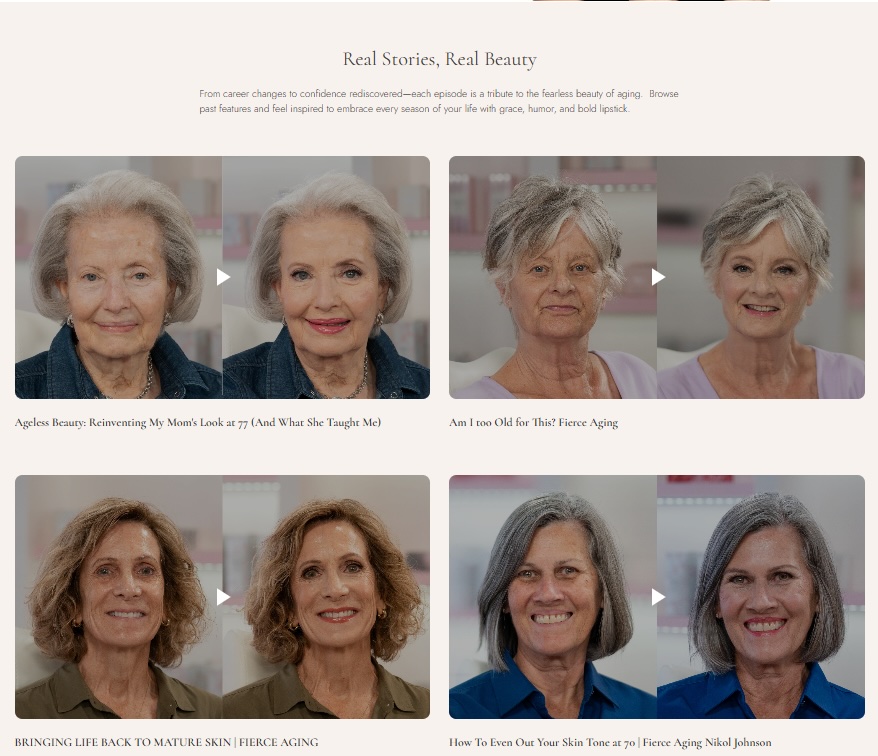
Source: Nikol Beauty Youtube channel
After years of conversations recorded across multiple seasons, several themes emerge repeatedly. Many women describe becoming less interested in looking younger and more interested in looking like themselves. Others speak about growing confidence, changing priorities, and feeling more visible once they stopped measuring themselves against younger versions of themselves. Makeup is presented less as a way to erase age than as a form of self-expression. Those observations are not scientific findings, but they closely mirror research published by the American Psychological Association, which found that self-esteem generally continues to rise through adulthood, reaching its highest average level around the age of sixty before gradually declining later in life. At its core, Fierce Aging treats visible signs of aging not as defects to disguise but as evidence of a life lived, shifting the role of makeup from concealment to expression.
This distinction helps explain why Fierce Aging differs from many traditional beauty narratives. Fierce Aging does not reject cosmetics or skincare. Instead, it questions the assumption that their primary purpose should always be to recreate a younger appearance. On Nikol Beauty’s Video Gallery, the series is introduced through the phrase “Real Stories, Real Beauty,” framing beauty as something that exists alongside lived experience rather than in opposition to it.
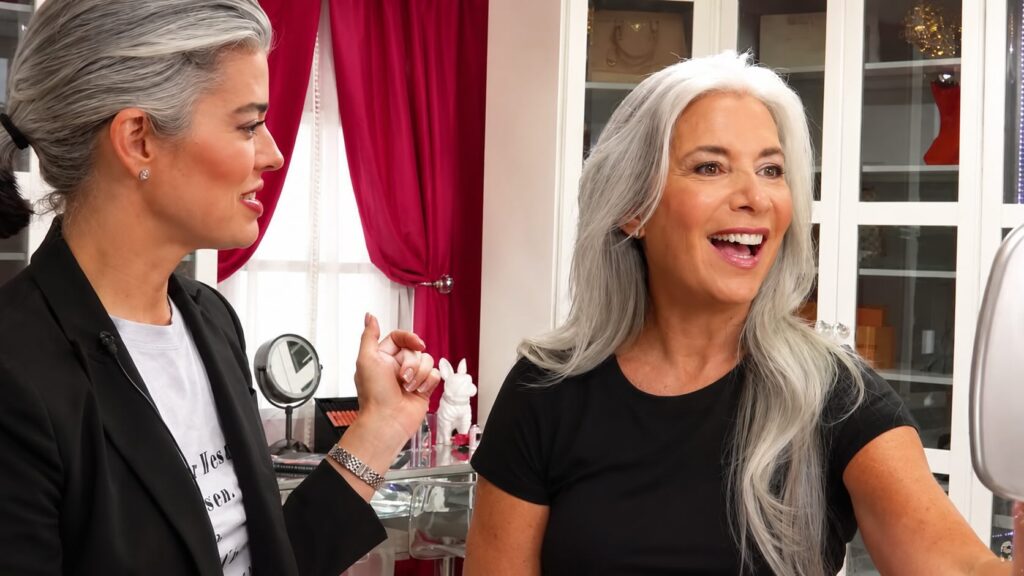
Source: Nikol Beauty Youtube channel
When a Philosophy Becomes a Product
Fierce Aging did not remain a media project. It gradually became the foundation for Nikol Beauty, a cosmetics brand built around the needs of mature skin. According to the brand, Nikol Beauty grew from Johnson’s frustration with the products available to mature consumers. She found foundations that settled into fine lines, blushes that lost their vibrancy on changing skin and beauty counters that continued to frame youth as the ultimate goal. Rather than trying to create another anti-aging line, she set out to develop colour cosmetics designed specifically for skin in its fourth, fifth, sixth and later decades of life, addressing a market that remained largely divided between conventional cosmetics for younger consumers and products focused primarily on reversing visible signs of age.
That positioning reflects a gap identified by consumer research. According to an AARP study, seven in ten women over 40 would like to see more beauty and personal care products created specifically for people experiencing perimenopause and menopause. The demand extends beyond representation in advertising. It also includes products developed with mature skin in mind.
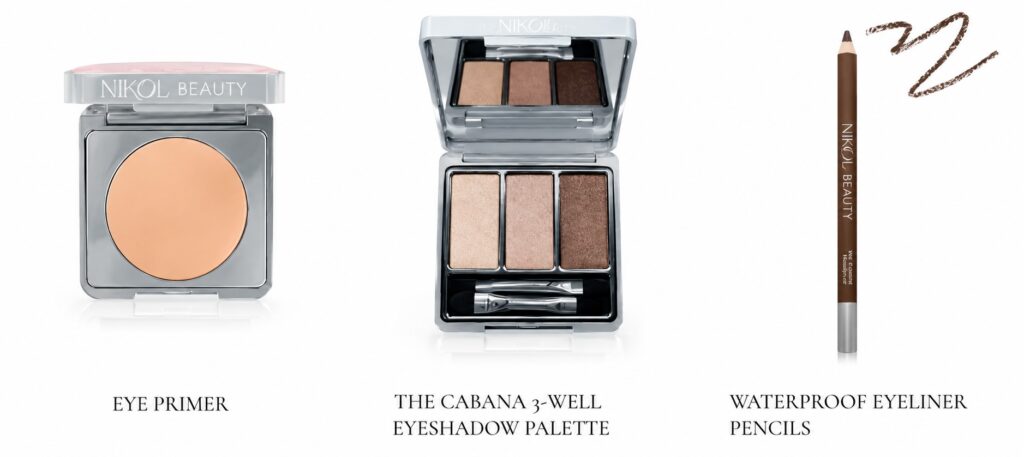
The same ideas also shaped product development. Rather than adapting formulas originally designed for younger consumers, Nikol Beauty says its colour cosmetics are developed with cosmetic chemists who specialize in mature skin. The brand emphasizes fragrance-free complexion products, micro-milled pigments designed to avoid settling into fine lines and emollient textures that deliberately blur the line between skincare and makeup for skin that becomes drier and more reactive with age. In that sense, formulation becomes part of the brand’s approach rather than simply another product claim.
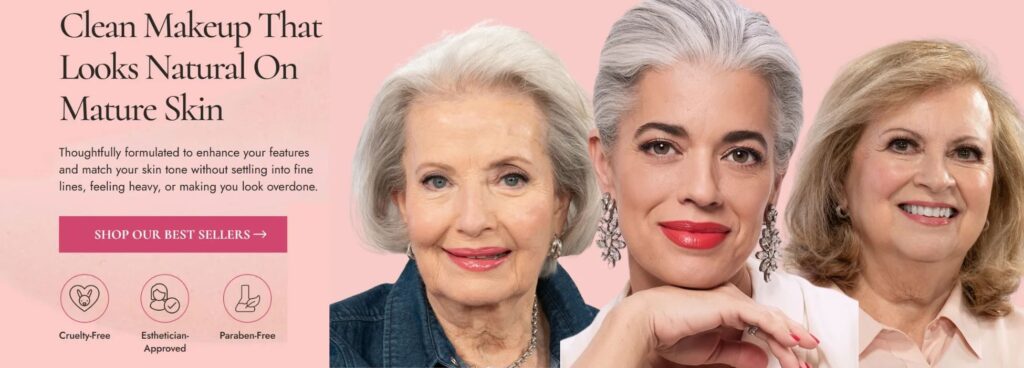
The same thinking extends to the brand’s visual identity. Campaigns feature women over forty, identified by name and photographed in natural light, with visible lines and grey hair left untouched rather than concealed. The brand’s product copy avoids many of the expressions traditionally associated with beauty marketing, such as “turn back time” or “anti-aging,” instead presenting makeup as a form of expression rather than correction.
By connecting interviews, product development and brand communication around the same idea, Nikol Beauty shows how one idea can shape decisions that extend well beyond advertising campaigns.
Looking Beyond Anti-Aging
Fierce Aging™ distinguishes itself by how the philosophy operates systematically across interviews, product development, and brand communication. Rather than following established industry formulas, this model challenges the conventional boundaries maintained by legacy cosmetic companies in redefining how the market addresses mature consumers. Whether that model remains exclusive to Nikol Beauty or pushes a wider range of beauty companies to shift their approach will become clearer as the industry continues adapting to an older and more diverse customer base.
The more enduring question may not be whether anti-aging disappears. It is whether beauty brands will increasingly be expected to design products, tell stories and speak about age in ways that reflect how people actually experience growing older. What began as a series of conversations ultimately became a way of rethinking how a beauty brand might approach age itself

