


In the third week of the COVID lockdown, Doreen Sayegh started selling popcorn out the front door of her movie theater. She called it Concessions on the Go. Families pulled up to the curb of the Cranford Theater in Cranford, New Jersey, and she handed them fresh popcorn, candy, and their favorite movie snacks through the door. They took it home and ate it on their couches during the umpteenth week of not being allowed to leave the house. Then Doreen rented a parking lot and turned it into a drive-in.
“About three weeks into the shutdown, I realized I couldn’t sit at home waiting for someone else to solve the problem,” she says. “That’s just not who I am. It was time to get creative.” She pauses on the same thought. “It was never just about keeping our business alive. It was about giving our community something to look forward to during an incredibly difficult time.”
Six years later, Doreen is the last independently owned, family-run cinema operator in Union County, and the Cranford Theater is about to turn 100.
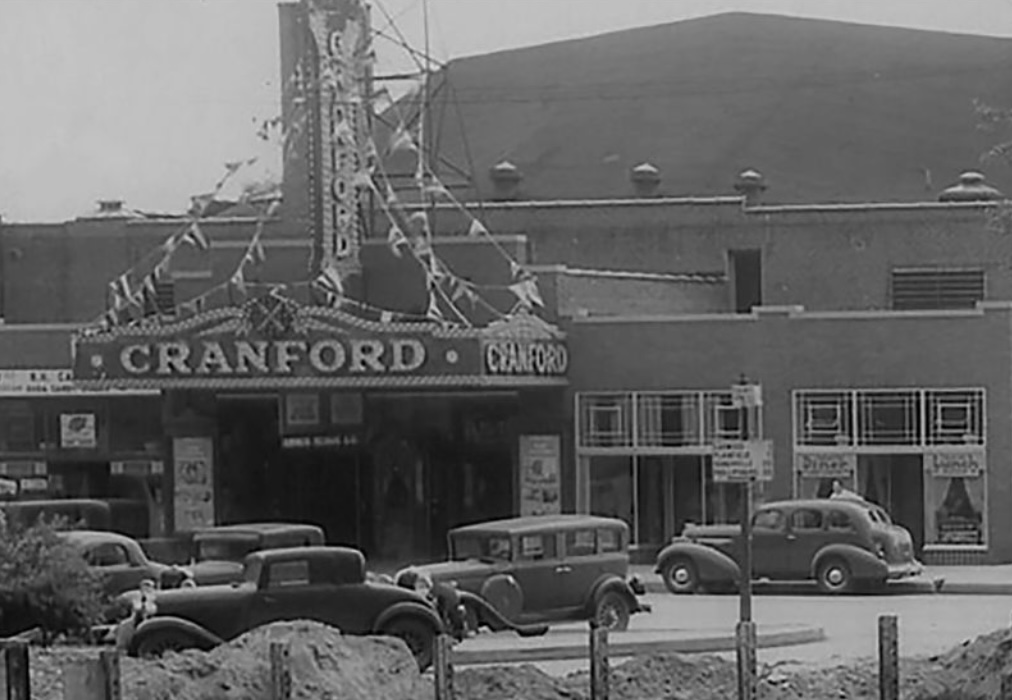
Her father bought the Cranford in 1998, two years after he’d acquired another theater in a neighboring town. “Most people probably saw another old movie theater that needed work,” Doreen says. “He saw something much bigger. He saw two beautiful neighboring communities that complemented each other. Owning theaters in both towns gave him the opportunity to play more movies, serve more audiences, and strengthen the moviegoing experience in our part of New Jersey. It wasn’t just about adding another building to the business — it was about creating something that was greater than the sum of its parts.”
What she inherited from him, she says, wasn’t the theater. “The biggest thing I inherited from him wasn’t the theater itself. It was his vision. He taught me to look beyond what something is today and imagine what it can become tomorrow.”
She was inheriting it into an industry that is still, in 2026, overwhelmingly run by men. “When I first started in this industry, it was definitely male-dominated, especially on the exhibition side,” she says. “I was often one of the only women in the room. There were times when people assumed I was there in a supporting role instead of being the person making the decisions.”
Her strategy was preparation. “I made it my mission to know my business inside and out. Whether it was film booking, operations, marketing, concessions, finances, or building relationships with studios and industry partners, I wanted to be able to contribute with confidence and back up my ideas with results.” Over time, she says, “people stopped seeing me as one of the few women in the room and started seeing me as someone whose opinion they wanted to hear. That wasn’t because I demanded it. It was because I earned it.”
In 2019, Doreen, her husband Dino, and her father completed a full renovation of the theater. Dino is a builder and handled the construction; Doreen and her father built the vision. Four and a half months after the reopening, every movie theater in America shut down. “There was so much uncertainty,” Doreen says. “We had no idea how long the shutdown would last or what the future of our industry looked like.” The conversation at home, she says, was never about selling. “The conversation was always, ‘How do we get through this?'”
That is when the popcorn started going out the door.
The other thing Doreen would like people to understand — people who love movie theaters, people who read a story like this and imagine that a busy lobby means a healthy business — is what running one actually costs. “People often assume that if a movie theater is busy, it must be doing really well financially,” she says. “I wish it were that simple. What many people don’t realize is that movie theaters operate on incredibly thin margins. A significant portion of every ticket sold goes right back to the film studios, especially during the opening weeks of a movie. On top of that, we have payroll, utilities, insurance, maintenance, equipment, and the countless expenses that come with operating a nearly 100-year-old historic building. It takes a tremendous amount of work just to open the doors every day.”
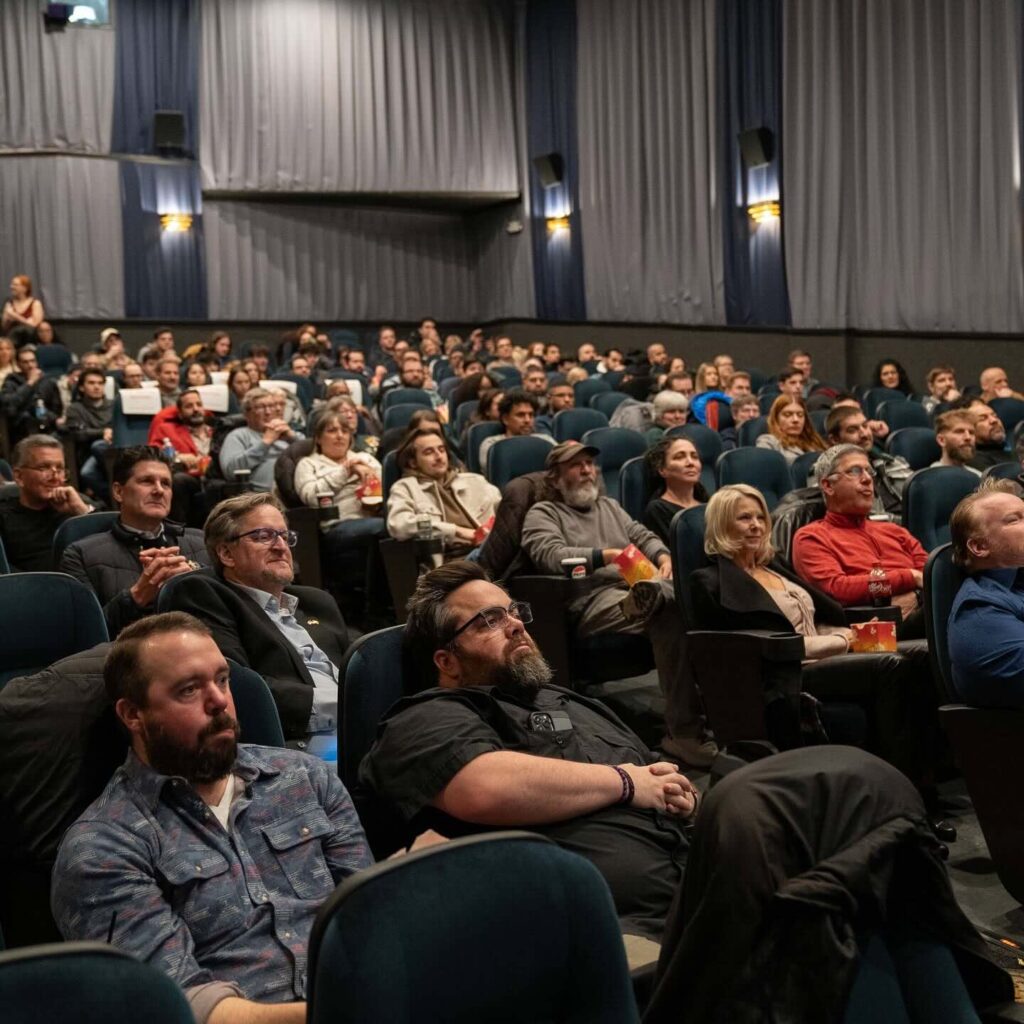
Streaming has changed the math further. “People have more choices than ever before, so every visit to the theater has to feel like it was worth leaving the house. That’s why we’ve focused so much on creating experiences, not just showing movies.” She lists them: community events, filmmaker Q&As, sensory-friendly screenings, comedy shows, classic film screenings with live guests, the entire centennial year. “We’re giving people reasons to gather together.”
“Buying a ticket really matters,” she says. “Buying popcorn matters. Bringing a friend matters. Choosing to see a movie on the big screen instead of waiting a few weeks to stream it matters. Those decisions are what allow independent theaters like ours to continue serving their communities.”
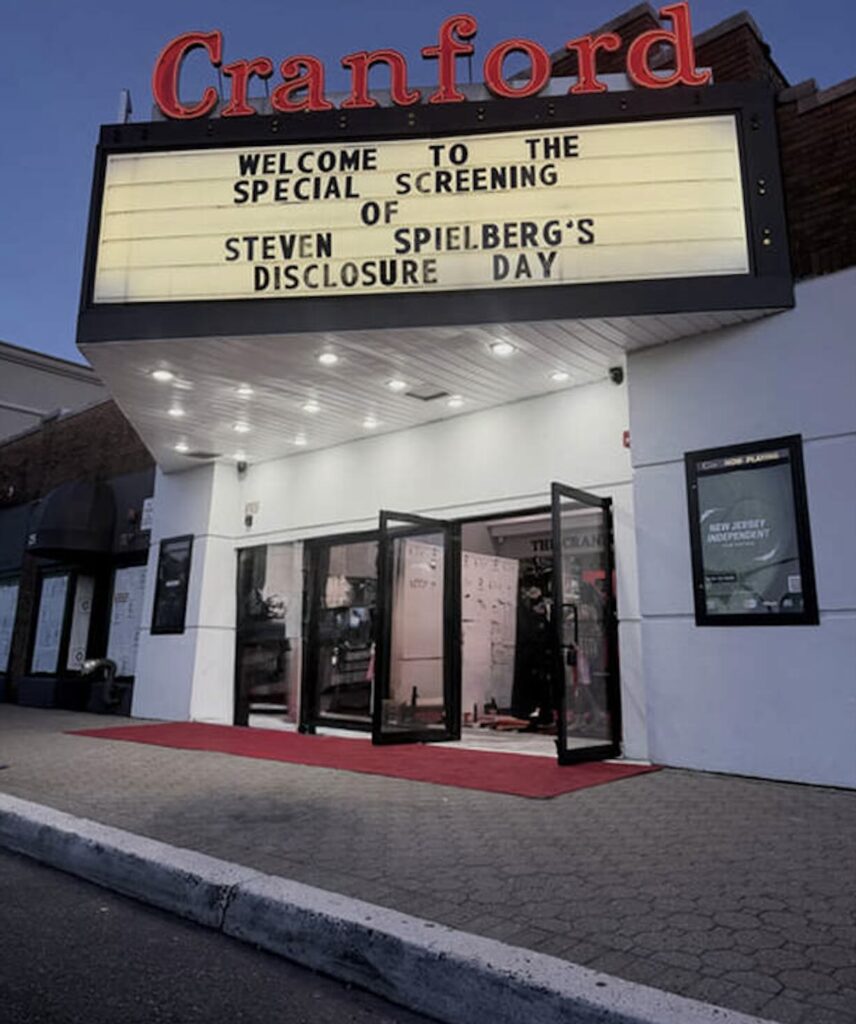
In June, Steven Spielberg’s Disclosure Day got a special advance screening at the Cranford four days before the film opened nationwide. “It was truly an honor,” Doreen says. “The opportunity came about through a relationship, and I was incredibly grateful that the Cranford Theater was chosen to host a special advance screening the same evening the film premiered in New York City. For an independent, family-owned theater, moments like that are incredibly meaningful. It speaks to the importance of building relationships, earning trust over time, and creating a theater that people believe can deliver a special experience.” The screening filled the room with elected officials, industry leaders, filmmakers, and members of the Cranford community. “As someone who runs an independent theater, I never take opportunities like that for granted. It reinforced that independent theaters still have an important role to play. We may not be the biggest theater, but we can create memorable experiences and bring people together in ways that are truly special.”
Doreen has a five-year-old daughter named Natalia. She is being raised in the lobby. “For her, the theater isn’t somewhere we visit on a Friday night. It’s home. She knows our staff by name, runs through the lobby, waves to our guests, and thinks it’s completely normal to have popcorn popping in the background.” Natalia has a favorite seat. She also has a best friend at the theater — Francesca, whose father Paolo owns the sandwich shop next door. “She’ll make her way over to the theater, and the girls pick out their snacks together before heading into a movie,” Doreen says. “Watching them share that experience is something I’ll never forget. Those are the kinds of memories that independent theaters create — they become part of childhood.”
The movie Doreen is waiting to show Natalia is E.T. the Extra-Terrestrial. “I already have the perfect picture in my mind: the two of us sitting together in the theater, sharing a box of Reese’s Pieces, watching one of the greatest films ever made.”
What she hopes Natalia sees, growing up here, is the work. “She sees that there are long days, difficult decisions, and challenges that don’t always have easy answers. But she also sees that if you care deeply about something, you show up every day and give it your best.” She adds: “If one day she chooses a completely different path, I’ll support her wholeheartedly.”
If, on the other hand, Natalia came to her at twenty-five and said she wanted to run the Cranford, Doreen has thought about it. “My first response would be that I’d be incredibly proud,” she says. “But before I handed her the keys, I’d want to know that she had completed her education and had built a strong foundation for herself. I also believe everyone should have a backup plan. Not because I don’t believe in this business, but because I’ve learned that the world can change in ways you never expect. Thirty years ago, no one in our industry saw streaming coming. Then came the pandemic. The way people consume entertainment continues to evolve, and as business owners, we have to evolve with it.”
“If, after all of that, she still wanted to run the Cranford Theater, I would absolutely support her. I would love nothing more than to see her continue our family’s legacy and write the next chapter of this incredible theater.”
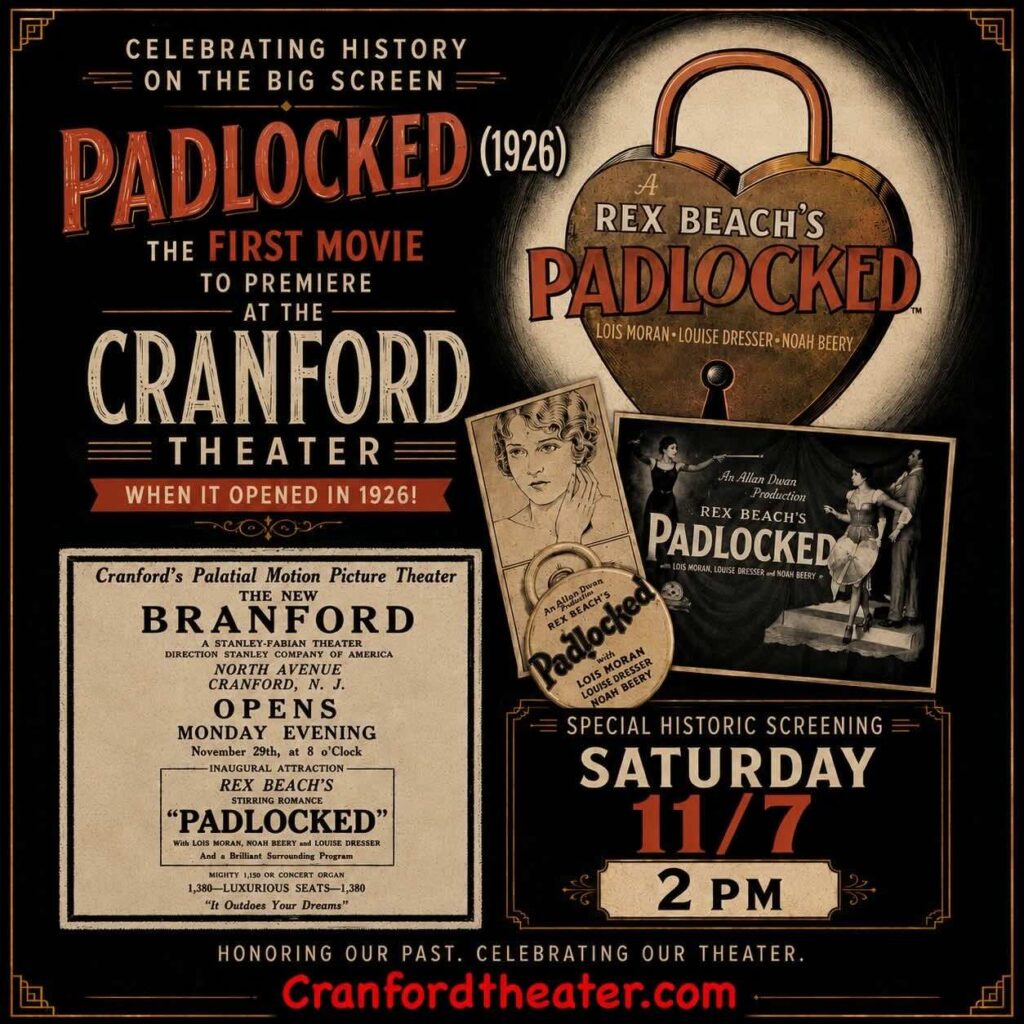
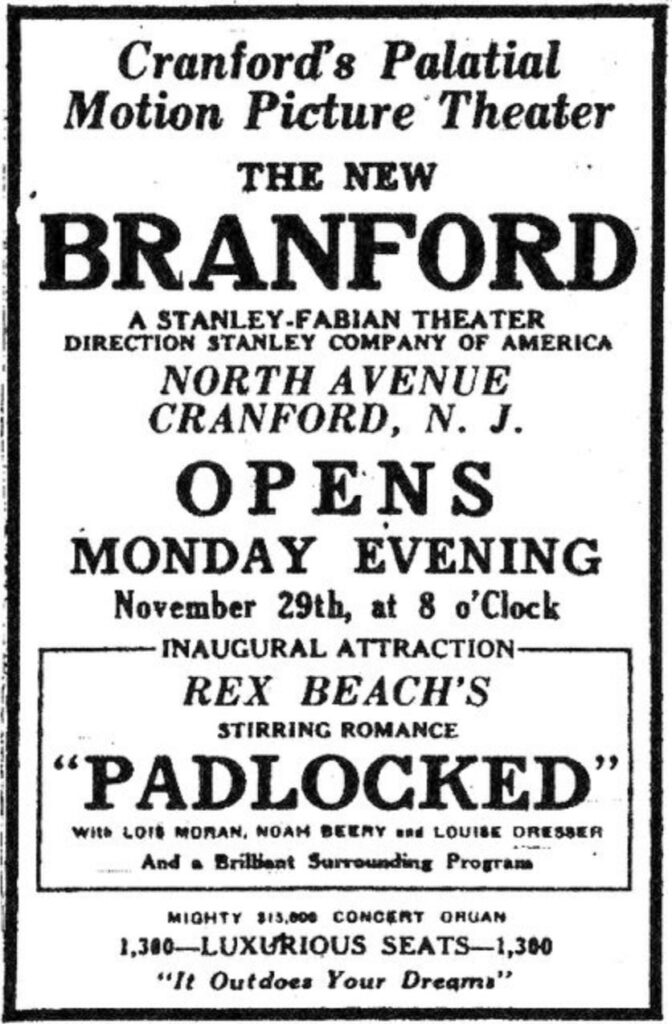
The Cranford turns 100 on November 29, 2026. For the centennial, Doreen is bringing back Padlocked, the silent film that opened the theater in 1926, with a live organist performing on a portable Wurlitzer equivalent. When she thinks about the women who sat in that same room a century ago, she says she would want to tell them the theater is still here. “That a hundred years later, people are still walking through those same doors, still laughing, still crying, still falling in love with the movies. I would tell them that generations of families have made memories in the very seats where they once sat, and that the Cranford Theater is still bringing a community together.” She would want to tell them one more thing. “That one day, a woman would own and operate their beloved neighborhood theater. In 1926, that would have seemed almost impossible. Today, I have the privilege of serving as a steward of this incredible place.”
The Cranford Theater is at 25 North Avenue West, Cranford, NJ. The centennial screening of Padlocked with live organ accompaniment is scheduled for November 7, 2026, get tickets here

