

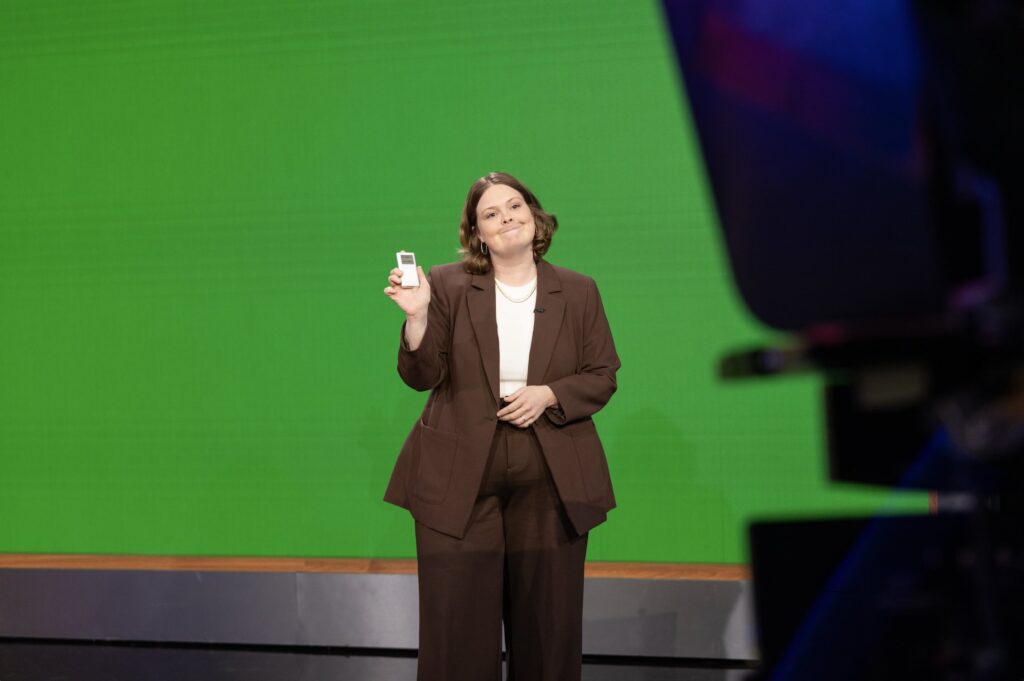
The Daily Show has been one of those big institutions of American comedy since its debut in 1996. Much like its comedic counterparts Saturday Night Live and the ever popular Late Night franchises, The Daily Show has been bolstering careers in comedy and offering some of the most sharp political satire for nearly 30 years. What sets The Daily Show apart from other late night programs, however, is the fact that it was in part created by women and continues to keep female voices at the center of the show. Madeleine Smithberg and Lizz Winstead, co-creators of The Daily Show, are comedians whose perspectives helped shape its early voice and direction. Part of the ongoing legacy of The Daily Show is how the program often finds ways to bring in fresh voices that represent the ever-shifting landscape of comedy. Its ‘correspondents’, a position which has launched the careers of comedians such as Stephen Colbert, Jessica Williams, Hasan Minhaj, John Oliver, and Samantha Bee, serve not as a side bar and instead are considered to be key pillars of the show. To quote that famous line from My Big Fat Greek Wedding, if Jon Stewart is the head, then the correspondents are the neck.
Enter Grace Kuhlenschmidt, one of The Daily Show’s newer correspondents and a recognizable name to the generation who grew up watching YouTube instead of Late Night. Kuhlenschmidt was inspired by comedians such as Amy Poehler, Tina Fey, Maya Rudolph, and more recently Patti Harrison, Sydnee Washington, Pat Regan, Marie Faustin, and Catherine Cohen. She grew a large portion of her fanbase from the internet, with unforgettably hilarious appearances on popular podcasts such as So True with Caleb Hearon, and iconic internet shows like Ziwe.
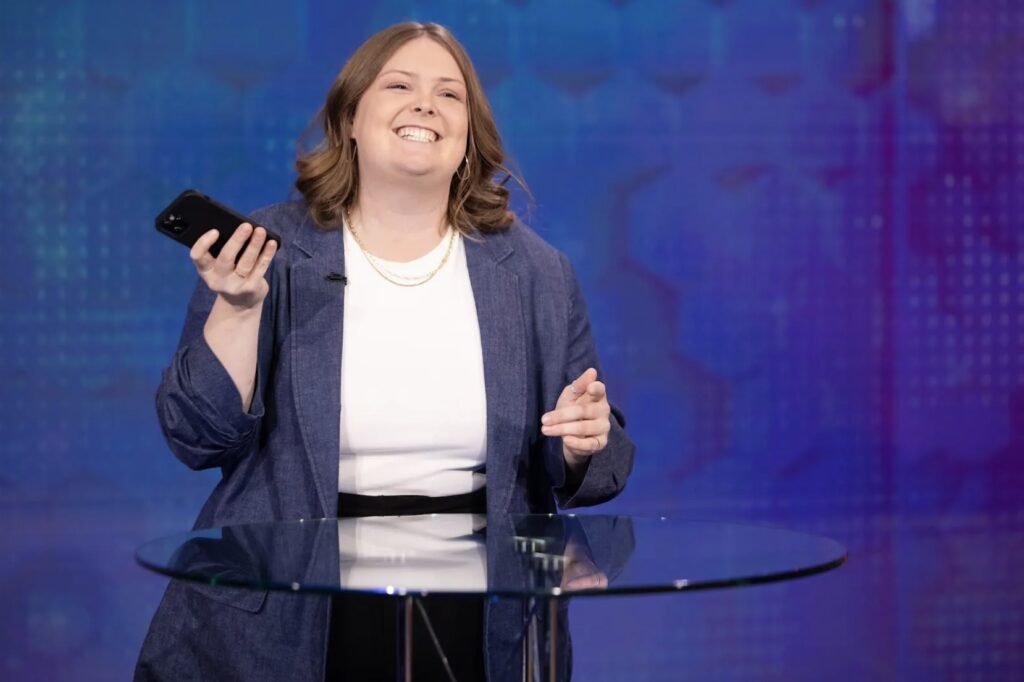
Kuhlenschmidt’s voice on The Daily Show has been invaluable as the show adapts and relates to an ever-changing audience. Kuhlenschmidt herself noted the legacy of the show and what it means to work at a place where women’s voices are taken seriously. “In terms of where we’re at currently, our Executive Producer Jen Flanz has been at the show for decades. She is so incredible, and I often have thoughts to myself where I’m like, ‘God, I really hope this isn’t the only show I work on where there’s a female EP’. And it’s a bummer that I feel that that’s a possibility.” Kuhlenschmidt acknowledged how rare it is to work in a comedy job with women at the forefront, but also stressed how important their voices are to the overall direction of the show. “I just feel really grateful and also we have so many women on the writing staff that I do think that–sure, you know, Jon Stewart is the head of our show, he’s the face of our show–but I feel like female voices at the show and in the writer’s room are fully at the front.”
The highly-awarded Jen Flanz (we’re talking Emmy and multiple Peabody awards amongst others) is another key force in keeping The Daily Show fresh, relevant, and with underrepresented voices at the center. Serving as Executive Producer AND Showrunner AND Writer, Jen Flanz has been involved in every iteration of The Daily Show since its inception, rising through the production and creative ranks to become an Executive Producer in 2013 and Showrunner in 2018, making her one of the few women in late night to hold that role.
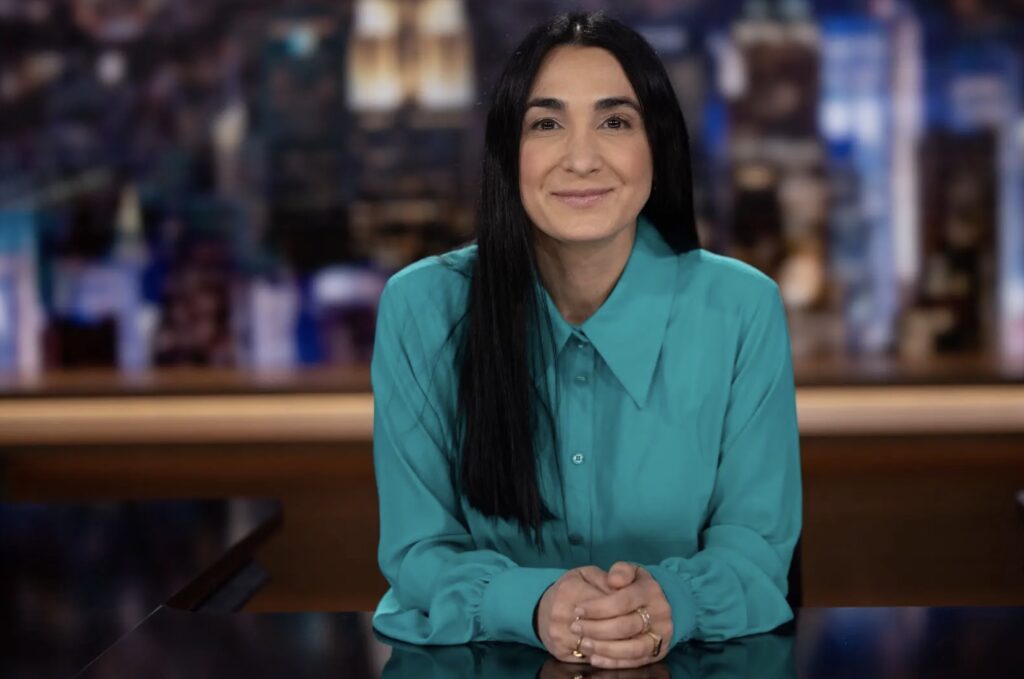
Flanz immediately recognized Kuhlenschmidt’s comedic value to The Daily Show, stating, “Grace brings a unique point of view to our news team and is so embedded in online culture that she’s often able to connect the dots on things that resonate with our audience. She definitely allows for us to do more whimsical, quirky jokes in a way that only she could deliver them. She has such a specific voice that it’s hard to squeeze her into a Daily Show mold, so it’s an exciting challenge to come up with ideas to suit her persona. She’s also the first content creator we’ve ever auditioned for the show successfully, and has proven that it can be a great fit.”
Putting the whimsy into content creation is certainly a key aspect of Kuhlenschmidt’s work, and it speaks to the origins of her career . As the comedian explained, “I started my career by genuinely just having fun. It was the pandemic and I was working at a restaurant, so we were closed. This was in Chicago. I really was just like in my apartment trying to prevent myself from being so fucking bored, and the tool I was using was making videos and tweeting at the time. I was completely alone and yet, I was feeling connected to so many people, which at the end of the day is how I feel about comedy. Why I like doing comedy is to connect to other people.”
Zhubin Parang, co-executive producer and writer on The Daily Show also spoke to this shift towards an audience that coexists with social media, which speaks to why it can be helpful to have writers and comedians adapt to that landscape. “Everything has to be faster in the social media area, since people don’t have the patience for a slow-burning joke” stated Parang, “In some ways that’s unfortunate, because it limits the range of comedy you can write, but it definitely disciplines your writing to be as funny as it can be as quickly as it can be.” The writer also offered high-praise for Kuhlenschmidt specifically, stating, “As a comedian, she’s a genius at channeling the goofy earnestness of a dope who’s just happy to be there. For us writers who usually write in the detached know-it-allness of ‘news reporter speak,’ it’s incredibly fun to write for that type of character.”
If there is one ingredient that both speaks to the origins of The Daily Show and its lasting legacy of promoting witty and informed political satire, it’s collaboration.
“I started comedy fully in a collaborative sense,” stated Kuhlenschmidt, “I was in an improv group, and a sketch group in college. Then I moved to Chicago and I was doing improv, you know, too many nights of the week for way too few audience members. Then the pandemic hit, and that was a completely isolating experience, which in a lot of ways was cool. I feel like I got to use completely new muscles, and really hone my craft even more when it comes to what I think is funny versus what is working collaboratively. But I mean, getting to work with others can sometimes be a lot harder, but I find more purpose in it. I think that’s why stand-up sometimes, as rewarding as it can feel, feels really isolating. And so I feel really lucky that I can be in comedy and have a job that is collaborative because so many people just don’t.”

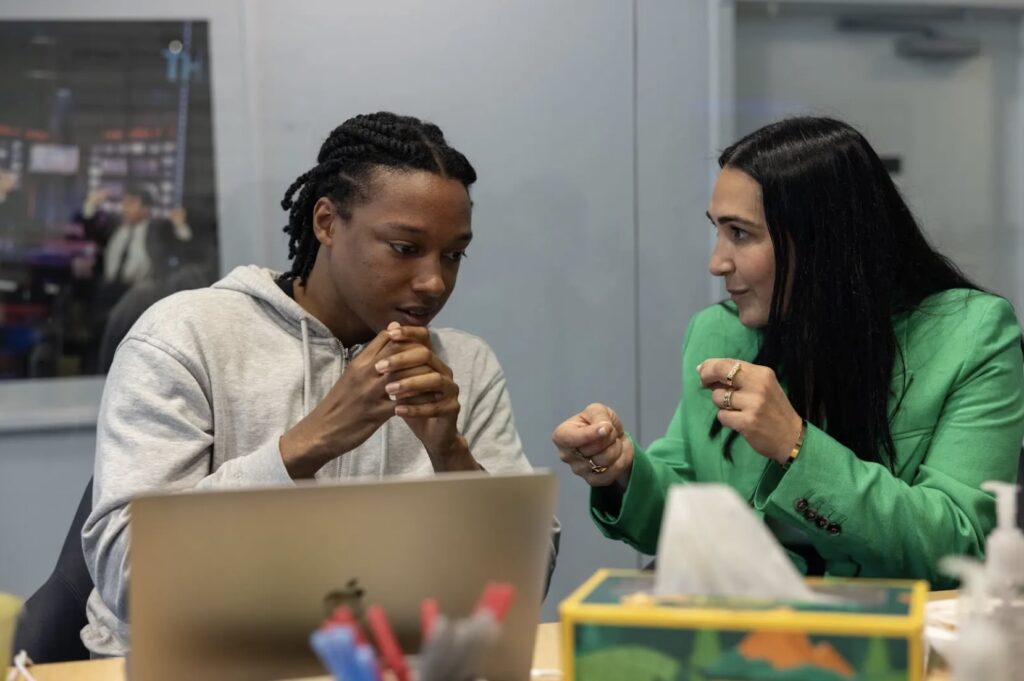
Flanz also spoke to the collaborative nature of The Daily Show, and how Kuhlenschmidt fits into the ecosystem perfectly, “Our correspondents, Grace included, are treated like staff. The whole show is collaborative and the on-air talent is involved in all of their pieces, from in-studio pieces to out in the field segments to digital. Their voice and opinion is important to the writers, producers, and directors they’re working with. They do everything from initial joke meetings to sitting in on the edits. Flanz elaborated, stating, “You’re taking people who do stand-up comedy at night or create digital content on their own schedule for as much or as little time as they want to and forcing them into an office job. It’s a really unique job and only people who have a strong work ethic excel at it, and Grace is one of those people.”
However, it’s not only collaboration that has led to The Daily Show’s 30 year and counting run, it’s also a commitment to tell the truth, and to speak truth to power through comedy and political satire. Franz reminded viewers that understanding the world around us and where power is are key tenets to contributing to The Daily Show. Praising Kuhlenschmidt specifically, she added, “she’s really freaking funny and of course very smart and a blast to work with. Also, her interest and compassion for what is happening in the world make her a perfect fit for The Daily Show.”
Kuhlenschmidt has been consistently outspoken in support of various issues for social justice long before her career took flight. Her and her collaborators’ work on The Daily Show often highlights the ridiculousness and absurdities of power (particularly this administration) through satire. In this political moment, it makes sense to feel a particular pressure—or motivation—as a comedian to engage politically through your work.
Kuhlenschmidt believes it to be somewhere in between the two, as she stated, “Somewhere between pressure or motivation maybe, but I think the word I really would use is a responsibility,” the comedian elaborated, “But I don’t even know if that’s a responsibility because of the platform that I have, or just because of who I am and my beliefs. I’d like to think I would be just as politically active if I didn’t have a platform. I think that’s an important perspective to have on it.”
In an era that seems to feature continuous questions (often asked by boomers) as to when comedy became political, Kuhlenschmidt serves as a reminder that comedy has not only always been political, but has always attracted political people. As Kuhlenschmidt chimes in, “I mean, also satire has always existed. Specifically political satire.” We are seemingly at a moment where it has become more noticeable as the absurdities of power become more and more present in our everyday lives.
As a self-proclaimed “straight lesbian comedian,” Kuhlenschmidt also spoke to how her identity shapes the kinds of stories she’s drawn to telling, and the way she approaches humor more broadly.
“I think there’s something really powerful about being like, ‘I can totally make fun of my own identity’ in a way that’s not punching down,” as Kuhlenschmidt explained, “There’s so many, like, chats that I’ve done on The Daily Show where there’s been a complete throwaway line alluding to the fact that I’m gay. That’s not punching down because like I’m behind the joke, and it’s, often assisting something else, it’s often tossing the bottle for another joke.”
Considering where we started, the influx of queer representation and queer voices entering the mainstream comedy space is both exciting, and feels particularly apt for the political environment we’ve found ourselves in. We need voices such as Kuhlenschmidt’s now more than ever to not only offer lightness, but to bring to light the realities of the world around us.
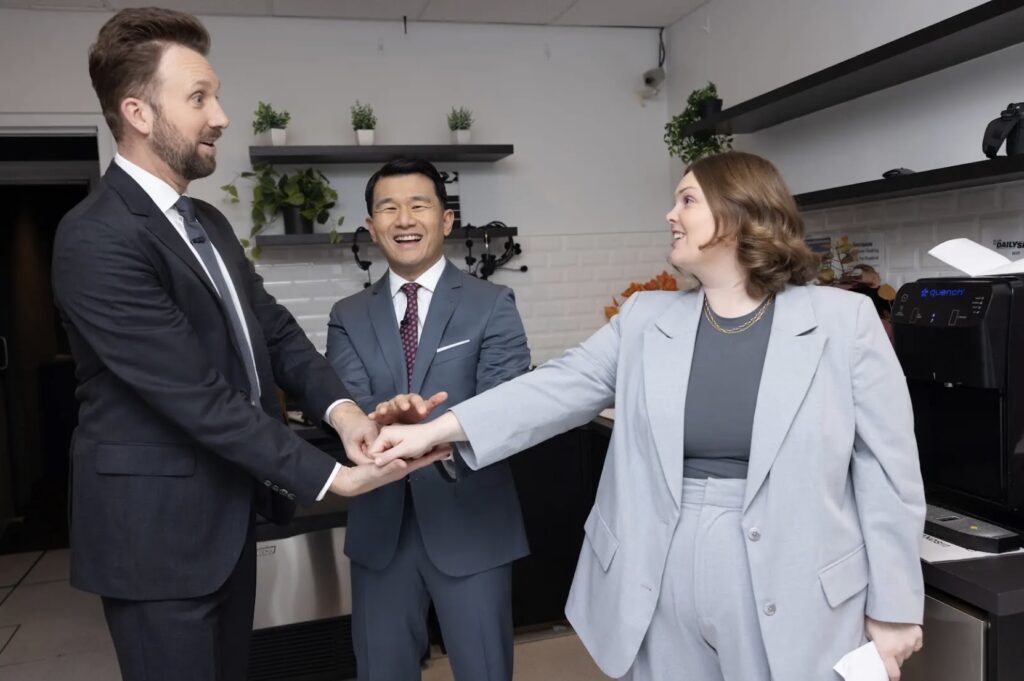
Jordan Klepper, Ronny Chieng and Grace Kuhlenschmidt
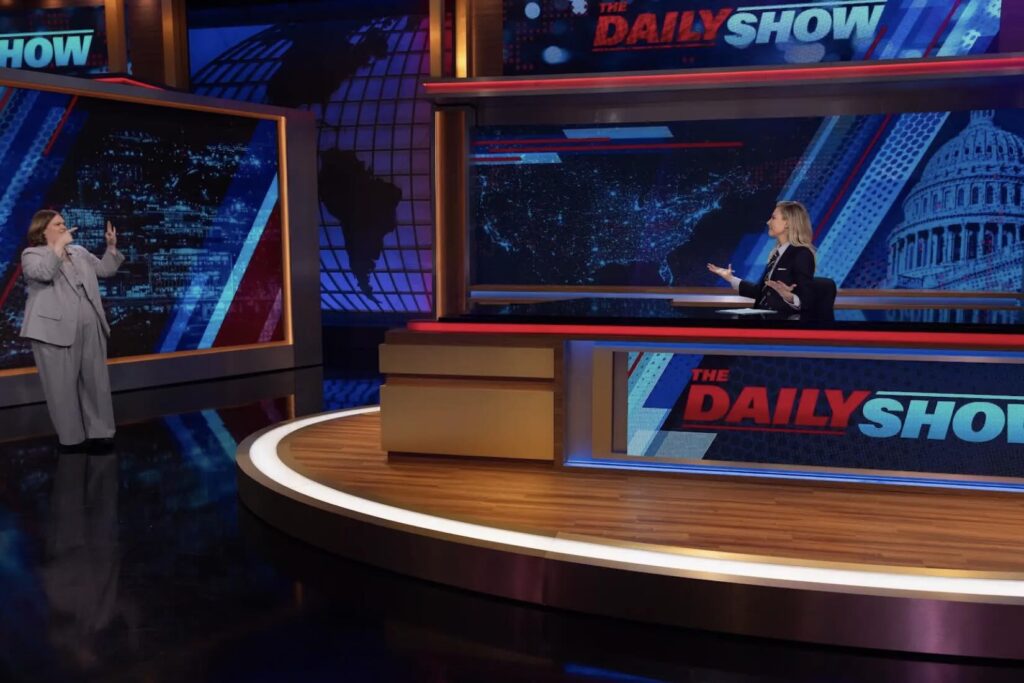
As Kuhlenschmidt discussed her career, she also reflected on what her career in comedy has meant to her thus far. “Honestly, just meeting people who have been impacted by my comedy is the most impactful thing. I think just like meeting people that experience joy from my comedy has been empowering because that’s literally why I’m doing it. You know, I’m not like some saint, I’m not posting videos literally to be like, ‘and now the people shall laugh.’ I’m doing it to make myself laugh. So I think anyone that can relate to that– I don’t know, it just kind of reminds me why I do it.” And we can say with certainty that the people are in fact laughing.
Flanz shared similar sentiments, speaking to the importance of Kuhlenschmidt’s voice in comedy, and her contributions to the ongoing legacy of The Daily Show, a legacy that started with funny women. “I feel like a proud big sister. She’s crushing it. I can see Grace’s arsenal of comedy tools growing every day. I’m positive that she has a bright future ahead of her, here at the show and in comedy in general.”
You can catch The Daily Show each Monday through Thursday at 11 PM EST on Comedy Central in the United States, with extended episodes released shortly after on Paramount+.
All images courtesy of Matt Wilson/Comedy Central © Comedy Partners

