

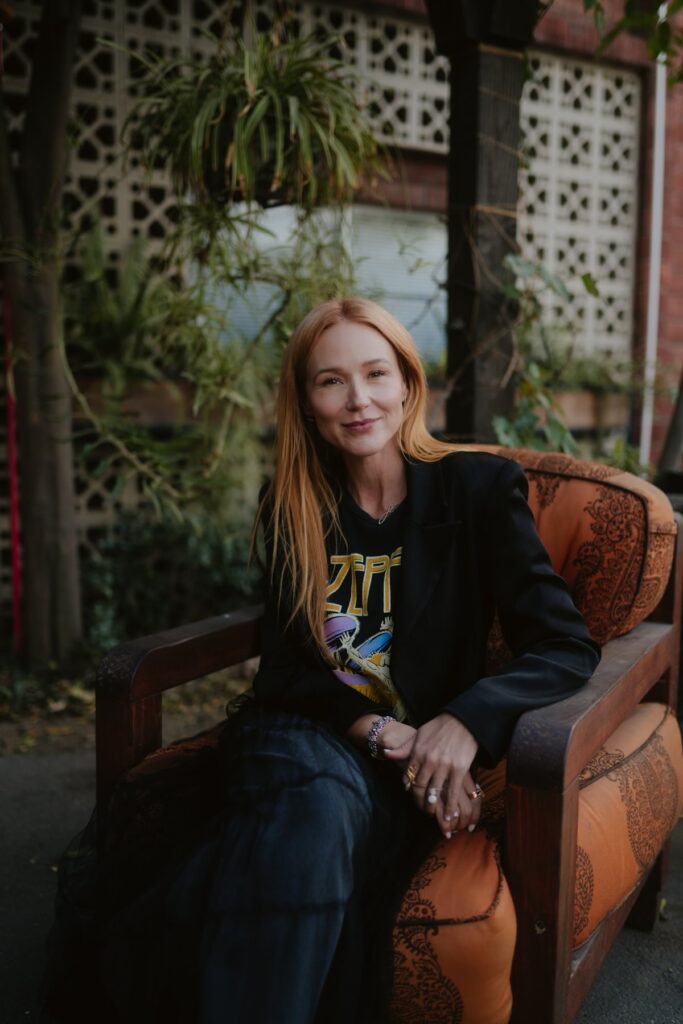
Jewel talks art, anxiety, and her open science inspired solo show presented alongside the Venice Biennale.
“You hearing this okay?” Jewel asks over Zoom. “…I’ve never shared off this computer, one second.” Her eyes stay fixed on the screen. Silence stretches, then a constellation of sound spills through my speakers.
“These are the raw signals that run each orb…that’s how the light twinkles,” she says, pulling up NASA data and showing how she translated star clusters’ light waves into the voices she’s sharing.
The singer-songwriter and poet is walking me through her multimedia solo exhibition, Matriclysm: An Archaeology of Connections Lost. It is presented with Crystal Bridges Museum of American Art and will run alongside the 2026 Venice Biennale.
I’ll start by saying I’m biased.
In my Nardwuar-esque pursuit to uncover everything about the artist, I discovered a teenage Jewel turning to synaptic pruning and string theory to untangle herself from doubt. Same. She’d eventually conjure the courage to write one of the best-selling debut albums of all time before the age of 20. Different.
Still, dear reader, two things can be true. Despite my partiality, Matriclysm is objectively fascinating.
I could continue to list the credentials the Grammy-nominated, New York Times bestselling poetry author has accumulated over three decades, but I’d rather spend my limited word count telling you about the love letter she has most cleverly penned to the science, sea, and stars in us all.
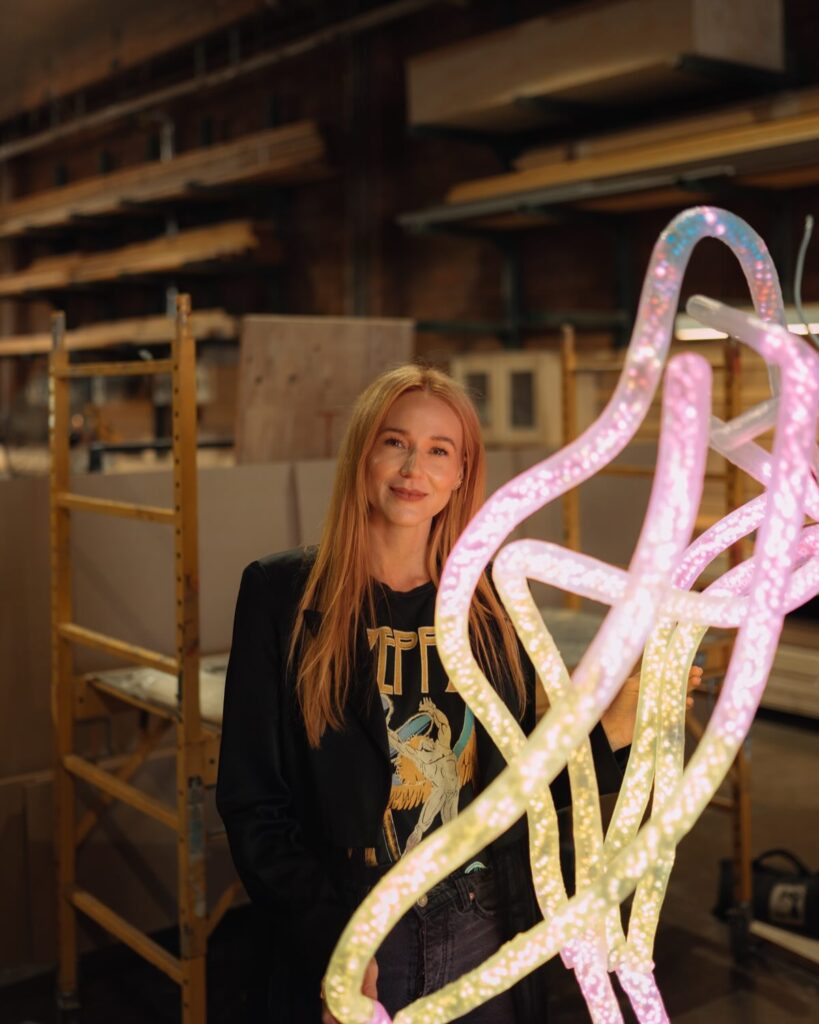
Matriclysm behaves like a living system rather than a static exhibition, gathering itself across mediums. In paintings, sculptures, tapestries, and installations, Jewel examines the overlooked cellular labor of women, from the resilience of Mitochondrial Eve to the immortal cells of Henrietta Lacks. Drawing on her own experimental design and open-source NASA data, the work moves through memory, motherhood, human fragility, and ferocity.
Resisting cynicism in favor of connection, Matriclysm begins outdoors with the sculpture First Mother, greeting visitors before any wall-mounted curatorial text can frame expectations. “For me, it’s a discussion about how vulnerable we are as humans,” Jewel says. “I also had to have it talk about nature … and our relationship to death, because if you give birth, you are very close,” she continues. “You’re willing to die to give birth to something.”
Unprotected, the figure is left to transform over eight months, shaped by weather, time, and human presence. “I really wanted this piece to be dust to dust,” she explains. “It will deteriorate. It will grow mold…” In a gallery culture that typically enforces distance, First Mother resists preservation, perceiving care as participation rather than control. “I also want it to be a piece people touch,” she says. “I don’t want people to touch anything else in the show, but I want them to touch her hand.” A gesture suggesting vulnerability is, in itself, a form of protection. Viewers are asked to move slowly, listen closely, and feel their way through the space, engaging with the work through presence rather than spectacle.
As Jewel explains, the exhibition is anchored by three large-scale sculptures representing undiluted feminine power. “The rest of the show sort of examines the unraveling in a really personal way in my own life,” she says, “in a way that I think will cause people to look at their own lives in a really personal way, and then also on a global scale.”
Jewel collaborated closely with Congo-born waste material artist Patrick Bongoy for this exhibition. “It was really important to do it with Patrick,” she says. “…it’s a healing. It’s a mending. A man and a woman coming together to honor the feminine.” Side by side, they wrapped the sculpture in hessian thread, taking care to embed seeds in the hope that something might grow. “I used poppy seeds because poppies are famous for growing after blood baths in war.”
The sculpture gestures toward our earliest maternal ancestor: mitochondria, the energy center inside every cell. Passed exclusively through our mothers, these tiny electrical currents influence immunity, resilience, and even how our genes express themselves. Scientists use it to trace thousands of generations of women.
“The show really explores feminine memory,” she says. “Do we know any stories about our matrilineal lineages? What is our own memory?” The question refuses to settle.
Another work, Seven Sisters, turns toward the sky. The sculpture features seven glowing glass orbs representing the Pleiades star cluster. Each is accompanied by its own voice, created using open-source NASA data derived from the stars’ light wavelengths. “…the neat thing too about stars is they’re kind of these living, gaseous things, and they have a heartbeat, this pulsing, and that’s a sound wave,” Jewel tells me.
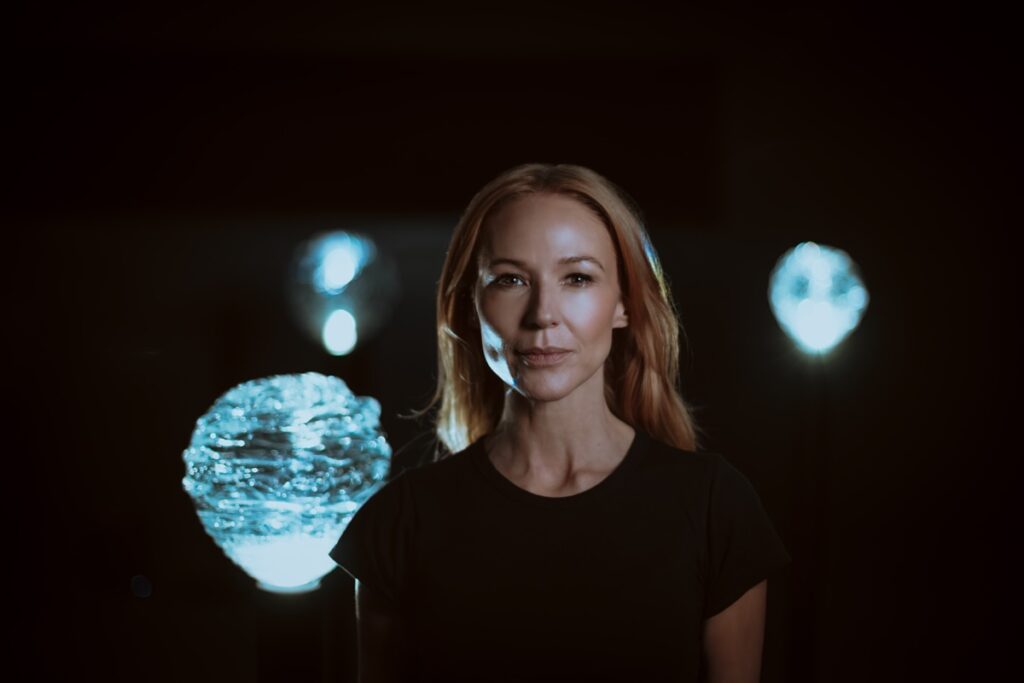
The legend of the Seven Sisters surfaces again and again, each time with important differences—ones that Jewel finds especially compelling. “This myth exists on every single continent by cultures that can’t talk to each other, couldn’t have spoken to each other,” she says. “How does every single continent have this shared myth about these women that brought technology, medicine, healing, math, spirituality to all the continents?”
She is particularly drawn to the Native American storytelling in which, after teaching all they could, six sisters returned to the stars while one remained behind as a guide or prophet. “And then eventually she joined the others,” Jewel explains. “That’s when you see this extra star appear in the sky. And I really love that. It takes it out of the Greek view, which just always gets patriarchal, no matter what.”
The question of who is remembered and who is forgotten resurfaces in her painting, Nepo Baby. In it, she depicts a still-faced, glitter-eyed woman, her gray hair coiled around tree branches. Scattered through it are clues like breadcrumbs: a credit card bearing the name Noor Inayat Khan, a copy of The Art of War inscribed as if authored by “Zenobia,” a prescription pill bottle, a portrait within the portrait of Henrietta Lacks, and a jar of La Mer.
Jewel follows the trail. “The credit card is Noor Inayat Khan, a British spy killed by the Nazis. And Zenobia was a Syrian ruler who fought off the Roman Empire…” She gestures toward the jar of La Mer. “The ocean reduced to commercialism,” she says.
She frames the title as both critique and provocation. “It was inherently in the family, … and now that’s been turned into a really bad thing,” she says. “Nepo baby is such a now word, you know?”
Perhaps a nod to female generational inequity? “It is about inheritance,” Jewel continues, suggesting knowledge is something we feel in the body first. “…it’s about suppressing this feminine lineage of healing, and you then have to bring up the witch trials if you’re bringing up healing.”
I wonder out loud if her synesthesia informed her desire to translate sound and data into physical and audio form. What she describes is a way of perceiving relationships across senses rather than separating them. “To me, sound comes with color,” she says. “I see shapes and forms that change when I change my vibrato.”
Her ability to see sounds doesn’t just describe a perception, but a way of thinking that collapses boundaries between systems. “They’re all the same. It’s just happening at different speeds,” she adds. “I think it’s why they always feel so integrated.”
“What if I could build an instrument that nature played?” she says. “It was my eureka moment.” That idea eventually became Heart of the Ocean, an eight-foot-tall steel and resin sculpture designed to transform both real-time and historical ocean data—such as salinity, wave height, temperature, and animal movements—into a living sound and light environment. “Sixty thousand programmable lights respond directly to that data,” she continues, including a brief red sequence compressing 150 years of ocean warming into seconds.
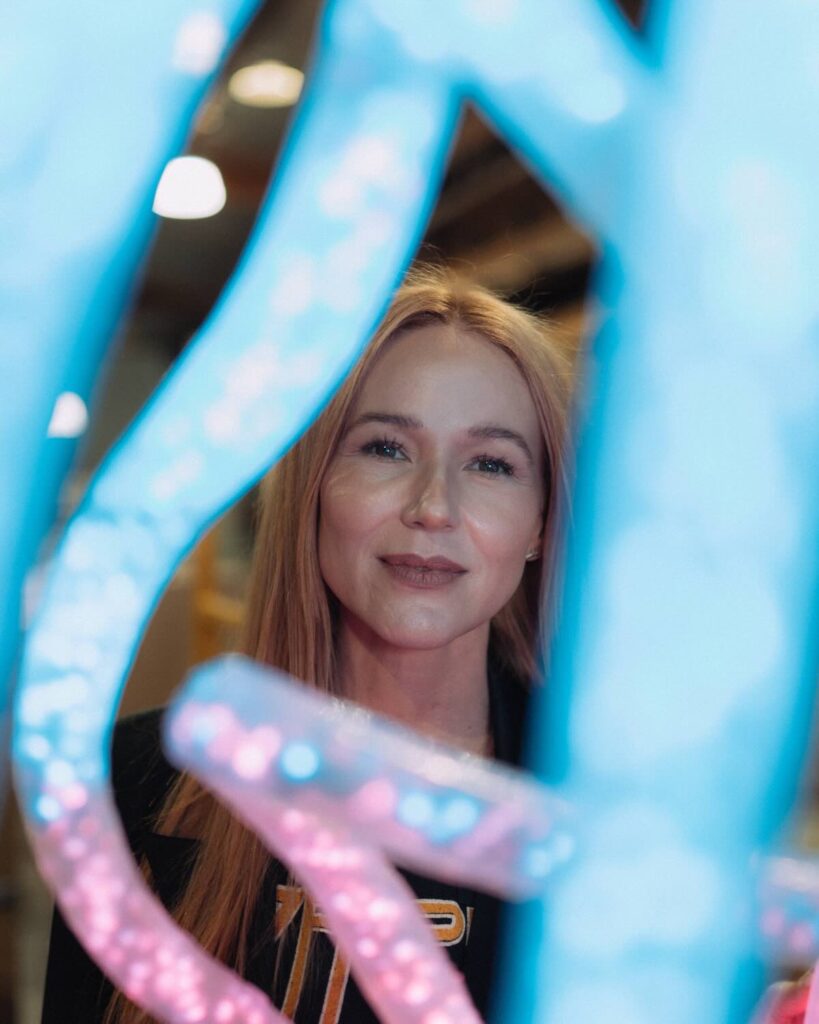
“The oceans always represented the psyche or the subconscious, and like Jungian psychology,” she says. “…our fear of the ocean is like the untouched depths of our own psyche—that’s really frightening.” A terrain that becomes more unsettling the deeper you go. “The sound gets so eerie when we go that deep,” she says. “At a certain point, there are angelic voices singing very, very deep.”
For Jewel, the work had to answer to numbers. “I have to be loyal to the mathematics. For some reason, I know a lot of scientists; I know a lot of astrophysicists … so I started to reach out to friends at NASA to say, how do I know what I’m looking for?” she explains. “NASA makes their data open. It’s pretty amazing.”
Themes of lineage, motherhood, feminine experience, and mythology emerge through this open scientific material, freely available to anyone willing to engage with it. The work quietly asks what beauty might already exist in what is available to us, and what we choose to do with it.
The result is a soundscape designed to subtly alter visitors’ brainwaves, a technique Jewel calls a “neuro-ceutical.”
These neuro-ceuticals cue the brain toward theta without conscious effort. Jewel explains, “…in our preliminary studies, it’s shown to get people into theta brainwave states in 20 seconds. So you come into these gallery spaces that really get you into your parasympathetic nervous system, you dilate, you open, you relax, and then you go on this journey.” These are the same brainwave states accessed in deep meditation and REM sleep, the safe places needed for pattern recognition, emotional processing, and long-term memory consolidation to occur.
“I designed the show to be from a very feminine perspective… It’s calming, and it’s nourishing,” she continues. “A lot of exhibitions we go to are really extractive and depleting and excitatory. This is designed opposite.” The result is an environment meant to shift the viewer out of fight or flight and into parasympathetic states associated with creativity, neural plasticity, and healing, a space curated to connect with our disconnection.
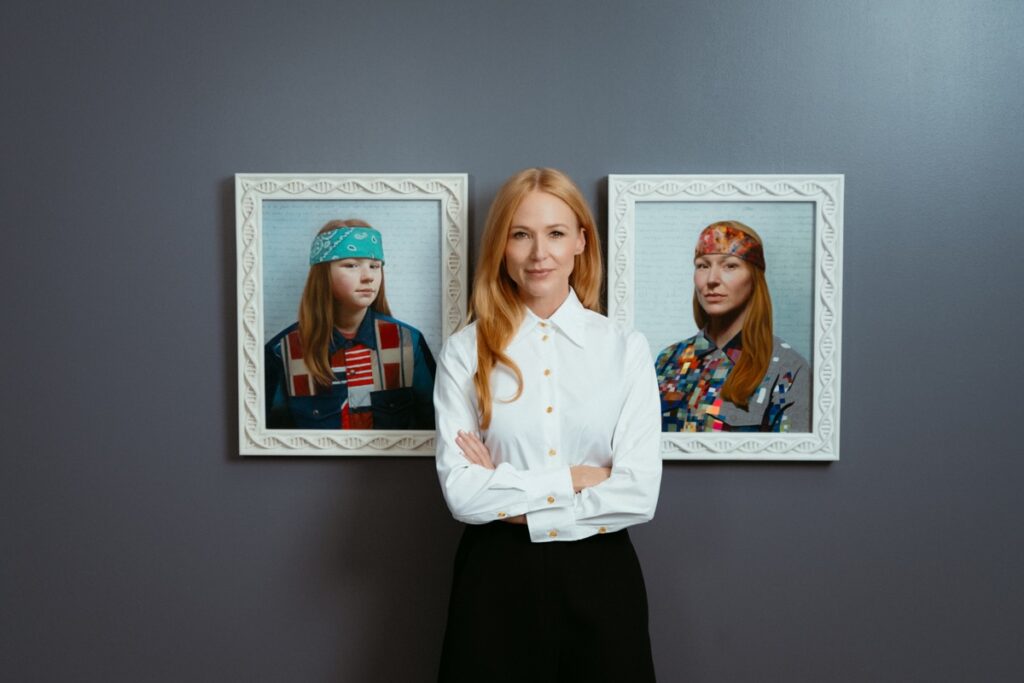
She comes by it honestly. “I shoplifted a lot when I was young,” Jewel says, likening it to an addiction. “…that was a way of managing anxiety. I did something scarier and riskier and more intense than my anxiety,” she says. “And so it gave me relief.” Her instinct to nurture herself out of her own nature is palpable.
“Anxiety is like food poisoning,” she says. “…we just consumed a thought, a feeling, or an action that doesn’t agree with us,” she says. “…will you do something about it? You know, will you interrupt that thought when you have it? Will you abstain from being around that interaction?”
For Jewel, joy itself is a form of rebellion. Moments of happiness and radical optimism are seen as unexpected acts of resistance, quietly breaking free from what is easily felt when we don’t consciously intervene.
“There was a while right after my divorce… I had to rewire myself,” Jewel tells me. “I’d become domesticated. It has nothing to do with being a trad mom or not,” she clarifies. “It was how I related to myself inside my body.“I quit having wild creativity. I quit having wild curiosity.” The exhibition appears to have grown out of this impulse. “So that was a really intense process of kind of reclaiming that wildness.”
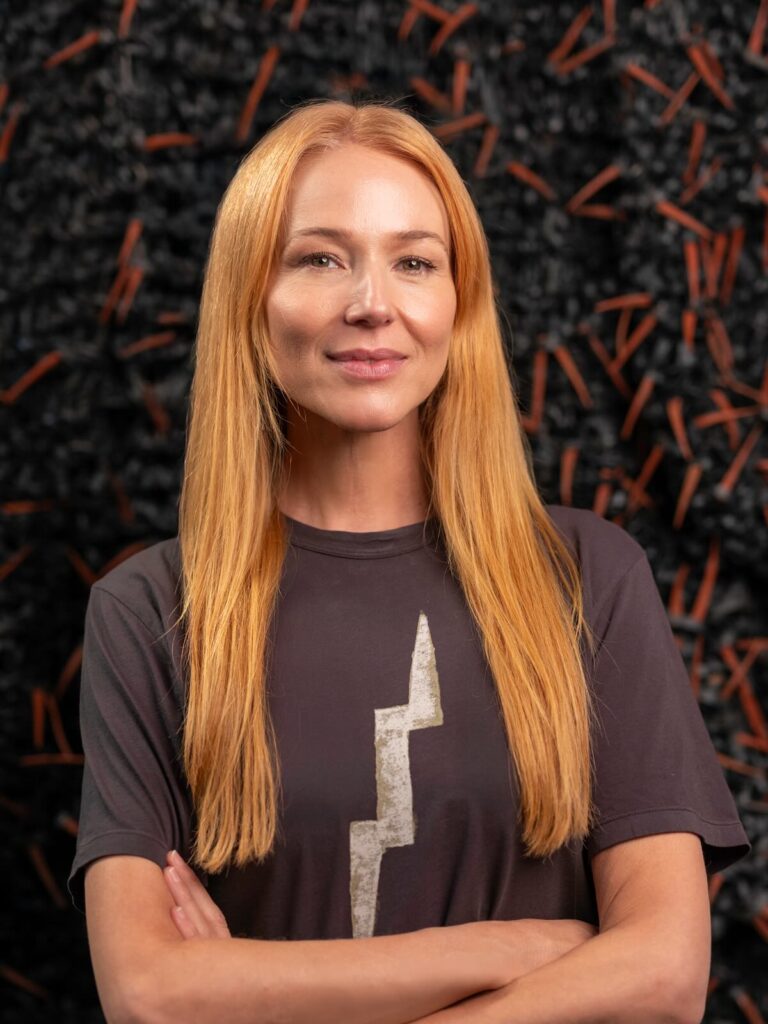
Matriclysm recasts ecology and biology as tangible, touchable, and audible experiences. Data can be hard to read, hard to feel, but Jewel turns math into something magical. In translating science into sensory form, she collapses the distance between cosmic observation and the human body.
Information, in her hands, becomes relational, something you stand inside rather than scroll past. What emerges is Jewel’s insistence on intimacy in a world increasingly baited by distraction: a request for slowness, curiosity, and compassion, for ourselves and the earth we inhabit. The work resists the detached authority science is often granted, asking instead what it feels like to live inside these systems, to be shaped by them, to depend on them, to even love them.

