

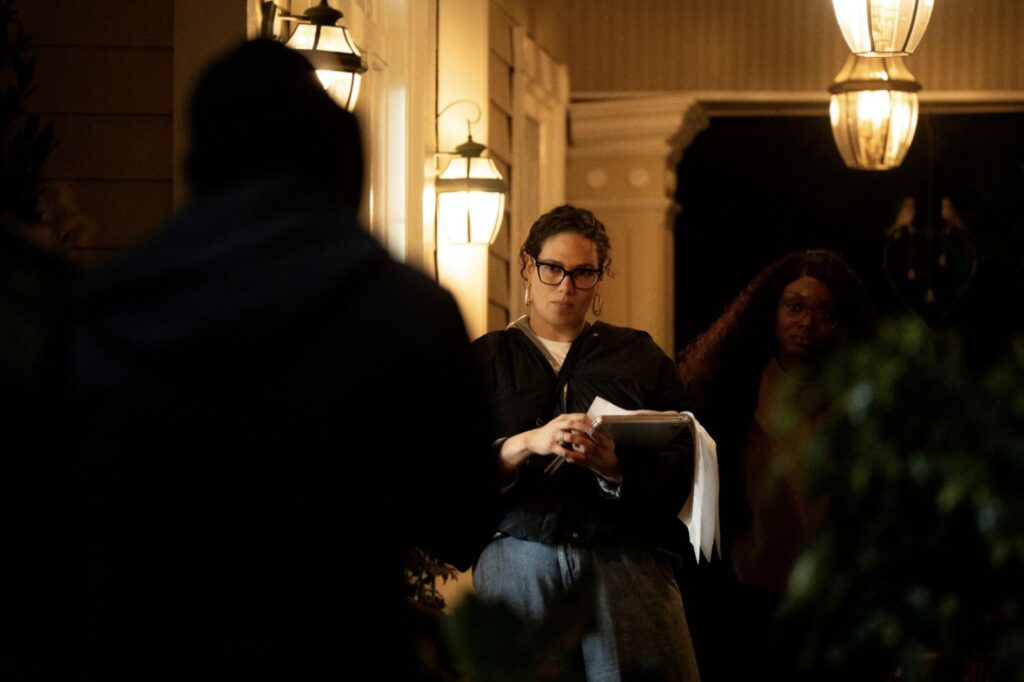
Three major NBC Universal sitcoms are airing this year on Peacock. All of them are helmed by women. Trailblazers like Celeste Hughey (The ‘Burbs), Megan Gallagher (All Her Fault) and Susanna Fogel (Ponies) are helping make historic strides in Hollywood, as the number of female filmmakers made up a whopping 36% of creators of television programs on streaming services over the past year.
Although this progress is encouraging, undeniably, there’s room for improvement. Betty White is widely credited as the first woman to produce, create and star in a nationally aired sitcom, Life with Elizabeth, which began its run in 1953 (yet the impact of preceding pioneers Gertrude Berg and Irna Phillips, who developed content for television as early as the 1940s with programs like The Goldbergs and Guiding Light, cannot be overstated), but the sheer amount of men working in the film industry today still greatly outnumber their equally gifted and hardworking peers.
Despite the fact that streaming services ultimately provide a bigger platform for female storytellers, according to the Inclusion of the Directors Chair report from the USC Annenberg Inclusion Initiative, only nine women directors worked on the top 100 highest grossing films of 2025, dropping significantly from 13.4% to 8.1% in one short year, marking a seven year low. And this is after Greta Gerwig’s insanely successful blockbuster box office smash, Barbie, which not only became a massive global cultural phenomenon, but it also happened to be the highest grossing film of 2023, rising in popularity until it eventually solidified itself as the 14th highest grossing film of all time.
One would assume that studios would be banging down the doors of women filmmakers, begging for their guidance. But just as history has shown, time and time again, the people with the most power often learn the wrong lessons. They fail to see the writing on the wall. They chase I.P. when they should be rewarding original vision. They attempt shortcuts with Chat GPT, bank on blatant cash grabs under the guise of nostalgia-based sequels. Their cyclic maneuvers are so unabashedly simple minded that it all might actually register as somewhat funny if the flippant transparency with which they deliver their slop weren’t so incredibly insulting. Copy and paste what worked before. Rinse, lather and repeat.
Happily, the burgeoning brains over at Peacock have a better idea: Invest in your filmmakers, and they’ll reward you with sharp, witty and insightful media. BUST recently spoke with these powerful writers, directors, and showrunners, and their spirit is nothing short of utterly galvanizing. Fogel, Hughey and Gallagher discuss their own personal journeys, meditate on where they are hoping to inspire change, and earnestly, break down what it’s really like being a woman behind the lens.
PONIES
Susanna Fogel on Crafting a 1970s Spy Thriller for a Modern Audience
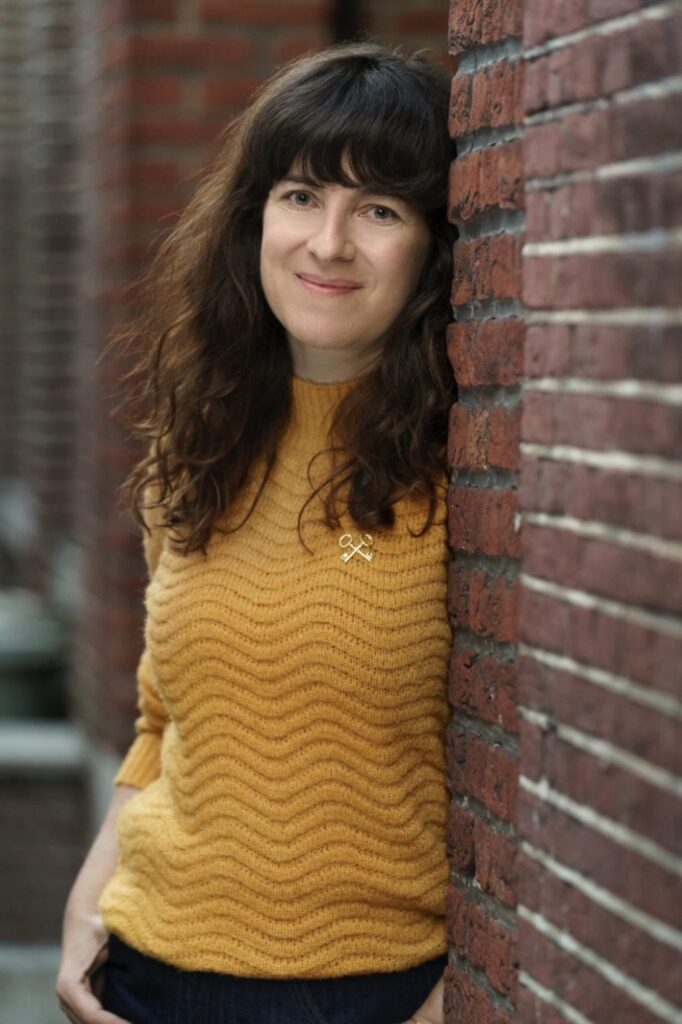
“It was so rare for each of them to be on a set where there are a lot of women,” Fogel tells me about working with Ponies stars Emilia Clarke and Haley Lu Richardson, “Because usually, it’s either a love story, or they’re the girl, and it’s a very male heavy set. They don’t often get to play off other women, or play something where a relationship with another woman is at the center of the show or movie. They were really high on that.”
Co-created with David Iserson, Fogel’s Ponies tells the story of Beatrice Grant (Clarke) and Twila Hasbeck (Richardson), two secretaries who work anonymously at the American Embassy in Soviet Russia until their husbands are mysteriously killed in the line of duty, and they’re called upon for a greater mission. Set against the backdrop of the Cold War, the newfound friends go undercover as CIA operatives, working together to uncover the conspiracy behind their shared tragedy.
While most associate Clarke with her role as Daenerys Targaryen on HBO’s hit fantasy drama series Game of Thrones, Fogel hopes to display the actress in a role that hits her much closer to home: an intellectual who likes to study. “Fans know her as this sex symbol in the world, but actually, she’s not so closetedly a huge nerd,” smiles Fogel. “On the level of wanting to give actresses who are typecast all the time a chance to prove that they’re more, and wanting to be the person who could give them that opportunity. It’s always been a fun part of directing for me.”
She continues, “Also, just the way that Emilia has had to make choices in her life based on her enormous fame. There’s a way that your life becomes very small, and very routine, just because you’re trying to keep yourself insulated from this world, and the crazy energy that’s coming at you if you’re famous the way that she is, especially as a woman.”
Listening to her intuition proved fortuitous when Clarke joined the cast and devoted herself to learning Russian for the role. “Luckily, Emilia, as I said, was a nerdy tryhard who was like, ‘Let me study this for hours and hours a day,’ and did an incredible job.” Fogel admits that directing a program in a language other than her native tongue is “scary to do,” but notes that this is actually not her first rodeo. “I did fourteen different iterations of the same MaxiPad commercial,” she reveals with eyebrows raised. “It was the same commercial, with fourteen different actresses, in fourteen different languages, with teleprompters.” She shrugs. “That was an early career thing. I really needed the money.”
Seeking to create a rich environment, Fogel knows that no matter how historically accurate she aims to be, the real key to authenticity is centering her story around interpersonal relationships.
“It was important to not do a show where we’re valorizing the American government, and saying our imperialism is good, and the Russians are bad. There’s something really dated about that type of storytelling in today’s world. For us, it’s more like using the spy world as a prism to study relationships and identity issues. For that, it needed to be a little more complicated than good guys, bad guys.” She adds, “At the heart of it is a friendship story, which is in almost everything that I do – a female friendship story.”
Raised in Providence, Rhode Island, Fogel felt inspired by the independent movie theater near her childhood home which she frequented with her parents. Immersing herself in print magazines like Premiere and Entertainment Weekly at an early age, by high school, she was already “obsessively” writing screenplays on her Apple TGS desktop computer and directing her own short films. “I went to the Rhode Island Film Commission and asked if they could recommend someone who could help me shoot something in my kitchen with my friends. That led to a short film that I sent off to all these festivals that I read about in these magazines. I ended up going to all these film festivals with my parents, who I made stand on the other end of the hall so that no one would know they were my parents – even though I was clearly fifteen,” she laughs.
“I always wanted to do this. It took a long time for me to make my first feature film, and TV show, just because in the course of trying to get something made with a real budget and scale, it just was a much longer road. And the confidence I had at fifteen then got subsumed into being a twenty-one year-old broke struggling person. It actually took me a while to rediscover the confidence I had as a teenager. As weird as it sounds, it did take me a while to have the selfishness I had way back then.”
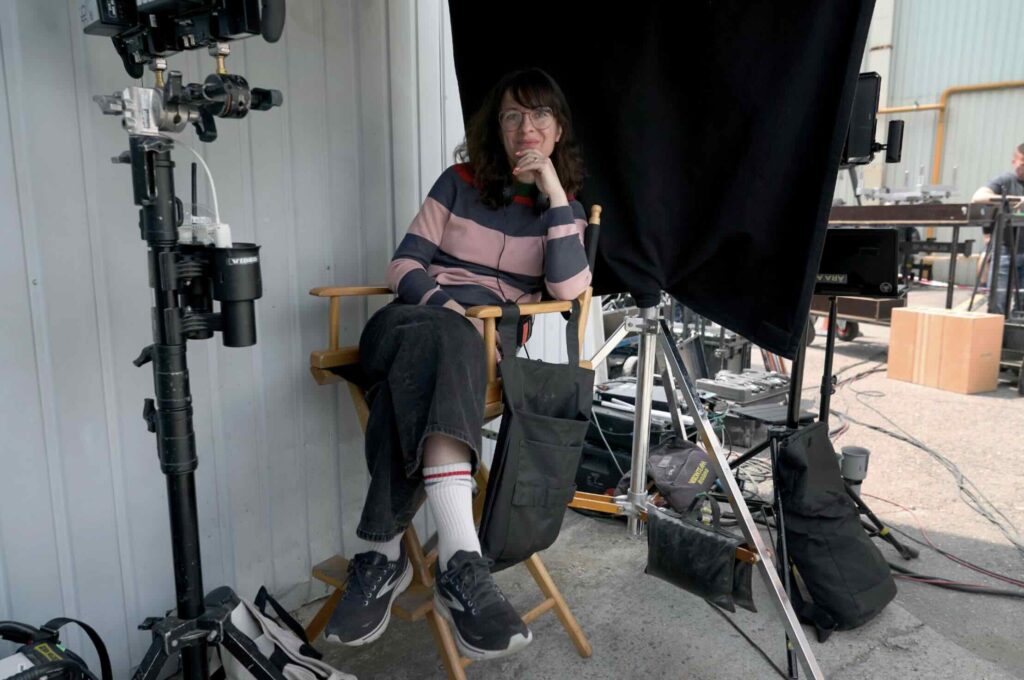
Imposter syndrome runs rampant among many writers, but perhaps even more severely when it comes to women. Patriarchal figureheads help push the false narrative of scarcity, leading many female filmmakers to believe that there’s only so many spots for women in their field, while the rest are reserved for men. Aggrandizing this notion is the plain fact that when little girls are growing up, more often than not, they don’t see many examples of people who look like them in prominent roles, both onscreen as well as behind the camera. Add to that logic the culture shock that emanates from moving to a big city like Los Angeles after growing up in a small seaside town, and it’s not hard to understand why an up-and-comer might feel a little apprehensive about being a little fish in a big pond.
“I would say that from ages twenty-one to thirty, I was in a post college, broke, struggling person phase,” Fogel remembers. “I had moved to LA and it seemed like everybody was an aspiring writer and director. It’s so easy to feel invisible.”
Oddly enough, the spark that provided forward movement for Fogel was just reading a lot of scripts. Excellent scripts, mediocre scripts, even bad scripts: they were all getting produced, which meant that if she put in the effort, eventually, she would, too. “I think 30% of it is just me saying, ‘I’m doing this now, and I’m not asking,’” surmises the director with a twinkle in her eye. “Just the confidence to not ask for permission.”
THE BURBS
Celeste Hughey on Reimagining a Cult Classic Post COVID
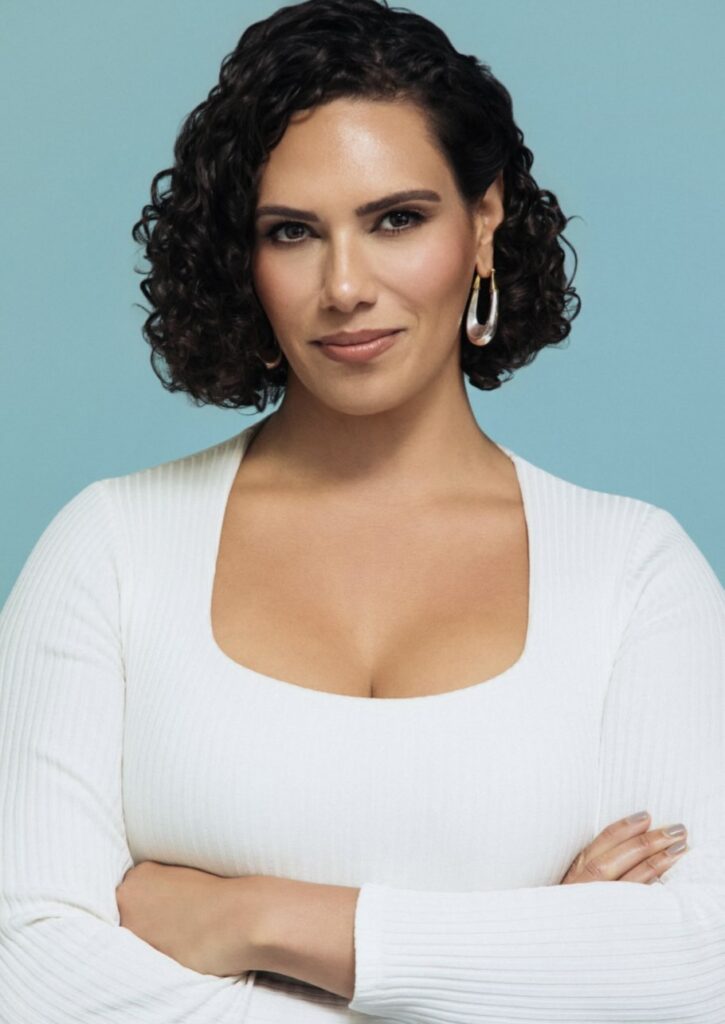
“When I was a kid, I wanted to be the President,” divulges Hughey as we sit down to talk about her take on the 1989 Joe Dante film The ‘Burbs. “It’s funny, because writing came to me later in life. It wasn’t what I initially set out to do. I loved writing as a kid, I always wrote stories and poems, but never realized it could be a career. I grew up in Boston, which couldn’t be further from Hollywood, and didn’t understand that there was someone behind the screen actually putting words on paper. It wasn’t until I moved out here for a different job in digital media and news where I realized, ‘Oh, everyone here is doing this, maybe I should try it.’ And I realized it was the one thing in my life that never felt like work.”
In the show, a young couple moves back to the husband’s childhood home, only to face new threats from neighbors and uncover dark secrets of their cul-de-sac. Loosely based on the 1980s property, Hughey’s vision sees the multifaceted Keke Palmer in the pseudo Tom Hanks role, switching up the storyline by making her an attorney on maternity leave, with lots of time to spare in a very monochrome suburbia.
“I really wanted to focus on the fish out of water story,” reflects Hughey. “I grew up in a mixed household, and I’m black and white, in Boston, and I lived in a very white neighborhood. I moved through the world feeling out of place, and I wanted to center that story. Keke Palmer was the best, and who I wanted immediately, since I started working on this project. So, I came up with the world, pitched it to them, and then brought it to the studio and the network, and I cannot believe that we’re here. I saw the first billboard today, and I almost drove off the road.”
She notes further, “Just any excuse to put Keke Palmer in anything. She’s an absolute star. To me, Keke is the modern Tom Hanks. She has the dramatic chops. She has the comedic chops. She can do physical comedy. She’s endearing. She’s charismatic. She’s everything that made Tom Hanks a star. I think she has that as well. And so to make that main character, you want someone who captures the essence, not necessarily the same exact photocopy. She just made so much sense to me to carry all of that.”
For fans of the original, there’s little nuggets paying homage that pop up sporadically, if you know where to look. “A good adaptation has to have its own unique voice and world to really succeed,” explains Hughey. “I always want to honor the people who made the movie, and so there’s Easter eggs throughout and there’s set pieces, like the sardine scene, that I think are must-see for both fans of the movie and new viewers.”
You might even spot a familiar face or two. “Everyone was super excited about [the cameos],” Hughey beams. “Wendy Schaal has worked with Seth McFarlane for years, so she was pretty early to come in. We wrote a little part for Tom Hanks, hoping that he would lend his face or voice, but he ultimately was like, ‘You have my face, you have my blessing.’ Corey Feldman was also so excited to be a part of it. He even wore the original jacket that he wore in the movie. He showed up wearing it, and we were all so thrilled that he was there.”
Much like in the movie, Samira (Palmer) spends her time being a modern day Jimmy Stewart, peeking out of her blinds, paying a little too much attention to her neighbor’s daily movements, and watching for signs of life from the creepy abandoned Victorian (which was modified from the original Munsters house!) across the street. Initially approached by Brian Grazer’s company Imagine and Seth MacFarlane’s Fuzzy Door Productions about adapting the material for the small screen, the project took on a life of its own in 2022 when the world entered lockdown during their preproduction.
“I think it’s so relatable, whether or not you live in a suburb,” says the screenwriter. “Coming out of the pandemic where we’re all home, relying on our neighbors, and looking out our windows and coming up with our stories. We all have a crazy neighbor story. We all have lived next to someone that we suspected of something.”
She elaborates, “You can get stuck in there, and it becomes its own little universe within a suburb. It just feels like the right place to tell a story. I used to live in Venice Beach, and New York before that, and then I moved to this quiet neighborhood, where I was up all night. The silence was terrifying. Every little crack of a branch, I was like, ‘Someone’s outside.’ You see a car that you haven’t seen before. It just breeds ground for your imagination to run wild and fill in those gaps.”
COVID may have left its mark on the narrative of Hughey’s ‘Burbs, but due to recent events, the subtle digs and morally ambiguous nature of some of the characters on the show now make it feel timelier than ever.
Hughey muses, “I mean, with Keke in particular, I wanted to make the experience authentic. It’s not overt racism. There’s microaggressions throughout. Just as other people are starting to get used to her on the block and see who this person is, she, too, is trying to see who might be accepting of her. You don’t choose your neighbors. And I think in modern times now, it’s like there’s a bit of divisiveness in the country, and you don’t know which neighbor is a friend, and which neighbor is a foe. I think there’s a found community where just because we don’t fully understand what someone’s life is, doesn’t mean that there can’t be a connection that’s still made.”
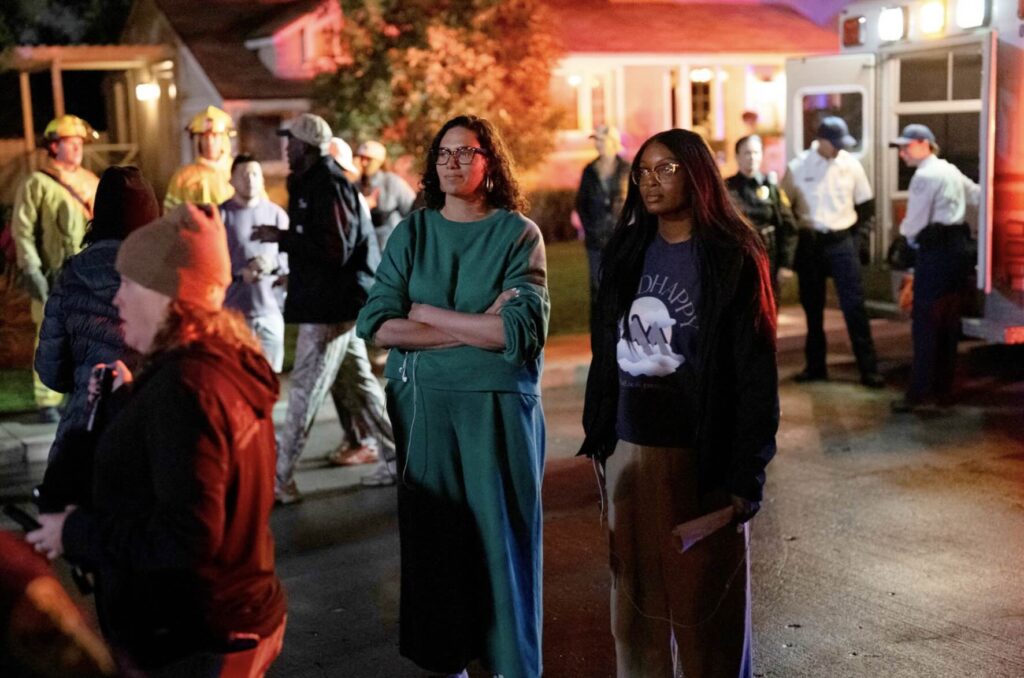
At its core, this is a story about showing up for one another, because what we have in common greatly outweighs what threatens to divide us.
“It’s found family. I think there is a character for everyone. We have a cast from the age of fourteen to seventy, and everyone can see part of themselves in these characters. That is something you don’t get very often on television. It’s usually the twenty, thirty something, so I think everyone can see themselves in here, and know that there is a community that can be found. Even a bunch of weirdos can come together and be this little all-star group.”
ALL HER FAULT
Megan Gallagher on the Right Way to Pull the Rug
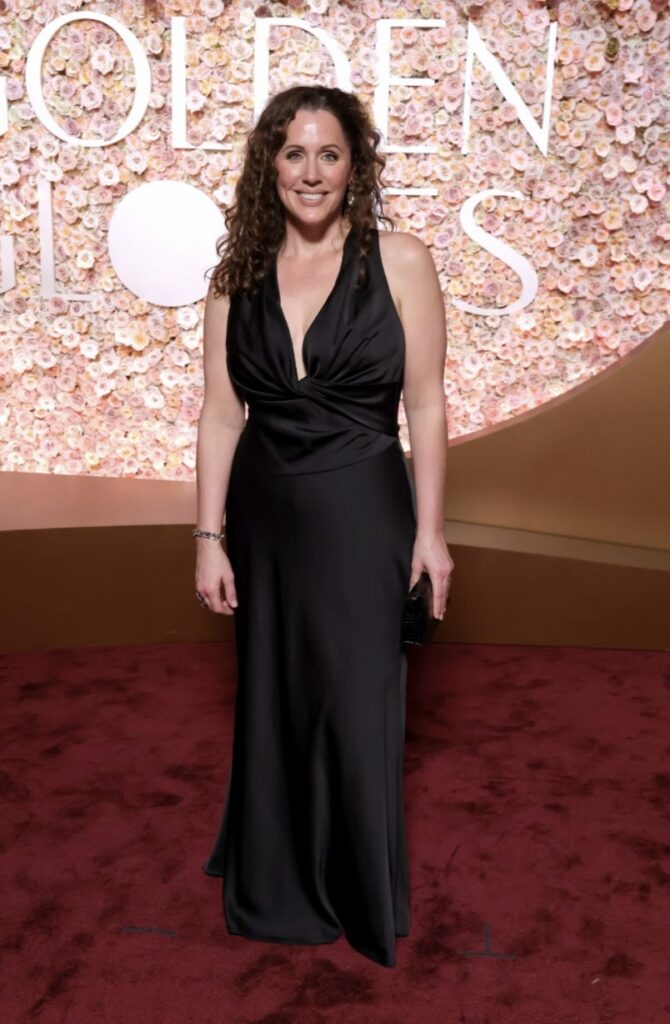
“I never wanted to be in front of the camera, let’s be very clear about that,” All Her Fault creator Megan Gallagher states with vigor. “I came of age around the time when there was a series of films that had some of the best twists out there. The Sixth Sense, Memento, Fight Club. That group of films, and seeing the art of the twist, and really landing a twist – I feel like it’s been lost today. Hopefully you can see it in All Her Fault, but I love the rug pull. I love the artistry of how you really lay the clues so that the twist doesn’t come out of nowhere. A good twist should feel like you could have guessed it, but didn’t.”
Gallagher expands, “I find it very unsatisfying when a twist is withheld so much that it feels like it comes out of nowhere. It’s not satisfying when you get to episode eight and the bad guy is the waiter who you saw for three frames in episode two. And you’re like, ‘Well, come on. Of course I didn’t guess it.’ It wasn’t on the screen. No, to me, I always say when I’m working in a writer’s room, put the twist all over the screen. I mean, if you think about a movie like Memento, for example (and if you don’t know the twist ending, sorry, I’m gonna spoil it for you, but it is like twenty-five years old), there are so many scenes where he is processing his wife’s death. And it’s nothing but emotion, right? It’s not factored into the plot. There’s no clues. There’s no tricks. We’re so wrapped up in what we think is grief, that we never think it’s guilt. It’s all over the screen. It’s just not what we think it is. It’s so masterful. That’s what I love. I love the mechanics of really studying that stuff. “
Based on the bestselling suspense novel by Andrea Mara, All Her Fault follows Marissa Irvine (played by the always captivating Sarah Snook) as she travels down an increasingly perilous and desperate rabbit hole when her son vanishes from an arranged play date with a boy at his school.
“I’m going to guess [the novel] is something like 350 pages,” says Gallagher about bringing Mara’s text to the screen. “If we filmed it as is, we’d probably have about two and a half hours. It’s a television show. It doesn’t translate into eight hours. So, usually what we do is we think of a book as an accordion, in the sense that you have this plot point here, and this great twist here, so what’s everything I can do to build up to these twists that she’s given me? With an adaptation, usually it’s less about gigantic changes, and more about addition. What more can I say about these characters? What personal storylines can I develop that will complement the plot? That’s usually how I approach it. Mechanics and mapping. It’s a lot of puzzle work, which I really enjoy.”
In the show, Snook’s character Marissa loses her son while he was supposed to be playing with a schoolmate. The classmate’s mother, Jenny Kaminski (Dakota Fanning), who hired the nanny who (as we learn later) inadvertently kidnaps Marissa’s son Milo (Duke McCloud), immediately pours all of the time and resources that she can spare into helping and consoling her new friend. In turn, Marissa takes comfort in the safety of commiseration. It’s a moving, progressive choice, in a moment that many other shows would seize upon to create a rift between the two female leads.
“It’s very interesting that between me, the episode writers, my producers, all the execs at Peacock, and certainly our directors, everybody just universally agreed we didn’t want to see it,” says Gallagher regarding the idea of making her two leading ladies more combative. “It wasn’t worth getting fourteen minutes of material out of it. Nobody cares. There’s a sea of suspicious people who are lying, and then there’s just two women in the center. Nobody wanted to undo that, even if it was later revealed to be a misunderstanding. Just because Marissa should hate Jenny because she hired the nanny that [took her son], and just because Jenny should be a coward and avoid Marissa because oh gosh, she could be sued – just because a situation is difficult doesn’t mean that these two women aren’t capable of showing up as the best versions of themselves. I feel like I know plenty of women who would act the same way in the same kind of difficult situation.” She offers, “The audience has been so grateful that it’s not a cat fight. I mean, how many times have we seen this? A million. Too many.”
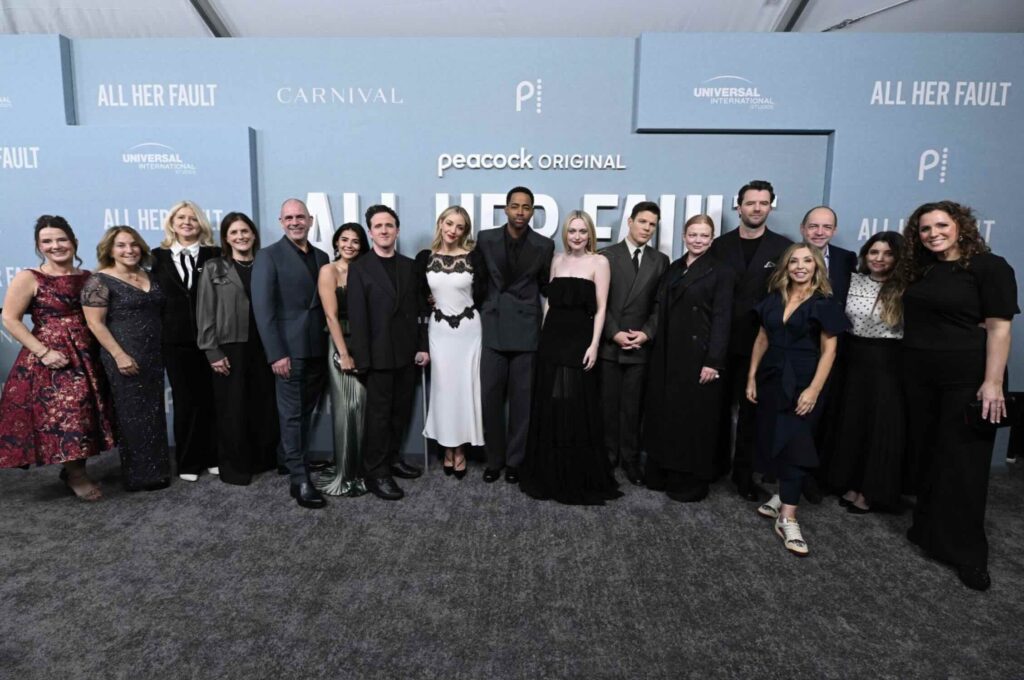
Every woman who has ever worked on a film set knows what it’s like to look around and see mostly men. On the flip side, this common experience makes it all the more gratifying when a production happens to enlist more women on their crew.
“We definitely wanted to look at women for this material, but they were also the best directors for the job,” says Gallagher, whose show proudly boasts all female directors for the entire miniseries. “There’s no question. Minkie [Spiro] was fantastic. Absolutely ran things. Just an incredible captain of the ship. And Kate [Dennis] was phenomenal. Kate has some really tough, big episodes. She has a lot of stunts. She had episode seven, which is Carrie (Sophia Lillis)’s whole world, which is neat, but needed to be created. She did an incredible job as well. We’re unbelievably pleased with both of our directors.”
In Gallagher’s eyes, the key to succeeding as a female filmmaker, against all odds, is just rolling up your sleeves and putting in the work. Some might see this as a setback, but for this auteur, she’s wise enough to view it as an opportunity.
“I really believe that the most important part of making a career in this industry, not a flashy career, maybe, but a steady career, is really just hard work,” states the filmmaker. “Like, that’s it. And that might sound boring. It might sound pedantic, or disheartening. But I think it is really inspiring, because it means you’re in so much more control of it than you think. If you’re willing to do the work, and willing to really put yourself out there, and just keep at it, chances are you’re gonna be able to sustain something that resembles a career. That’s like 90% of it. Don’t be deterred by ups and downs in the industry. Don’t be deterred by this idea that you have to be connected to a million people, or if you don’t have an agent, then you’re never gonna, blah, blah, blah. All that stuff can be figured out. Just work hard. If you wanna write, write. Write all the time. When you watch movies, stop them, pause them, pay attention to the story beats and how they’re unfolding. Just work. Work all the time. And if you’re willing to do that, that’s the magic sauce to me.”
Images courtesy of Peacock

