


In a city of unique people, Adeline Jadot still manages to stand out. The New York City-based visual artist is beautiful, stylish and ethnically ambiguous. But what sets her apart from tons of other young women in Gotham is her talent.
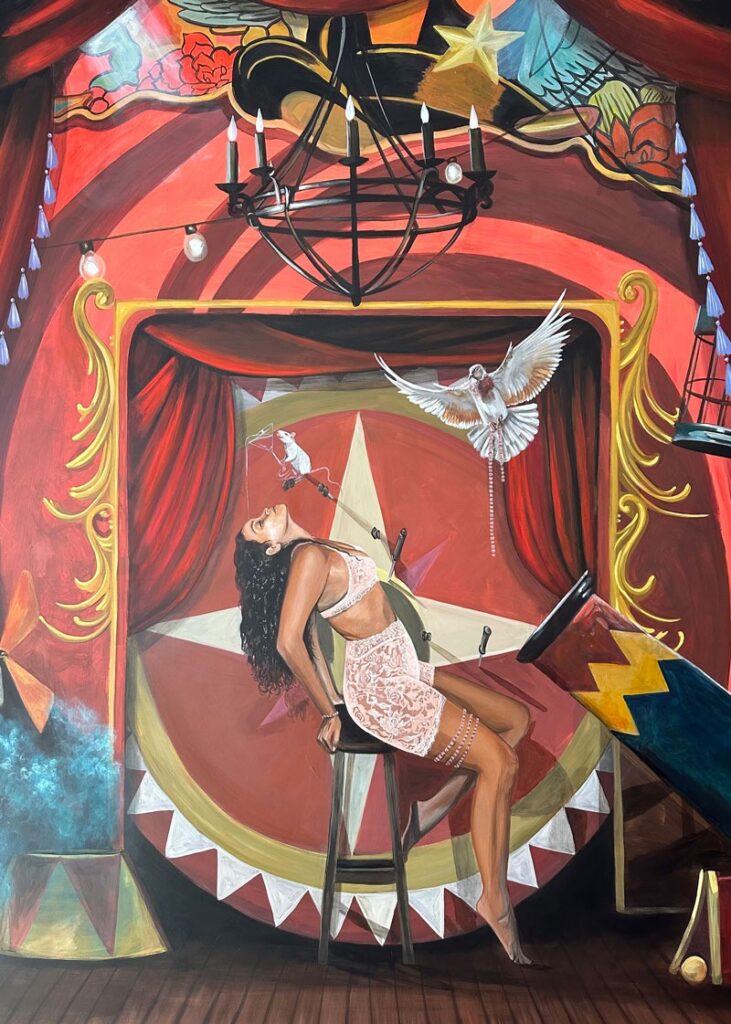
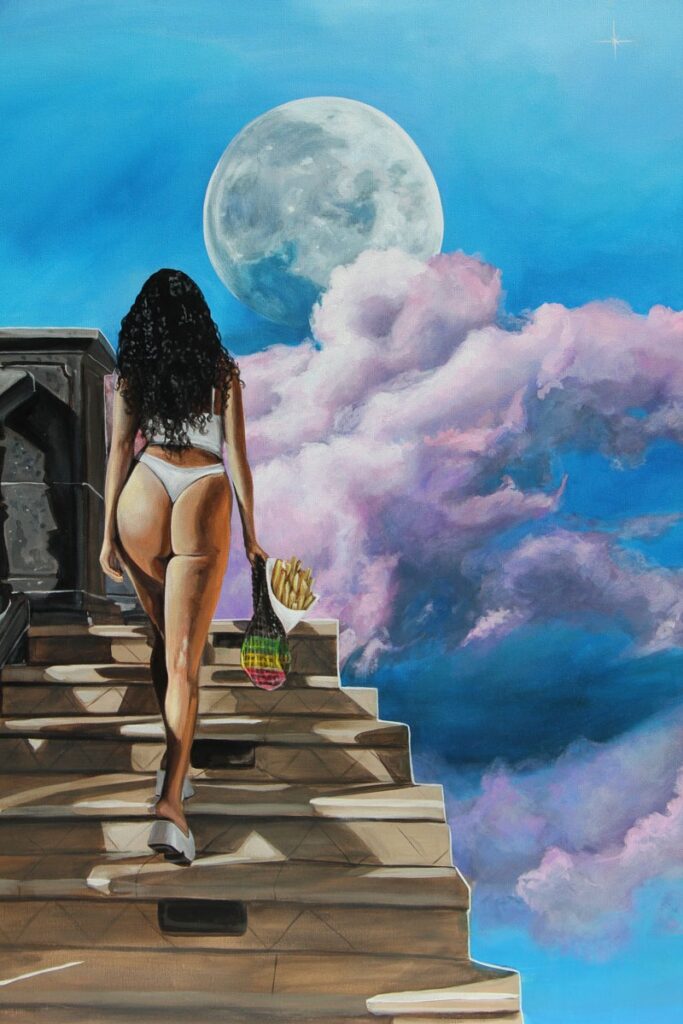
Though she has dabbled in everything from making scarves to teaching yoga, her primary love is painting and designing murals. Her work can be seen in bars and restaurants around Manhattan (my introduction to her came at Jones Wood Foundry, an Upper East side eatery) and she even had her work featured on a billboard in Times Square. Not bad for someone who just turned 30!
Adeline didn’t start painting in the city. “I went to school in Boulder, Colorado,” she tells me over lunch. Extremely random. I just decided I was going to go out there ‘cause it looked pretty! My [parents] were very adamant on me going to school for anything. They [said] ‘You can do anything!’ So I was like, ‘Alright. I’ll get into the art program’.” A year later, I decided to go into the painting and drawing program. They gave me my own studio and I started just painting large canvas pieces. I started with mostly self-portrait art.” Even now, Adeline includes herself in most of her paintings.
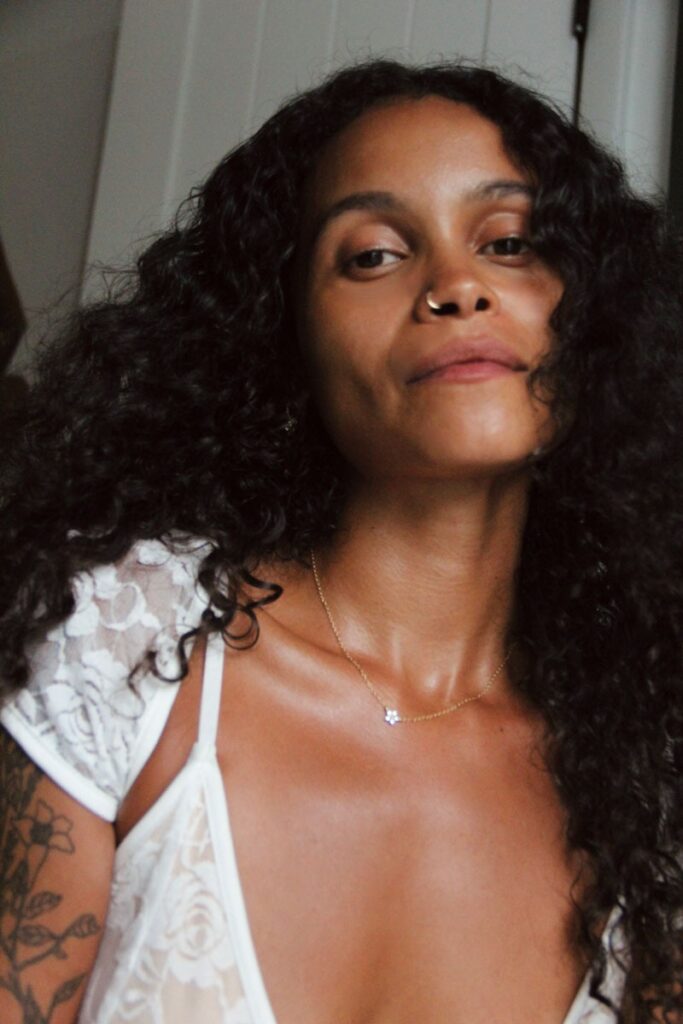
Adeline’s career really took off after she studied the art of Trompe l’œil at a school in Belgium. “Trompe l’œil means ‘to trick the eye’,” explains Adeline. “It was a very competitive program; they only accept about 15 to 20 students a year — and it’s [an] international school. It was very intense. I always describe it as the military of painting schools. We did not sleep. We painted from 8am to 6pm every single day. Sunday we had off and Saturday we had, like, an hour less! But it was quite a rigorous program. That was six months and then Covid hit, which was kind of crazy.”
“But eventually, I went back home [to NYC] and I started getting jobs left and right,” she continues. “Because now, not only did I have experience painting on walls; I had this school under my belt as well.”
Two of Adeline’s big influences as a painter are the great Belgian surrealist Rene Magritte and Frida Kahlo. Interestingly, you can see both in her work. “Frida is a huge influence,” she says. “I love her rawness. I [also] love that she had the strength to always use her face [in her paintings]. That’s not easy, [as] I discovered as a self-portrait artist. [And I appreciate] the challenges she overcame as a woman.”
Someone else Adeline cites as an influence is the Belgian singer Angele, who also happens to be an old friend of hers. “[Angele and I] met because our dads were friends back in the day in Belgium,” she says. “We met when we were, like, four years old. She started writing songs when we were [around] 19. Then, on TikTok one day, [she] did some song she wrote with a bowl of spaghetti on her head —and she went viral. She’s also bisexual, so she’s a huge influence in the LGBT community in Europe.”
“She [Angele] inspires me so much,” Adeline adds. “She did her first big concert [about] three years ago at Terminal 5. And I literally sat there in the VIP section, just crying. [It was great] to see all of the people that came out for her, all of the people screaming her lyrics in French — which is so rare!”
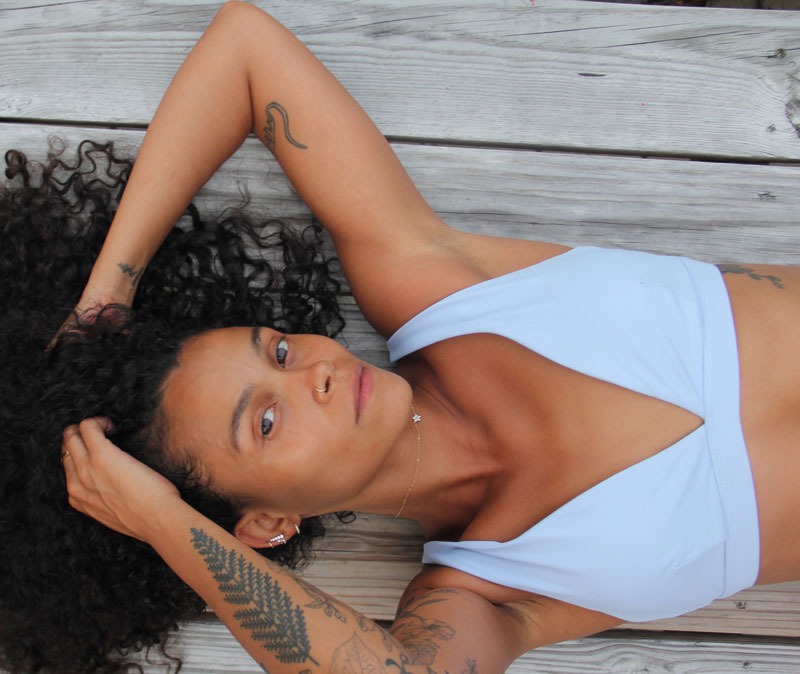
One of the biggest themes in Adeline’s work is being of mixed race. Her mother is a black woman from Jamaica and her father is a white man from Belgium. Even though she grew up mainly in Manhattan, she experienced both racism and identity issues. “It was quite annoying growing up,” she says. “Everybody was like, ‘Oh, you’re adopted?’ Nobody thinks that your parents are your parents.”
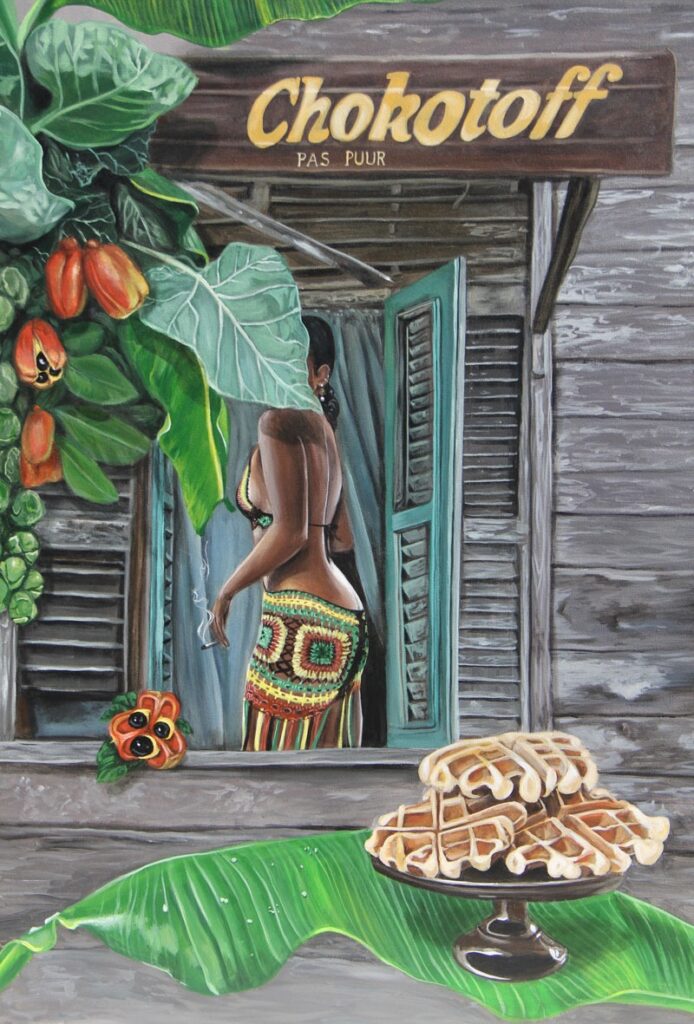
“Every time I would go visit Belgium, I stuck out,” she remembers. “My brother and I would go to summer camps with our grandmother and people would look at us really crazy. Everybody was white, blonde, blue eyes, rosy cheeks. We always felt, you know, ‘We’re not Belgian!’ Same on the Jamaican side. Our skin was more fair and our hair wasn’t the same as theirs. So it was like, ‘You’re not Jamaican!’ How many times I’ve heard that or ‘You’re not black’ [or] ‘You’re not white.’” She pauses. “I’m not black and I’m not white, so what the fuck am I? In college, I really started to feel like an alien — to the point where I was like, ‘I have to own this shit.’ What also was kind of killing me was that I didn’t feel American. That really started to eat at me and that’s when I started to make the work I make. I have my own body of work and it’s about the beauty of belonging nowhere.”
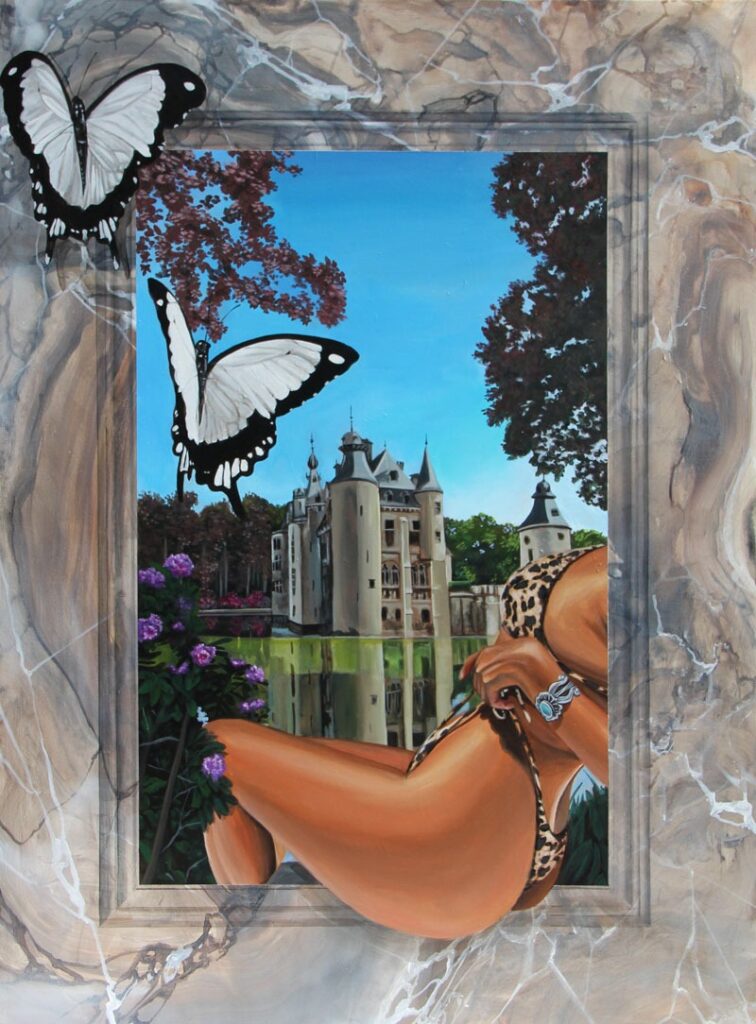
Adeline also uses her art — and her experiences in general — to be a role model to other people who are of mixed race. “Everybody in my family is mixed,” she says. “I have maybe three fully white cousins and three fully black cousins. Everyone else is mixed; every last one of them. And I always told my girl cousins especially, “people are gonna hate on you because you’re different. [But] it’s better to be different. That’s beautiful and [you can] use it to your advantage.”
All Images Courtesy Of: Adeline Jadot

